

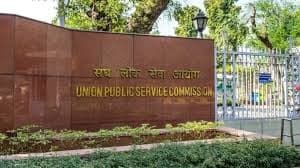
On 1 October 2025, the Union Public Service Commission (UPSC) completes 100 years of its establishment. From its modest beginnings under colonial rule to becoming India’s premier recruiting body, the UPSC has stood as a guardian of fairness, trust, and meritocracy in governance. Its journey reflects not just an institutional history, but also the nation’s faith in impartiality and integrity in public service.
The Story
The roots of the UPSC lie in the Government of India Act, 1919, which first provided for a Public Service Commission. Following the recommendations of the Lee Commission (1924), the body was established in October 1926 under Sir Ross Barker with limited powers. It became the Federal Public Service Commission under the Government of India Act, 1935, and with the adoption of the Constitution in 1950, it assumed its present status as the Union Public Service Commission.
Over the decades, the UPSC has grown from conducting a handful of examinations to overseeing recruitment across diverse services — civil, engineering, forest, medical, and statistical cadres. Its central mandate remains unchanged: to select the finest talent for public service, insulated from political influence and personal bias.
The Foundation of Trust
The UPSC’s stature rests on three pillars: trust, integrity, and fairness. Millions of aspirants place their faith in the Commission every year, knowing that merit alone determines success. Transparency in procedures, impartial evaluation, and vigilance against malpractice have built this trust.
Integrity has meant resisting political pressures and ensuring confidentiality. Fairness has meant providing a genuine level playing field for candidates — rural and urban, privileged and disadvantaged, English-speaking or not. In a diverse nation marked by inequality, the UPSC’s exam process has come to embody the very principle of equal opportunity.
The Bhagavad Gītā’s wisdom — “Without attachment, constantly perform your duty as it ought to be done” — aptly captures the Commission’s ethos: duty performed with rigour, without attachment to outcomes.
The Indian Dream
At the heart of UPSC’s journey are the aspirants. Once dominated by elites from select urban centres, the exam today draws candidates from nearly every district of India. This remarkable spread of participation reflects the “Indian Dream” — that talent and hard work, rather than privilege, can open doors to service and leadership.
The Civil Services Examination (CSE), the world’s largest competitive exam, attracts nearly 10–12 lakh applicants annually. From over 2,500 venues for the prelims to customised arrangements for differently-abled candidates, the logistics are unmatched in scale. With 48 optional subjects and 22 constitutional languages available, the UPSC evaluates diverse candidates into a single, merit-based ranking. This orchestration, completed within fixed timelines even during crises like COVID-19, epitomises institutional efficiency.
The Invisible Backbone
Behind the exam’s credibility lies the dedication of paper-setters, evaluators, and subject experts — the unsung backbone of the UPSC. These academics and professionals, often masters in their disciplines, serve without public recognition. Their quiet diligence ensures fairness and rigour in the assessment process.
Over the decades, UPSC-selected officers have steered India through crises, reforms, infrastructure expansion, and environmental challenges. Though their contributions often remain unseen, they touch the daily lives of millions of Indians.
Reforms and Adaptation
As India faces global competition and technological disruption, the UPSC has initiated reforms to stay current. An online application portal and face-recognition technology ensure smoother, fraud-free applications. The PRATIBHA Setu programme now provides employment opportunities to candidates who reach the interview stage but fall short of final selection.
Looking forward, the UPSC is exploring digital technologies and Artificial Intelligence to enhance efficiency without compromising integrity. These reforms signal its adaptability while safeguarding its core values.
Why It Matters
The UPSC embodies India’s commitment to meritocracy. Its impartial processes safeguard democracy by ensuring that the state’s administrators are chosen not by privilege or patronage, but by competence. This independence strengthens public trust in governance.
At a time when institutions worldwide are under strain, the UPSC’s century-long record of integrity and fairness stands as a benchmark. It is not only about recruitment but about upholding a culture of duty, service, and excellence in public life.
Conclusion
As the UPSC enters its centenary, it celebrates not just its history but also its promise. It reaffirms its commitment to fairness, trust, and integrity while embracing reforms for a changing future. In its hundred years, the UPSC has become more than an institution; it is a symbol of India’s faith in meritocracy, and a guardian of the nation’s democratic dream.