

A rural employment guarantee is not merely a welfare programme; it is an economic shock absorber. For two decades, MGNREGA’s most distinctive feature was that it treated work as an entitlement—if a household demanded employment, the State had to respond within a time-bound framework or pay an unemployment allowance. The proposed Viksit Bharat—Guarantee for Rozgar and Ajeevika Mission (Gramin) Bill, 2025 signals a decisive redesign: from demand-led provisioning to supply-led allocations, with sharper Central control over budgets, geographies, and timing. That shift may bring administrative neatness, but it also raises a deeper question of public policy: can a “guarantee” remain meaningful if the tap is regulated more by ceilings than by need?
What’s in the news
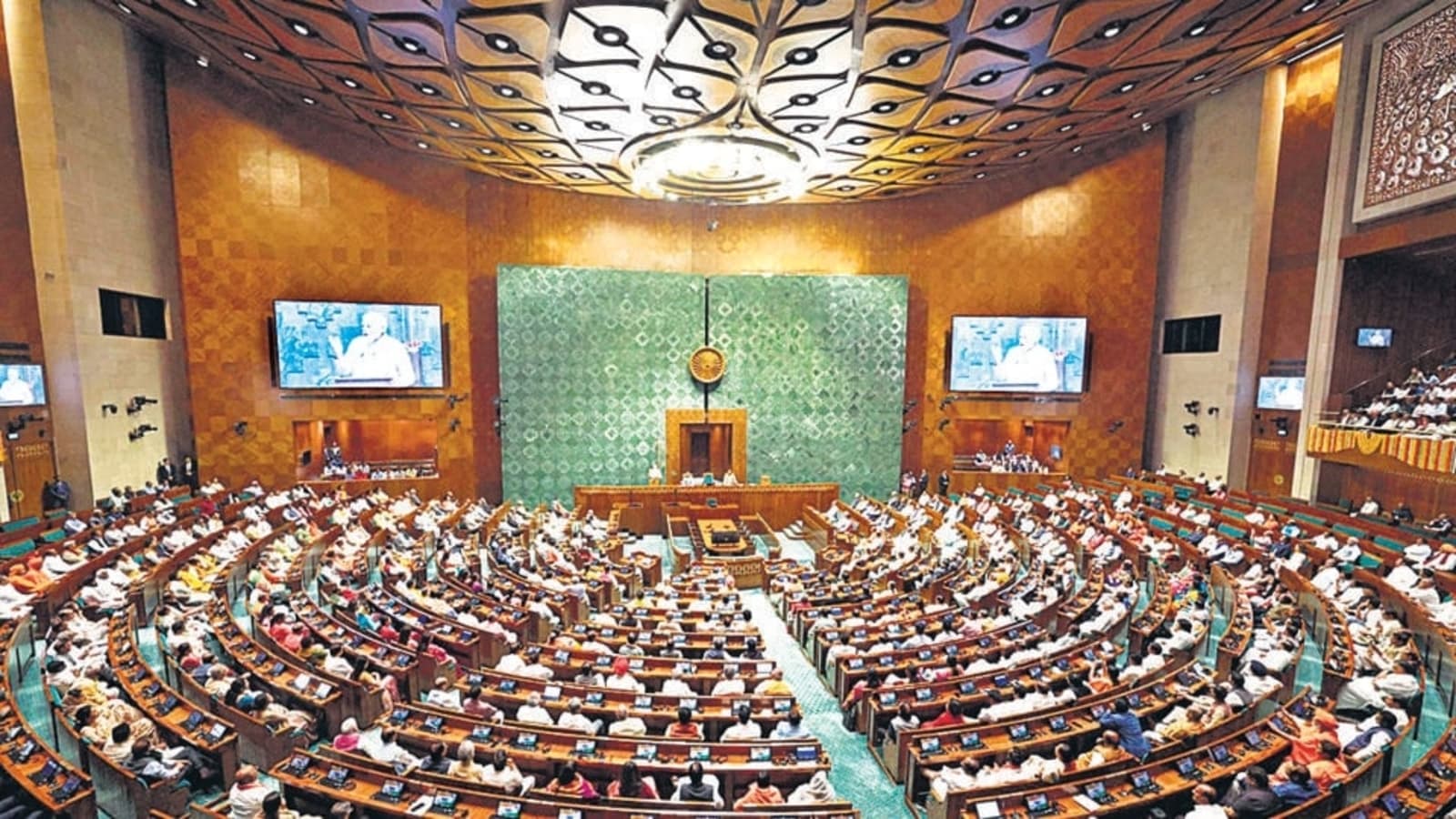
The Union government is set to introduce the VB–G RAM G Bill in Parliament to replace the Mahatma Gandhi National Rural Employment Guarantee Act, 2005. Reports indicate the Bill:
-
increases guaranteed wage employment from 100 to 125 days,
-
changes the financing pattern to 60:40 (Centre:States) for most States with a legislature, while retaining 90:10 for certain categories,
-
introduces State-wise “normative allocations” determined by the Centre, replacing the demand-linked labour budget approach,
-
permits pausing works for up to 60 days in peak agricultural seasons,
-
and anchors works in “Viksit Gram Panchayat Plans” aggregated into a national rural infrastructure stack, aligned with broader planning frameworks.
What changes at the design level
From “right-to-demand” to “allocation-to-deliver”
MGNREGA’s original strength lay in its counter-cyclical logic: when rural livelihoods tighten—after a failed crop, a drought, or a local downturn—demand rises and the programme expands. The Bill’s “normative allocation” approach changes this logic. Once the Centre fixes a State’s allocation, any spending beyond it may fall on the State, turning the guarantee into a budget-managed promise rather than a demand-triggered entitlement.
From universal rural applicability to notified geographies
Another consequential pivot is the power to restrict implementation to rural areas notified by the Centre. This can be framed as targeting—directing funds to high-need blocks, migration hotspots, or climate-vulnerable zones. But it also creates an administrative gate that can leave needy households outside notified areas with weaker access to the “guarantee”, especially if local distress is sudden or district-specific.
The fiscal bargain and the federal signal
States pay more, but control less
Under MGNREGA, the Centre bore the unskilled wage bill and a large share of material costs; in practice, this translated into a 90:10 pattern in many cases. The proposed 60:40 structure for most States substantially raises the State burden.
This is not a routine accounting tweak. When States pay more, they typically seek greater discretion. Yet the Bill simultaneously expands Central control via normative allocations and notified geographies. That combination can squeeze State fiscal space while narrowing State autonomy—an uneasy mix in a country where inter-State capacity and revenue strength vary widely.
Budget caps can convert wage guarantees into rationing
In a capped environment, local administrators may respond with implicit rationing: fewer sanctioned works, shorter muster rolls, or delayed approvals. The risk is not merely fewer projects; it is unpredictability for households that use wage employment as a consumption stabiliser.
Labour markets and the “pause” clause
A policy choice with two valid anxieties
The Bill allows a pause in works during peak sowing and harvesting windows, up to an aggregated 60 days, through advance notifications that can vary by agro-climatic zone.
This responds to a long-standing concern among cultivators: when public works compete with farm operations, agricultural labour can become scarce and wage costs rise.
But it also shortens the safety net window
For labour households, the programme’s role is income smoothing. A legally mandated pause, if not calibrated carefully, can remove the very cushion when households face seasonal expenses, debt repayment, or health shocks. The design challenge is to protect agricultural operations without undermining the stabilisation function of wage employment.
A workable balance would mean: predictable calendars, prompt alternative work windows outside peak periods, and clear exceptions for drought, disasters, or local distress—so the “pause” does not become a blunt instrument.
Governance: planning discipline versus local responsiveness
Panchayats remain central, but priorities get standardised
The Bill’s emphasis on Viksit Gram Panchayat Plans aggregated into a Viksit Bharat National Rural Infrastructure Stack signals an intent to improve asset quality and convergence—water security, core infrastructure, livelihood assets, and climate-risk mitigation. The Indian Express+1
This can reduce the criticism that wage employment sometimes produces low-durability assets. It can also align spending with long-horizon rural resilience.
Yet over-standardisation can weaken “works on demand”
Demand-driven programmes succeed when they are locally agile—quick to sanction small, labour-intensive works in response to immediate need. Heavy aggregation into national stacks and steering structures can improve coherence, but if it slows approvals, the promise of time-bound employment weakens on the ground.
The rights-based core: what remains, what may dilute
Unemployment allowance stays—its enforceability is the real test
Reports indicate the Bill retains an unemployment allowance if work is not provided within 15 days of application, echoing the spirit of time-bound obligation.
However, the enforceability will hinge on how “normative allocations” and notified areas interact with that obligation. If funds are capped and areas restricted, the legal pathway may shift from “must provide work” to “cannot provide beyond allocation,” pushing disputes into a grey zone.
“Guarantee” must be judged by delivery, not headline days
Raising the guarantee to 125 days is symbolically strong.
But in public policy, the credibility of a guarantee is measured by ease of access, timeliness of wages, predictability of work, and grievance redrss—especially for the poorest households that have the least ability to wait, travel, or litigate.
What could improve outcomes
Publish the “objective parameters” and make them contestable
If State-wise allocations are based on objective parameters, those parameters must be transparent: poverty and vulnerability indices, migration data, climate shocks, employment demand trends, and payment delays. Transparency reduces discretion anxiety and helps States plan.
Protect the stabiliser function with automatic top-ups
A strong social protection design typically includes automatic triggers—drought notifications, disaster declarations, price spikes, or sudden migration surges—that allow temporary relaxation of caps. Without such triggers, a job guarantee risks becoming a fixed-supply scheme during variable distress.
Ensure wage certainty and faster grievance redress
In wage employment programmes, delayed payments are equivalent to denial. A credible reform would prioritise predictable payments, audit trails, and time-bound grievance disposal—because trust is the programme’s true currency.
Conclusion
The VB–G RAM G Bill appears to pursue two goals at once: make rural public works more “planned” and infrastructure-aligned, while rebalancing fiscal responsibility toward States. There is merit in improving asset quality, convergence, and climate resilience. Yet the deeper policy challenge is preserving what made rural employment guarantees socially powerful: responsiveness to demand in times of stress. The test of this reform will be simple and unforgiving—whether, in a bad year, a rural household can still convert need into work without running into ceilings, exclusions, or seasonal shutters.
Source credits
The Hindu (Sobhana K. Nair report as shared by the user); The Indian Express overview of key changes and Bill clauses; Hindustan Times summary of Bill provisions; Times of India reportage on State-level fiscal implications.