

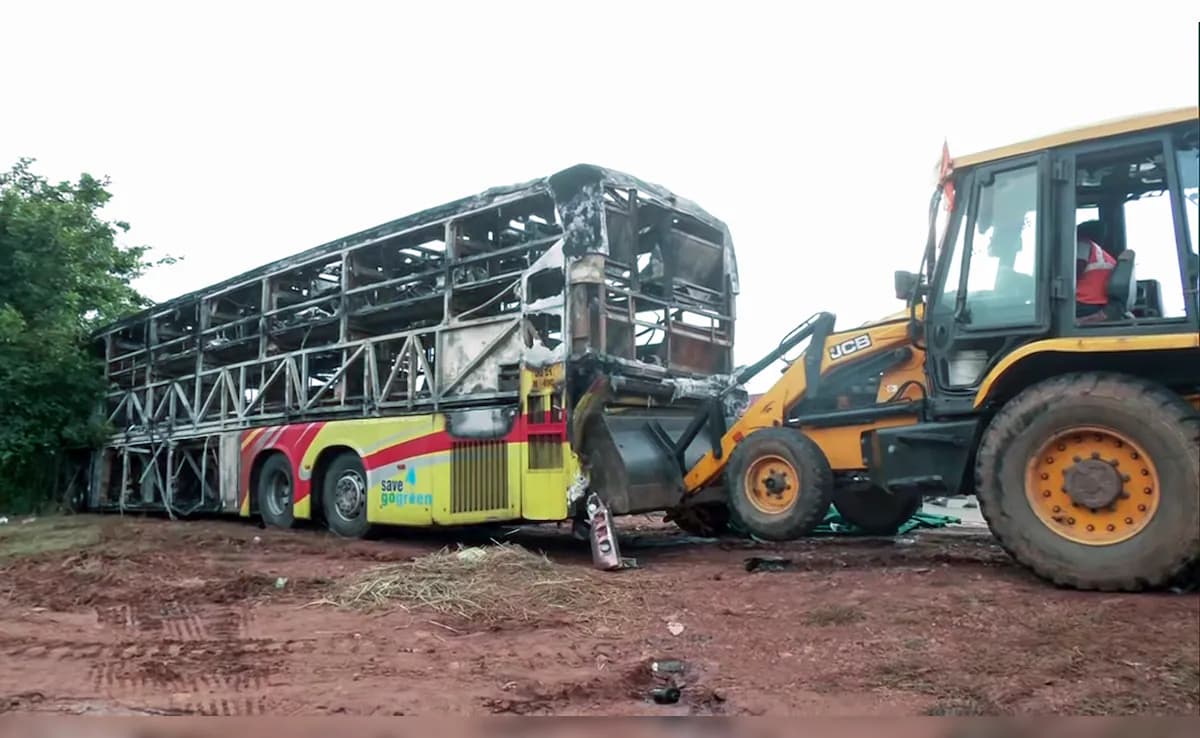
On 24 October 2025, a private sleeper bus traveling from Hyderabad to Bengaluru burst into flames near Chinna Tekuru village on the outskirts of Kurnool, Andhra Pradesh, leaving 19 passengers and a motorcyclist dead. Initial investigation points to a motorcycle becoming lodged under the bus and sparking a fire that rapidly engulfed the vehicle.
The Story
Police said the bus, operated by Kaveri Travels and carrying 44 passengers and two drivers, caught fire around 2:45 a.m. after the motorcycle became trapped under the front axle and was dragged for a long stretch, likely creating friction sparks that ignited leaking fuel. Survivors reported breaking windows to escape as the cabin filled with smoke within minutes.
Twenty-seven occupants, including both drivers, escaped with injuries ranging from minor cuts to burns. Authorities moved the injured to Kurnool Government General Hospital; several were treated as outpatients, while a few required admission. Given the extent of charring, district officials ordered DNA profiling to identify the deceased; samples have been sent to the forensic lab with results expected by 27 October.
Officials noted the bus was registered outside the state and are probing allegations that it had been converted from a seater to a sleeper in violation of norms, alongside possible fuel and electrical safety lapses. Andhra Pradesh Home Minister V. Anitha said the bike appears to have skidded or been run over before getting stuck under the bus; police are also examining eyewitness accounts from a pillion rider who survived
Why It Matters — Bigger Than One Crash
-
A pattern of preventable deaths
Two mass-casualty sleeper-bus fires in quick succession point to systemic, not isolated, failure. When similar conditions (night runs, sleeper layouts, aftermarket electricals, questionable permits) keep showing up, it signals a nationwide safety gap rather than bad luck. -
Post-crash survivability is near-zero in fires
In high-speed night operations, a spark can turn the cabin into a smoke-filled tunnel within minutes. If windows jam, hammers are missing, or exits bottleneck, evacuation fails. That means even “small” defects—like a poorly routed wire or a leaking fuel line—become mass-fatal events. -
Families need rapid identification and closure
Severe charring forces DNA identification. Apart from human trauma, this delays compensation, insurance, and investigations. Every hour lost compounds distress and undermines public trust in the system. -
Economic and governance credibility
Intercity private buses carry millions of workers and students. Repeated tragedies dent confidence in affordable road travel, burden hospitals, and strain local administrations—ultimately becoming a governance issue, not just a traffic one. -
Enforcement signals to operators
Visible accountability (audits, prosecutions for illegal conversions, suspension of fitness certificates) reshapes operator behavior. Absent that, cost-cutting and risky retrofits remain a rational—if deadly—business choice.
Recurring Risks — What Keeps Going Wrong
-
Illegal or unsafe conversions
Seat-to-sleeper retrofits often dodge type-approval norms. Berth partitions, added panelling, and concealed wiring create hidden heat paths and fuel the “flashover” effect. Once ignited, the cabin can become unsurvivable in minutes. -
Overloaded electrical ecosystems
Aftermarket ACs, neon strips, inverters, USB hubs, and subwoofers draw power beyond what the original harness can safely bear. Splices, loose lugs, and unfused branches overheat behind panels where early smoke is undetectable to occupants. -
Fuel-system vulnerability
Leaking motorcycle/bus tanks and lines, combined with friction sparks (e.g., a vehicle dragged under the chassis), are a known ignition cocktail. If diesel lines, return hoses, or saddle tanks are poorly shielded or routed, a small breach escalates fast. -
Exit bottlenecks and missing safety kit
Sleeper layouts reduce aisle width; luggage, parcels, or courier consignments block pathways. Many buses lack working extinguishers at both ends, smoke alarms, illuminated exit signage, and emergency hammers at every third window—basic items that buy precious seconds. -
Night-run operating pressures
Tight schedules, driver fatigue, and high cruising speeds at night shrink reaction windows. A minor obstacle becomes catastrophic if braking distance is long and the undercarriage scoops it into the chassis. -
Fragmented regulation and weak fitness checks
Permits from one jurisdiction, registration in another, operations in a third—this patchwork blurs accountability. Annual or periodic “fitness” inspections often don’t include rigorous electrical thermal-load testing or teardown checks after major retrofits. -
Poor incident-readiness on highways
Rural stretches may lack rapid fire response, crash tenders, or foam capability. Even when bystanders arrive quickly, without tools to break laminated glass or manage fuel fires, rescues stall.
What Should Change Now (Actionable Checklist)
-
Zero-tolerance on illegal sleepers: Immediate audit of sleeper conversions; cancel fitness if retrofit certificates and wiring diagrams aren’t on file.
-
Electrical safety regime: Mandatory third-party electrical inspection after any retrofit; require fused circuits, approved cable gauges, and labeled junctions.
-
Fire detection & egress: Smoke/heat alarms in cabin, illuminated exit paths, hammer every few windows, two serviced extinguishers (front/rear), and a clearly marked second door.
-
Fuel & undercarriage protection: Shield fuel lines/tanks; install spark-arresting guards where feasible; inspect after any underbody impact.
-
Ops discipline: Night-run SOPs (speed caps, staggered rest for drivers, pre-trip electrical/fuel checks), with tamper-proof logs.
-
Unified enforcement: Link permits, fitness, and insurance to a single digital record so any state can flag unsafe buses.
-
Rapid forensics & support: Pre-arranged DNA sampling protocols, family help desks, and time-bound compensation to restore trust.
These aren’t luxuries—they’re the difference between a scare and a catastrophe.
Conclusion
The Kurnool inferno is not an isolated freak event but part of a worrying pattern laid bare by the Jaisalmer tragedy: unsafe designs, unapproved electrical work, and lax enforcement can turn buses into tinderboxes. Swift forensic closure must be matched by a nationwide safety reset for private intercity coaches.
Credits: Reporting inputs referenced from The Hindu (original on-ground accounts), AP News, Hindustan Times, Times of India, and Reuters.