

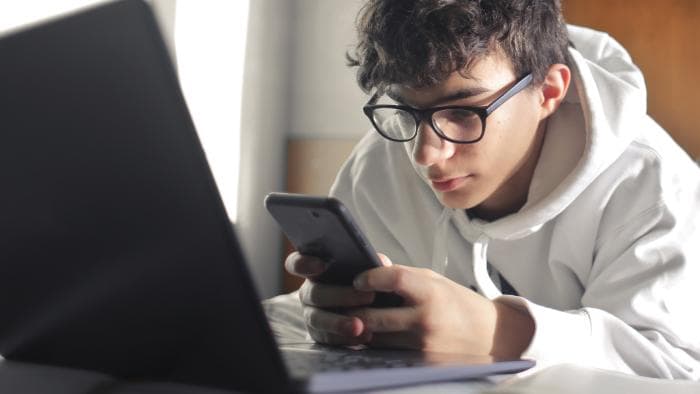
Australia on 10 December 2025 began enforcing a sweeping ban on social media use for children younger than 16, becoming the first country to do so. Prime Minister Anthony Albanese welcomed the change as a moment when “families are taking back power from big tech companies”. As the rules took effect, many children posted farewell messages, and parents reported distraught teenagers suddenly locked out of their favourite apps.
The Story
The ban arises from amendments to Australia’s Online Safety framework that set a legal minimum age of 16 for social media accounts. After a year-long transition, the provisions came into force on 10 December 2025.
In the first phase, the law targets major platforms such as Facebook, Instagram, TikTok, Snapchat, YouTube, X (formerly Twitter), Reddit, Threads, Twitch and Kick. These platforms must take “reasonable steps” to prevent under-16s from holding accounts. Serious or repeated breaches can attract penalties running into tens of millions of Australian dollars.
Enforcement is led by the eSafety Commissioner, who is issuing notices to platforms, asking how they are implementing the minimum age and how many under-age accounts have been removed. Companies are expected to rely on a mix of tools: age estimation based on user behaviour, selfie or face-based age checks, data cross-checks and, in some cases, identity documents or bank-linked verification.
On day one, implementation was uneven. Some teenagers found that their TikTok or Instagram accounts had been abruptly disabled; others claimed to have already discovered loopholes, such as using older relatives’ details or trying to trick facial age-estimation tools. Officials acknowledged that the early days would be messy but argued that regular audits and growing compliance pressure would tighten the system over time.
Reactions have been sharply divided. Many parents, especially those whose children have faced cyberbullying, grooming or sextortion scams, strongly support the move and see it as overdue regulation of addictive platforms. At the same time, a group of teenagers has already taken legal steps to challenge the ban, arguing that it restricts their ability to take part in public debate and online communities.
Young users themselves are split. Some posted emotional farewell notes and “last selfies” before their accounts were shut down. Others used their final hours online to criticise the government and warn politicians that they will remember this policy when they are old enough to vote. Families of under-16 influencers have also raised worries about the financial impact on young creators who rely on brand deals built entirely on social media audiences.
Why It Matters
This is one of the strongest attempts by any democracy to control social media access for minors in the name of mental health and safety. Australian authorities have repeatedly highlighted research linking heavy social media use among teenagers to anxiety, depression, body-image issues, cyberbullying and exposure to harmful content.
For parents, the law signals a shift of responsibility away from the household alone and onto the platforms, which now have a clear legal duty to keep younger children off their services. For technology companies, it is a test case: can strict age-gating be made to work at scale without causing significant privacy risks and unintended exclusion of legitimate users?
Globally, regulators in Europe, North America and Asia are watching closely. If Australia’s model is seen as workable and effective, similar age-based restrictions could spread to other countries, reshaping how children everywhere experience the internet.
Background and Criticisms
Support for the law has been built over years of public debate, campaigns by parents and advocacy groups, and testimonies from families who lost children to online harms. They argue that the old nominal minimum age of 13 was not enforced and was easily bypassed by simply entering a false date of birth.
However, civil liberties groups and digital rights advocates have flagged several concerns:
-
Free expression: the ban may limit young people’s access to political discussions, social movements and peer support.
-
Isolation risks: some vulnerable teens rely on online communities to cope with bullying or difficult family situations; cutting off that space may have side-effects.
-
Privacy and data: robust age verification often requires sensitive identity or biometric data, raising questions about surveillance and data security.
A constitutional challenge has already been initiated, arguing that the law infringes Australia’s implied freedom of political communication. How the courts handle this will shape the long-term stability of the ban.
Practical Implications
In the near term, enforcement is likely to look patchy:
-
Some platforms may over-comply, suspending borderline or suspicious accounts to avoid penalties.
-
Others may lag behind, as they struggle to build accurate and privacy-conscious age checks.
-
Families may see children lose access on some apps but not on others, creating confusion and frustration.
For children, especially during Australia’s summer holidays, the ban could significantly change daily routines. The government is encouraging a shift towards offline activities—sports, hobbies, volunteering and community events. At the same time, it is realistic to expect workarounds: VPNs, shared family accounts, or a shift to smaller, less-regulated platforms.
For technology firms, the ban sends a strong signal: when it comes to minors, the design of algorithms, infinite scroll and engagement-driven feeds can now trigger tough regulatory intervention, not just soft guidelines or voluntary codes.
Conclusion
Australia’s under-16 social media ban is a bold attempt to re-balance power between families and big tech. It reflects a growing global worry about what constant connectivity and algorithm-driven feeds are doing to young minds.
Whether it becomes a model for the world or a cautionary tale will depend on three things: how fairly it is enforced, how carefully it protects privacy, and whether it still leaves young people with enough space to learn, express themselves and connect—safely—both online and offline.