

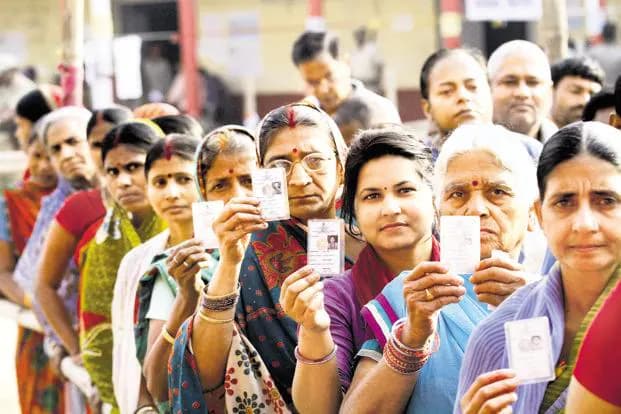
On 30 September 2025, the Election Commission of India (ECI) published Bihar’s final electoral rolls, listing 7.42 crore voters. The special intensive revision (SIR), undertaken after a gap of 22 years, added over 21 lakh new names and deleted 3.6 lakh ineligible entries. The exercise comes ahead of the Assembly elections and is expected to shape the political contest in the state.
The Story
Bihar’s electoral landscape has been formally reset. As of June 2025, the state had 7.89 crore registered voters. The draft electoral roll, released on 1 August, cut this down to 7.24 crore after the deletion of 65 lakh names flagged as deceased, migrated, or untraceable. Following the claims and objections phase, 21.53 lakh fresh applications were accepted, while 3.66 lakh more names were removed. The final list now stands at 7.42 crore electors.
Chief Election Commissioner Gyanesh Kumar, announcing the completion of the SIR, credited the efforts of the Chief Electoral Officer, district election officials, nearly one lakh booth-level officers, and 1.6 lakh booth-level agents of political parties. He described the exercise as “a democratic milestone, ensuring no eligible voter is left behind.”
Bihar Chief Electoral Officer (CEO) Vinod Singh Gunjiyal stated that voters can verify their details online at voters.eci.gov.in. He clarified that applications for inclusion remain open until 10 days before the last date of filing nominations. Assistant Director Apurva Kumar Singh added that dissatisfied voters could appeal under Section 24 of the Representation of the People Act, 1950 — first to the District Magistrate, and then to the CEO.
Physical and digital copies of the rolls have been distributed to political parties, ensuring transparency. Lists of excluded names were shared with district-level officers and displayed publicly, allowing citizens to track changes.
Political reactions reflected familiar divides. BJP spokesperson Niraj Kumar welcomed the revision as “a step towards strengthening democracy and enhancing transparency.” Janata Dal (United) spokesperson Neeraj Kumar said the opposition’s earlier accusations of “vote theft” stood discredited, given the addition of over 21 lakh names, especially from marginalized groups. Opposition party Rashtriya Janata Dal, however, maintained caution, promising a formal response only after its agents and panchayat representatives reviewed the list.
Concept: What Is an Electoral Roll?
An electoral roll is the official list of all eligible voters in a state or constituency. It is the foundation of the electoral process, ensuring that elections are conducted on the basis of universal adult suffrage.
Key features:
-
Eligibility: All Indian citizens aged 18 or above, ordinarily resident in a constituency.
-
Exclusions: Non-citizens, persons of unsound mind declared by a court, and disqualified individuals.
-
Dynamic nature: Rolls require constant updating to reflect births, deaths, migrations, and newly eligible voters.
The process ensures fairness in elections. Inaccurate rolls risk either disenfranchising citizens or enabling bogus voting. Electoral rolls, in essence, are democracy’s attendance register — without a name on the list, one’s right to vote cannot be exercised.
Why It Matters
Electoral rolls form the bedrock of democratic legitimacy. In Bihar, a state known for close contests and high-stakes politics, the accuracy of the roll is particularly significant.
For voters, being included means recognition as a participant in governance. For marginalized communities, often the most vulnerable to exclusion, it represents dignity and empowerment. For political parties, the final figures influence campaign strategies, voter outreach, and booth management.
A flawed roll can lead to allegations of “vote chori” or voter suppression, undermining trust in the system. By contrast, a credible roll strengthens confidence in the electoral process. Much like a cricket scoreboard that must count every run correctly, the voter roll must account for every eligible citizen — neither missing nor inflating numbers.
Background / Context
Legal Framework
-
Article 326, Constitution of India: Establishes adult suffrage as the basis of elections.
-
Representation of the People Act, 1950: Governs preparation, revision, and maintenance of electoral rolls.
-
Section 24, RPA 1950: Provides appeal mechanisms for individuals aggrieved by the decision of electoral registration officers.
Institutional Framework
-
Electoral rolls are prepared and revised under the supervision of the Election Commission of India.
-
Electoral Registration Officers (EROs) oversee constituency-level rolls, supported by Assistant EROs and Booth Level Officers.
-
Political parties are formally integrated into the process through booth-level agents.
Past in Bihar
-
2003: Last special intensive revision.
-
2025: First such revision in 22 years.
Data Highlights
-
Before revision (24 June 2025): 7.89 crore voters.
-
Draft rolls (1 August 2025): 7.24 crore voters.
-
Final rolls (30 September 2025): 7.42 crore voters.
-
Net change: +21.53 lakh additions, –3.66 lakh deletions.
-
Manpower: 243 Electoral Registration Officers, 2,976 Assistant Officers, ~1 lakh Booth Level Officers.
-
Political involvement: 12 major parties, 1.6 lakh booth agents.
Timeline of the Revision
-
24 June 2025: 7.89 crore voters recorded before revision.
-
1 August 2025: Draft rolls released; 65 lakh deletions announced.
-
August–September 2025: Claims and objections filed; hearings conducted by district authorities.
-
30 September 2025: Final rolls published with 7.42 crore names.
Implications
For Voters:
The updated rolls provide citizens with greater access to verification through digital portals. Yet, digital exclusion remains a concern in rural areas where internet penetration is limited. Efforts by booth-level officers will remain crucial to bridge the gap.
For Political Parties:
Campaign strategies will now account for the 21.5 lakh new voters, many of whom are first-time electors. Parties are expected to intensify outreach to young and marginalized groups. At the same time, deletions may become flashpoints if communities allege targeted disenfranchisement.
For Election Management:
The EC’s credibility hinges on the integrity of this exercise. After years of criticism over “bogus voters” and missing names, the success of the SIR will be measured by the extent to which election-day complaints are reduced.
For Democracy:
The revision reinforces the democratic motto: “No eligible voter left out, no ineligible person included.” However, the 22-year gap between intensive revisions highlights an institutional weakness. Regular, technology-driven updates could prevent such large-scale discrepancies in the future.
Conclusion
Bihar’s final electoral rolls for 2025 mark a crucial step toward credible elections. With 7.42 crore names, the list balances additions and deletions after exhaustive scrutiny. For voters, it is a reaffirmation of their democratic right; for parties, it sets the stage for high-stakes campaigning. Ultimately, the accuracy of this roll will determine not just the fairness of Bihar’s Assembly election, but also public confidence in India’s electoral machinery.