

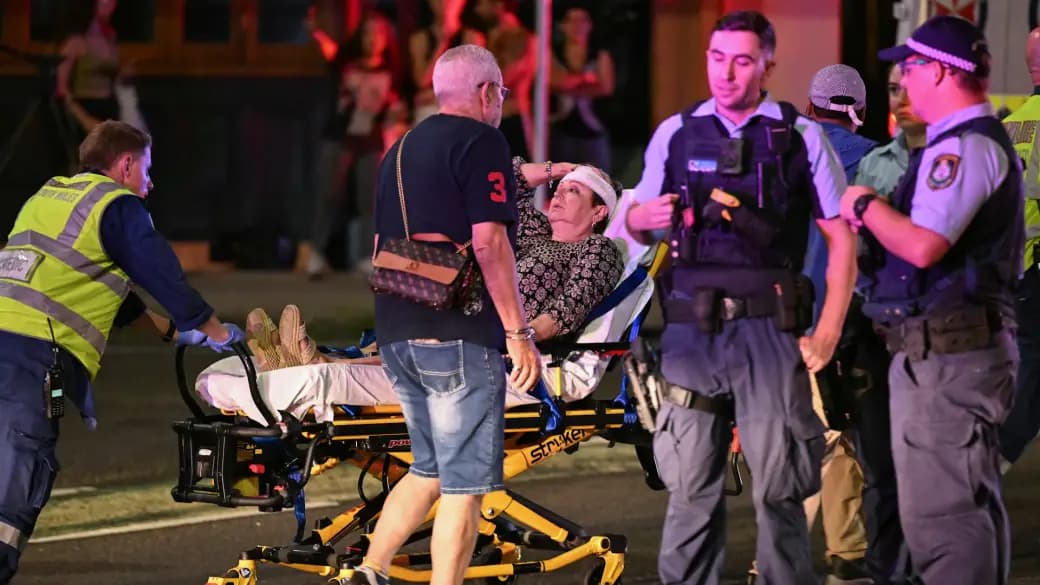
Bondi Beach is usually shorthand for sunlit ease—surf, cafés, and the relaxed confidence of a city that believes violence belongs elsewhere. On December 14, that self-image was shattered. A Hanukkah gathering turned into a killing field when two gunmen opened fire for several minutes, leaving 15 victims dead and dozens injured; one of the attackers was also killed at the scene. Australia now faces an uncomfortable truth: even the world’s most celebrated gun-control success stories are not immune to ideological violence when legal access, radicalisation pathways, and intelligence blind spots collide. The question is not whether Australia has strong laws; it is whether its systems can keep pace with a changing threat landscape.
What happened
A targeted act with wider implications
Investigators have described the shooting as terrorism and as a hate-driven attack on a Jewish community event. The attackers, a father and son, reportedly used firearms that were legally licensed and registered. One suspect had been on the radar of domestic security agencies, though not assessed as an imminent threat at the time.
The attack has prompted the federal government to flag changes to firearms licensing rules and to accelerate steps towards a national firearms register—an idea long discussed, unevenly implemented, and politically difficult in a federal system.
Why this attack hits Australia differently
A post–Port Arthur country confronted again
The 1996 Port Arthur massacre transformed Australia’s gun policy and is often cited globally as proof that decisive regulation can reduce gun deaths. The Bondi attack does not negate that record; it complicates it. It suggests that while broad gun prevalence may be contained, determined actors can still exploit loopholes, time-lags, and licensing assumptions—especially if oversight focuses on initial eligibility rather than ongoing risk.
A public safety shock layered onto an antisemitism anxiety
The attack lands in a period of heightened concern about antisemitism, with Jewish institutions in Australia reporting increased threats, vandalism, and harassment since late 2023. Against that backdrop, any mass-casualty incident at a Jewish gathering becomes more than a crime scene: it becomes a stress test of the state’s promise of equal citizenship and safety.
Extremism is not static, and monitoring cannot be mechanical
The “known to authorities” paradox
Modern security failures often share a bleak pattern: perpetrators are “known,” but the signal is not strong enough to justify action under the law, or the risk is misread because it evolves faster than watchlists. Monitoring alone is not prevention; prevention requires structured reassessment—what changed, when, and why.
A sharper approach needs three pillars:
-
Dynamic risk review: periodic reassessment of individuals of concern, especially when life events, online behaviour, travel patterns, or association networks shift.
-
Better triage: clear thresholds for escalation so that agencies are not either overwhelmed by noise or paralysed by caution.
-
Community intelligence without stigma: relationships with communities that help detect early warning signs without turning minority groups into permanent suspects.
The online-to-offline pipeline
Extremist ideologies today do not require physical “cells” to radicalise. They need attention, grievance, and a digital ecosystem that turns prejudice into purpose. Australia’s monitoring strategy must recognise that hate-driven violence can be incubated through:
-
closed online forums and encrypted channels,
-
“ideological mashups” combining conspiracies, sectarian hate, and violent fantasies,
-
and global events used as emotional accelerants to justify local targeting.
This demands capability beyond traditional surveillance—specialised digital investigation, faster lawful access procedures, and stronger coordination between platforms, police, and intelligence agencies.
Gun licensing: the gap is not only about access, but about continuity
Licensing that assumes stability can fail in a radicalisation era
Licensing regimes are built around screening at the point of issuance—criminal history, mental health flags where legally accessible, safe storage requirements, training, and category restrictions. But radicalisation is a time-dependent process. A person can be “clean” at the time of licensing and high-risk years later.
That is why proposals to review licence validity periods, tighten renewals, and link renewals to refreshed risk assessments matter. The key is not to punish lawful gun owners; it is to ensure the system is honest about the fact that risk can change.
A national firearms register is only as strong as its enforcement spine
A register is not a magic wand. It becomes valuable when paired with:
-
consistent reporting obligations across states,
-
real-time updates on transfers, storage compliance, and licence status,
-
and meaningful penalties for non-compliance.
Without that, a register can become a database that looks reassuring while reality moves around it.
Protecting minorities without fraying a democratic society
Security presence must not become symbolic
When minority communities feel threatened, state protection cannot be a photo-op after tragedy. It must be practical: security audits for community events, funding for protective infrastructure, and clear channels for threat reporting and rapid response.
At the same time, protection cannot become a pretext for suppressing lawful speech or peaceful protest. Democracies stumble when they confuse criticism of a state’s policies with hatred of a people, or when they allow real hatred to hide behind “political expression.” The distinction is difficult, but it is essential.
Hate crimes enforcement must be credible, not selective
If hate crime laws appear inconsistently enforced—strict for some targets, lenient for others—public trust collapses and communities retreat into fear. Credibility requires:
-
consistent thresholds for prosecution,
-
faster case movement for hate-driven violence,
-
and transparent reporting on outcomes.
The foreign influence layer
Australia has also publicly raised concerns in recent years about foreign-directed or foreign-influenced hostility, including allegations linked to arson incidents. Whether or not any foreign hand is connected to Bondi, the larger principle stands: hate ecosystems can be fertilised by external actors who benefit from polarisation in open societies.
Countering this requires not only intelligence work but also:
-
stronger scrutiny of foreign funding and covert influence pathways,
-
tighter integrity checks around proxies and front organisations,
-
and public communication that reduces panic while raising vigilance.
What responsible leadership looks like after Bondi
Avoid politicising grief
It is tempting for international and domestic actors to weaponise tragedy—blaming foreign policy decisions, multiculturalism, migration, or ideology in broad strokes. That route produces heat, not safety. Australia’s priority must be operational: find the full chain of culpability, close system gaps, and protect those at risk.
Build a prevention ecosystem, not just a response machine
The hard work is quiet work:
-
earlier detection of radicalisation trajectories,
-
better inter-agency coordination,
-
tighter licensing logic that recognises changing risk,
-
and community reassurance that feels real on the ground.
If Australia treats Bondi as an aberration, it will repeat the cycle of shock and forgetting. If it treats Bondi as a systemic warning, it can strengthen both security and social trust—without surrendering the freedoms that define it.
Source credits: Reuters; Associated Press; ABC News (Australia); official Australian government statements and public briefings; Australia’s Special Envoy to Combat Antisemitism documents and reporting.