

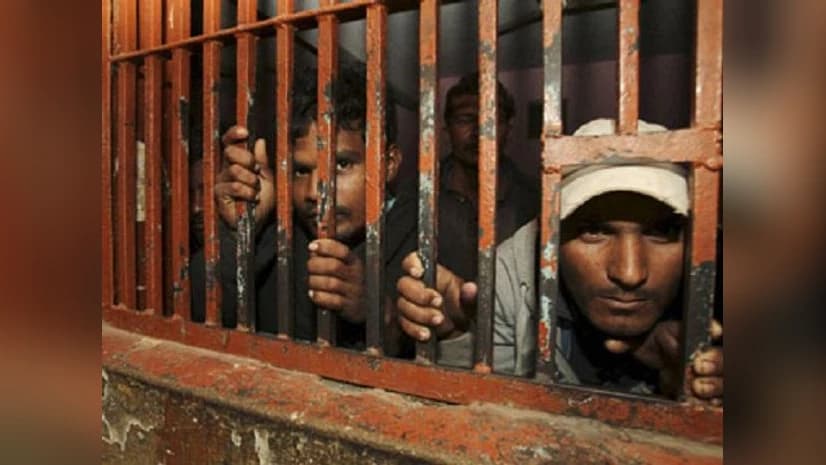
India’s prisons were never designed with disabled bodies in mind. They were built to confine, control and discipline a presumed “able-bodied” prisoner. The Supreme Court’s recent directions on providing disability-related support inside jails have, therefore, struck at the heart of this carceral culture. By insisting that prison systems must comply with the Rights of Persons with Disabilities Act, 2016 and constitutional guarantees of equality and dignity, the Court has reframed prison conditions as a rights question, not merely an administrative matter.
The Story
The immediate trigger for the Court’s intervention is a petition seeking implementation of existing disability law in places of detention. It draws on the harsh experiences of prisoners such as G.N. Saibaba and Father Stan Swamy, both of whom lived with serious physical conditions and sought basic accommodations — special bedding, assistive devices, accessible toilets, warm clothing, straws and sippers. These requests, tied directly to their ability to survive prison life with dignity, were delayed or denied, with grave consequences.
The editorial situates these cases within the framework of:
-
Constitutional guarantees of equality and life with dignity for prisoners, and
-
The Rights of Persons with Disabilities (RPwD) Act, 2016, which obligates governments to ensure support for services within their control, including prisons.
Yet the failures in implementation are not just individual lapses; they are structural.
-
Prisons are a State subject under the Constitution.
-
But the Union government influences policy through a Model Prison Manual, central laws and advisories.
-
Recent national guidelines on prisoners with disabilities have recognised the need for accessible infrastructure and procedures.
-
However, many State prison manuals still assume a standard, able-bodied prisoner, with no systematic obligations towards those who cannot move, see, hear or use sanitary facilities without assistance.
In a separate matter, the Supreme Court has already declared caste-based segregation in jails unconstitutional, and has taken suo motu cognisance to monitor discrimination in prisons along caste, gender and disability lines. Together, these interventions push the state to confront the discriminatory foundations of its prison practices.
Carceral Culture, Caste and Disability
The editorial reminds us that colonial and postcolonial prison rules historically encoded social hierarchies:
-
Sanitation and menial tasks were routinely assigned to Dalit and Adivasi prisoners,
-
Dalits and Adivasis are over-represented in prison populations relative to their share in the general population,
-
Yet prison rules lack clear obligations to support prisoners who cannot perform such tasks due to disability.
The National Crime Records Bureau (NCRB) also records a noticeable number of inmates with mental illness, indicating that disability in prisons is not limited to physical impairments. In the Muruganantham (2025) case, the Court had already criticised NCRB for not disaggregating prison data by disability; the current order extends those mandates nationwide.
It is reasonable, therefore, to assume that many prisoners sit at the intersection of caste bias and disability — experiencing layers of disadvantage simultaneously. Yet, prison rules and oversight mechanisms have repeatedly normalised the idea that discomfort, inaccessibility and humiliation are simply part of the sentence, not harms the state is obliged to prevent.
This is the core of the “carceral culture” the editorial critiques: a mindset where the expansion of punitive and security functions is prioritised, while rights-related obligations are treated as optional.
Why It Matters
For governance and rights discourse, this moment is significant for several reasons:
-
From Charity to Rights
Disability-related accommodations in prisons are often viewed as discretionary favours. The Court, drawing on the RPwD Act, repositions them as legal entitlements and constitutional necessities. Accessibility is not a luxury; it is part of Article 14 and Article 21 protections. -
Intersectionality in Practice
The recognition that caste, disability and incarceration overlap forces policymakers to confront structural discrimination, not just isolated incidents. A Dalit or Adivasi prisoner with disability faces layered barriers that cannot be addressed by one-size-fits-all rules. -
Data, Visibility and Accountability
Without disaggregated data on caste and disability in prisons, abuses remain invisible and reforms cannot be monitored. The editorial stresses that routine publication of such data is essential for public oversight and meaningful judicial follow-up.
The Way Forward: Manuals, Money and Monitoring
The editorial lays out a three-layered reform agenda if the Supreme Court’s directions are to move beyond paper.
1. Rewrite Prison Manuals
Both the Centre and the States must amend prison manuals to:
-
Define clear duties related to disability accommodations (assistive devices, accessible toilets, ramps, modified beds, access to medication and therapy),
-
Mandate disability screening at admission,
-
Provide individualised support plans where necessary, integrating physical, sensory and psychosocial disabilities,
-
Ensure training for prison staff on disability rights and non-discrimination.
Without codified duties, implementation will remain uneven and dependent on individual jail superintendents’ goodwill.
2. Confront Carceral Austerity
The editorial uses the phrase “carceral austerity” to describe a budgetary pattern where:
-
Funds flow towards security, surveillance and infrastructure that supports control, but
-
Spending on rights-related functions — like accessibility, medical care, counselling, legal aid or rehabilitation — remains neglected.
To reverse this, prison budgets must be redesigned so that:
-
Accessibility, reasonable accommodation and non-discrimination are treated as core obligations,
-
Not as add-ons that can be postponed or cut when finances are tight.
This requires political will to accept that punishment in India is deprivation of liberty, not deprivation of dignity or bodily integrity.
3. Independent Inspections and Public Oversight
Finally, the editorial stresses the need for independent inspections and routine publication of disaggregated data on:
-
Caste,
-
Disability,
-
Gender and other vulnerabilities.
Such inspections could involve:
-
Judicial officers,
-
Human rights commissions,
-
Independent experts and civil society.
Without external monitoring, the Supreme Court’s directions risk becoming “paper tigers” — strong on principle, weak in practice.
Conclusion
The Supreme Court’s directions on disability-related facilities in prisons, and its condemnation of caste-based segregation, open a window to rethink carceral culture in India. They remind the state that prisons are not spaces outside the Constitution, and that equality, dignity and accessibility do not stop at the prison gate.
For this promise to be real, the Union and State governments must rewrite prison manuals, reallocate budgets, collect and publish disaggregated data, and subject prisons to independent scrutiny. Only then can India move from a culture of punitive neglect to a framework where rights follow the prisoner, even behind high walls and locked doors.