

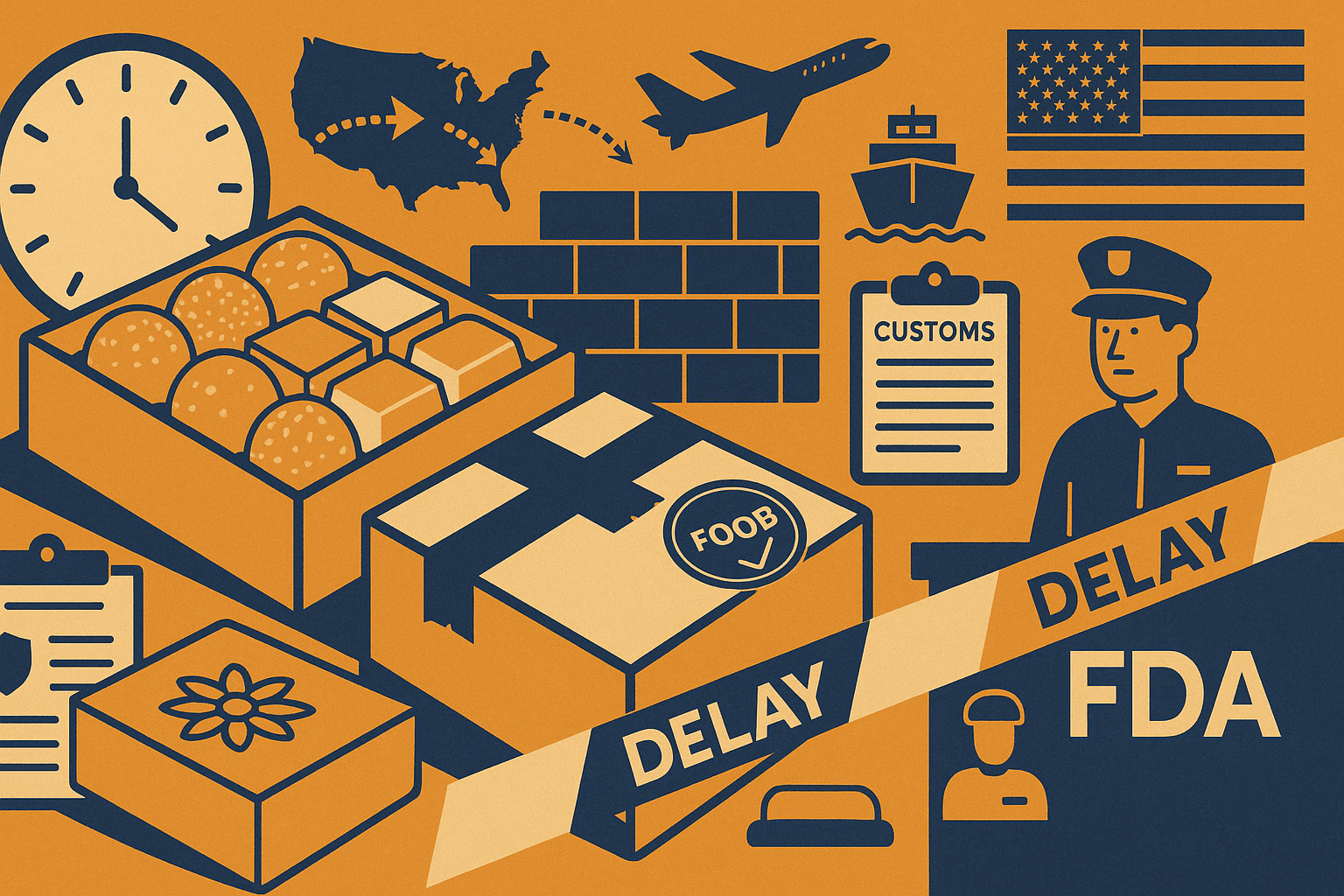
This season’s plunge in mithai/namkeen shipments to the U.S. isn’t just “holiday congestion.” Two things collided: Washington ended duty-free entry for low-value parcels (the old de-minimis $800 rule), and carriers layered on extra charges and paperwork. Net effect: duties at the door, higher rates, and more holds at customs—enough to derail perishable gifts with 10–14-day shelf lives.
What changed on the U.S. side
-
No more duty-free “small parcels.” A White House executive action suspended the $800 duty-free threshold for all origin countries. Every shipment—courier or post—now attracts applicable.
-
Postal pause and restart with duties. India briefly halted U.S. postal dispatches while systems were built to pre-collect U.S. duties; services have resumed with duties charged (including interim flat schemes during transition).
-
Higher headline tariffs on Indian goods. Separate from de-minimis, the U.S. added punitive duties on products of Indian origin (policy write-ups describe an added 25%, with some reportage calling total effective rates “up to 50%” depending on line items). This is why even small gift boxes can face steep charges.
-
Express-carrier frictions. DHL/FedEx/UPS now require fuller data for low-value shipments; recipients can be billed duties on delivery if the shipper didn’t prepay. Carriers also levy variable “Emergency Situation”/demand surcharges on top of base freight.
Bottom line: even a ₹3,000–₹5,000 mithai box can trigger a duty-collection event in the U.S., plus carrier fees—causing holds and delivery slippage around Deepavali (Oct 20, 2025).
Why food gifts are getting flagged more
-
Documentation + admissibility. Store-bought, sealed, ingredient-labeled sweets/snacks generally clear; meat/egg components, unsealed or homemade items risk seizure or delays. You must declare food; businesses shipping food face FDA requirements.
-
Recipient-pays duties. If you didn’t choose DDP (duties taxes prepaid), the carrier will ask the U.S. family to pay before release—some parcels then sit uncollected.
-
Screening pressure. With de-minimis gone, more packages fall into “formal” screening—extra checks = time.
Editorial: this isn’t just “tariffs vs. mithai”—it’s policy hitting people
Diwali gifting is a cultural bridge for the Indian diaspora. But the U.S. de-minimis shutdown—originally aimed at curbing e-commerce abuses and narcotics flow—has a broad splash radius: families, micro-exporters, and small caterers get caught by industrial-scale rules built for mass trade. A festive box shouldn’t be treated like a container ship. Policymakers on both sides could carve out low-risk food gifts—pre-labeled, sealed, light-weight—under a simplified lane with prepaid duties and fast release. Until then, planning (or switching channels) is your only defense.
If you still want to ship mithai this week: a practical playbook
-
Choose “DDP” at booking (duties & taxes prepaid). Yes, it costs more upfront; it avoids recipient-side holds that kill shelf life. Check your carrier’s DDP option.
-
Send only commercial, sealed packs with ingredient & weight labels (dry sweets/snacks fare best). Avoid homemade/fresh dairy-heavy items; always declare food.
-
Single-box, lighter consignments. Split shipments increase per-piece fees and inspection risk.
-
Complete data. Put full contents (HS description), value, and “Gift—personal use” on the invoice; attach serialised item list. Carriers now reject vague descriptions. Time cushion. Even with express lanes running 4–5 days, build a 7–9 day buffer this week because duty billing can add 24–72 hours. (Carriers warn of customs-related delays under new rules.)
-
Keep proof handy. Save purchase invoices and ingredient sheets; CBP may ask.
Smarter alternatives (so the sweets actually arrive for Diwali)
-
U.S. fulfilment via Indian sweet shops. Many U.S. Indian bakeries now offer authentic motichur, kaju katli, badusha etc.; you can place local orders for same-week delivery—no customs risk.
-
Partner brands with U.S. warehouses. Some India brands stock in New Jersey/Texas/California; check if your favorite shop has a U.S. distributor.
-
Gift cards / e-vouchers for diaspora-area stores; add a printed note from Chennai/Delhi to keep the sentiment.
(These options dodge the new duty regime entirely and keep your mithai fresh.)
Quick FAQ
-
Are dry namkeen and sweets allowed? Generally yes, commercially packaged & declared; meat-based items are a no. When in doubt, check CBP guidance. Why did my courier ask family to pay? You sent DAP (duties unpaid). With de-minimis gone, everyone pays duties unless the sender prepays.
-
Are the tariffs really that high? The U.S. ended duty-free small parcels and also layered extra duties on Indian goods; depending on product lines and the interim postal scheme, the total effective rate can be steep.
Bottom line
For Deepavali on October 20, the safest way to keep the tradition intact is either DDP-prepaid express with labeled, dry, sealed sweets and a week’s buffer, or buy within the U.S. this time and resume parcels once the new processes settle. The policy will likely stay; our habits must adapt so the love still arrives on time—even if the laddus don’t always fly.