

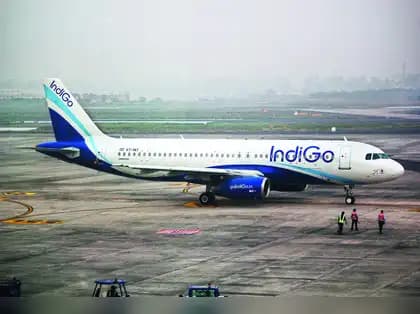
India’s aviation regulator has launched a direct crackdown on IndiGo, the country’s largest airline by market share, after prolonged disruptions left passengers stranded across airports. The Directorate General of Civil Aviation (DGCA) will station nine senior officials at IndiGo’s headquarters in Gurugram to continuously monitor its fleet deployment, pilot roster, network planning and compensation to affected passengers. The move signals that the government now sees the disruption not as a routine operational issue, but as a systemic failure requiring on-site regulatory oversight.
The Story
The trigger for the DGCA’s hard line is the massive scale of flight delays and cancellations since early December. These followed IndiGo’s failure to adequately prepare for new duty-time rules that reduce night-time flying hours and increase mandatory rest for pilots. Instead of a smooth transition, the airline’s schedules buckled, with pilots, cabin crew and aircraft availability falling out of sync.
On Wednesday, DGCA announced that nine of its senior officials will be deployed at IndiGo’s corporate office. Their mandate is wide:
-
Fleet and network planning – to see whether the airline’s schedule matches its realistic capacity under the new crew rest rules.
-
Pilot roster and crew utilisation – to ensure duty-time limits, rest periods and safety norms are actually respected in practice, not just on paper.
-
Passenger-facing issues – especially refunds, compensation, baggage handling and the pattern of delays and cancellations.
Two of the nine officials will specifically track refunds and compensation. This is significant because passengers have complained of poor communication and uncertain redress. DGCA rules provide for:
-
₹10,000 compensation for cancellations when the scheduled flying time is up to two hours, and
-
₹20,000 for delayed, missing or damaged baggage.
IndiGo has reportedly told the government that it has released ₹1,158 crore in refunds so far, but it has not made public the break-up or compensation figures, leaving a transparency gap that the regulator now wants to close.
The officials posted at IndiGo HQ will also conduct inspections at airports over the next two–three days and submit a comprehensive report on:
-
Ground handling,
-
Baggage management,
-
Passenger care (meals, accommodation, rebooking), and
-
Overall status of flight operations.
Parallel to DGCA’s move, the government has set up a four-member panel to inquire into the disruption. Notices have been issued not just to IndiGo’s chief executive officer Pieter Elbers but also to its chief operating officer Isidre Porqueras, signalling a focus on top-level accountability.
Mr. Elbers has been summoned by DGCA for a meeting to explain:
-
How and when the airline plans to restore full operations,
-
Its recruitment pipeline for pilots and cabin crew,
-
Systems for timely refunds and baggage return, and
-
Its broader strategy to prevent a repeat of such disruption.
Amid rising criticism on social media over the board’s role, IndiGo released a video message from its chairman, Vikram Singh Mehta. He rejected allegations that the airline had “engineered” the crisis or tried to bypass new pilot rest rules, insisting that there was no attempt to game the regulatory framework.
Why It Matters
This is not just a story of one airline’s mismanagement; it is a test case for India’s aviation governance. IndiGo dominates the domestic market. When such a large carrier stumbles, the impact is system-wide: airport congestion, missed connections, stranded passengers, and reputational damage to Indian aviation as a whole.
DGCA’s decision to physically embed officials inside a private airline’s HQ is extraordinary. It reflects:
-
Regulatory impatience with repeated disruptions, and
-
A shift from reactive notices to proactive, on-site supervision.
For passengers, it signals that the State is finally prioritising refunds, baggage and compensation as core regulatory concerns, not just safety and airworthiness. For airlines, it is a clear warning that failure to anticipate policy changes—such as revised crew duty-time norms—can attract intrusive oversight.
Background / Context
The immediate backdrop is a tightening of crew duty and rest regulations designed to reduce pilot fatigue, especially during night operations. Such changes improve long-term safety but require:
-
Careful rescheduling of flights,
-
Adequate hiring of pilots and cabin crew, and
-
A buffer capacity to absorb the transition shock.
IndiGo appears to have underestimated the operational impact of these reforms. When the new rules kicked in, it did not have enough rested crews for its ambitious network. The result was cascading cancellations, delays, and baggage pile-ups at major airports such as Delhi.
The Prime Minister’s Office (PMO) has already stepped in, holding meetings with the Civil Aviation Ministry, DGCA and the Airports Authority of India (AAI). This escalation from sectoral regulator to the PMO underlines the political sensitivity of disruptions that affect lakhs of passengers, especially in the busy winter and festive travel window.
Governance and Policy Implications
From a UPSC and public policy lens, the IndiGo episode illustrates several governance themes:
-
Regulatory Capacity and Assertiveness
DGCA is often criticised for being understaffed and reactive. Stationing nine officers at a single airline’s HQ shows an attempt to move towards real-time supervision when required. The success of this experiment will shape future enforcement strategies across the sector. -
Balancing Safety and Commercial Pressures
New pilot rest rules are aimed at safety, but airlines face pressure to maintain high utilisation of aircraft and crew. The case highlights the tendency of carriers to push the limits of scheduling and the regulator’s duty to ensure that safety norms are not diluted in the name of efficiency. -
Passenger Rights as a Policy Priority
Focusing two officers exclusively on refunds and compensation is a recognition that consumer protection is no longer peripheral. Enforcement of compensation norms, transparency in reporting refunds, and time-bound baggage resolution are now core performance indicators. -
Board Oversight and Corporate Governance
Public anger has questioned the role of IndiGo’s board in anticipating and managing such a large risk. The chairman’s video statement shows that communicative, visible boards will increasingly be expected to answer for operational crises, not just financial results. -
Crisis Management Frameworks
The government’s four-member inquiry panel, along with DGCA’s on-site presence, may evolve into a template for responding to future aviation crises—balancing regulatory pressure with the need to keep capacity in the market.
Conclusion
The DGCA–IndiGo standoff is more than an internal industry issue; it is a stress test of India’s regulatory will, corporate governance standards and respect for passenger rights. If handled firmly but fairly, the episode could push airlines to plan more conservatively, invest in staffing and systems, and treat compensation not as a grudging cost but as a legal obligation.
For the State, the lesson is equally clear: sectoral reforms—such as safer duty-time norms—must be backed by continuous oversight and credible penalties. Only then will India’s aviation story be not just about rapid growth in passenger numbers, but also about reliability, safety and respect for every flyer caught in a disruption they did not create.