

Back-to-back offshore earthquakes near Mindanao show how Earth’s crust releases accumulated stress along active plate margins. To read these events well, you need the basics, what quakes are, how seismic waves travel, why some parts of the world shake more, and what the Ring of Fire really means.
The Story
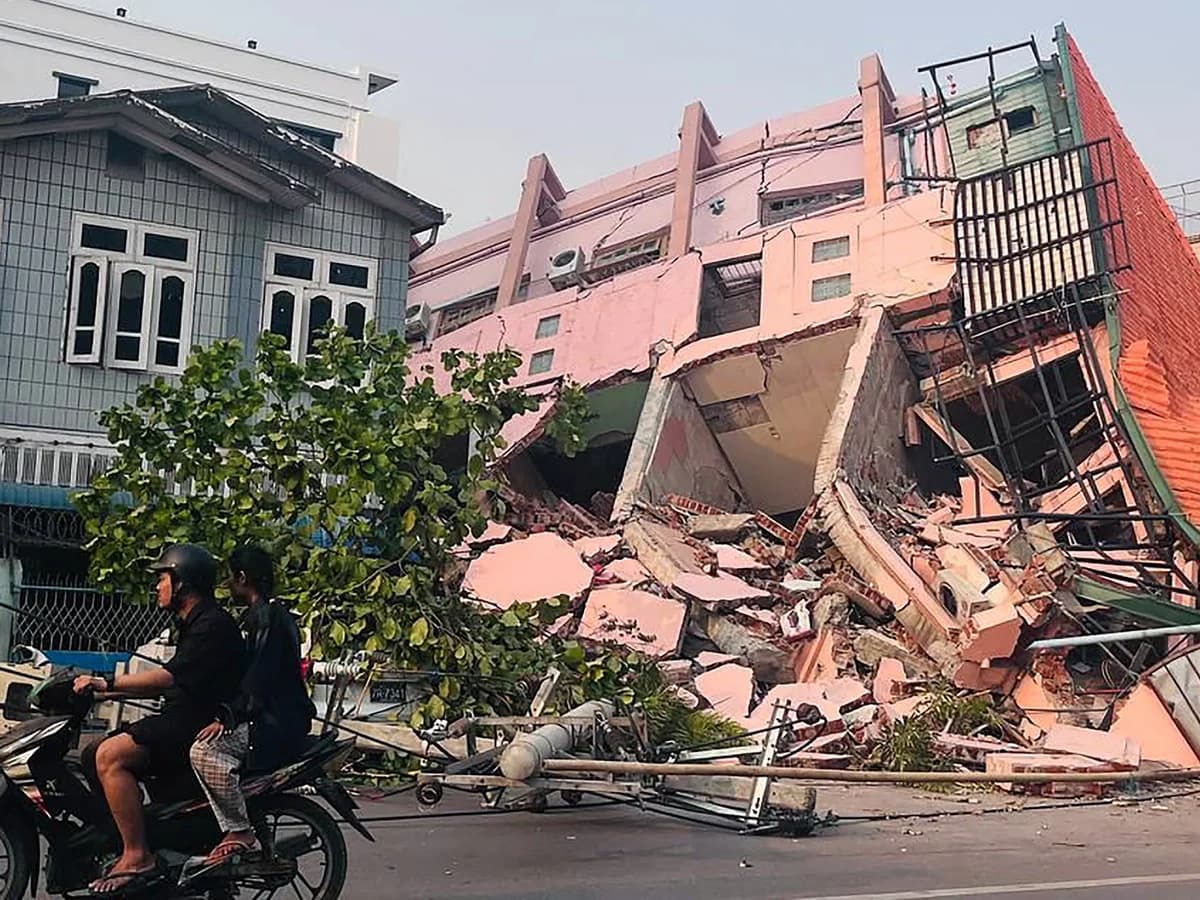
At least seven people died after magnitude 7.4 and 6.7 earthquakes struck hours apart off southern Philippines. The region sits where small plates and trenches interact, so powerful mainshocks can be followed by strong aftershocks or an earthquake doublet. Offshore ruptures can displace the seafloor, hence the short-lived tsunami warnings.
Earthquake Anatomy in One View
-
Focus or hypocenter: the point inside Earth where rupture begins.
-
Epicenter: the point on the surface directly above the focus.
-
Fault: a fracture where rocks slip. Slip can be strike-slip, normal or reverse/thrust.
-
Magnitude vs intensity: magnitude measures released energy at source; intensity measures shaking at a place.
Seismic Waves: P, S and the Surface Pair
Body waves, travel through Earth
-
P waves (primary): compressional, fastest, first to arrive. Travel through solids, liquids and gases. Particle motion is back-and-forth in the direction of travel.
-
S waves (secondary): shear, slower, second to arrive. Travel only through solids because liquids cannot support shear. Particle motion is side-to-side or up-down, perpendicular to travel.
Surface waves, travel along the crust
-
Love waves: horizontal shearing, typically cause strong sideways shaking that damages buildings.
-
Rayleigh waves: rolling, elliptical motion that lifts and drops the ground, often felt longest.
Arrival order at a station is usually P then S then surface waves. The time gaps help locate the epicenter.
Shadow Zones: What They Reveal
-
S-wave shadow: S waves vanish beyond about 103 degrees from the epicenter because they cannot pass through the liquid outer core.
-
Subduction zones: an oceanic plate dives beneath another plate. Big, deep and tsunamigenic quakes are common. Example, Philippine Trench, Japan Trench, Peru–Chile Trench.
-
Continental collision: two buoyant plates crumple and thicken. Large but generally shallower crustal quakes. Example, Himalaya.
-
Transform boundaries: plates slide past each other. Frequent shallow quakes. Example, San Andreas, North Anatolian, Philippine Fault.
-
Rift and mid-ocean ridges: plates pull apart. Moderate quakes linked to magmatism and normal faulting.
-
Intraplate quakes: within a plate due to reactivation of old faults or local stress. Less common but can be damaging.
-
Volcano-tectonic events: magma movement fractures rock, producing swarms.
-
Human-induced: reservoir loading, mining, fluid injection can trigger small to moderate events.
Why the Philippines Shakes So Often
-
The Philippines lies in a complex plate junction. The Philippine Sea Plate subducts westward beneath the archipelago along trenches like the Philippine Trench and Cotabato Trench, while the Philippine Fault accommodates strike-slip motion along the islands.
-
Subduction plus major strike-slip faults means frequent strong quakes and volcanic activity. Offshore sources also raise tsunami risk.
Earthquake “Pairs” and Aftershocks
-
Strong events can come as a doublet: two mainshocks of similar size hours or days apart on adjacent fault patches.
-
More commonly, a mainshock is followed by a decaying aftershock sequence that can last weeks to months as the crust re-equilibrates.
-
Either pattern can trigger landslides, especially on steep, water-saturated slopes.
Global Vulnerable Areas
-
Circum-Pacific belt, the Pacific Ring of Fire: the most seismically active belt on Earth. Subduction zones and arc volcanism ring the Pacific from Chile up to Alaska, across to Japan and Southeast Asia, then down to New Zealand.
-
Alpide belt: from the Mediterranean through Turkey, Iran and the Himalaya into Myanmar.
-
Oceanic ridges and transforms: mid-Atlantic, Indian Ocean and Southwest Indian Ridge systems.
-
High exposure also depends on population density, building stock, soil type and preparedness. Soft sediments amplify shaking compared to hard rock.
The Pacific Ring of Fire, in Brief
A chain of trenches, volcanic arcs, and transform faults around the Pacific basin. Subducting slabs scrape and lock against overriding plates, storing elastic strain until faults rupture. The same process feeds magma into arc volcanoes. Hence the tight coupling of big quakes, tsunamis and active volcanism around the rim.
Tsunamis: When Do Quakes Raise the Sea
-
Requires vertical seafloor displacement or large submarine landslides.
-
Highest risk comes from shallow megathrust quakes at subduction zones.
-
Not every offshore quake triggers a tsunami. Magnitude, depth and fault geometry matter.
Practical Takeaways and Preparedness
-
Drop, Cover, Hold during shaking. Evacuate coastlines to higher ground if a long or strong quake occurs and official alerts follow.
-
Build right: enforce seismic codes, retrofit critical infrastructure, avoid weak-story designs.
-
Site matters: map soft soils, liquefaction zones and landslide-prone slopes.
-
Early warning systems can give seconds of lead time by detecting P waves first.
-
Aftershocks: expect many. Stay away from damaged structures until cleared.
Conclusion
The Mindanao double event fits the physics of an active subduction setting. P and S arrivals, surface-wave damage potential and shadow-zone logic are the toolkit scientists use to understand such quakes. Geography sets the stage, but risk is shaped by how and where we build, how quickly we warn and how well communities rehearse what to do when the ground starts to move.