

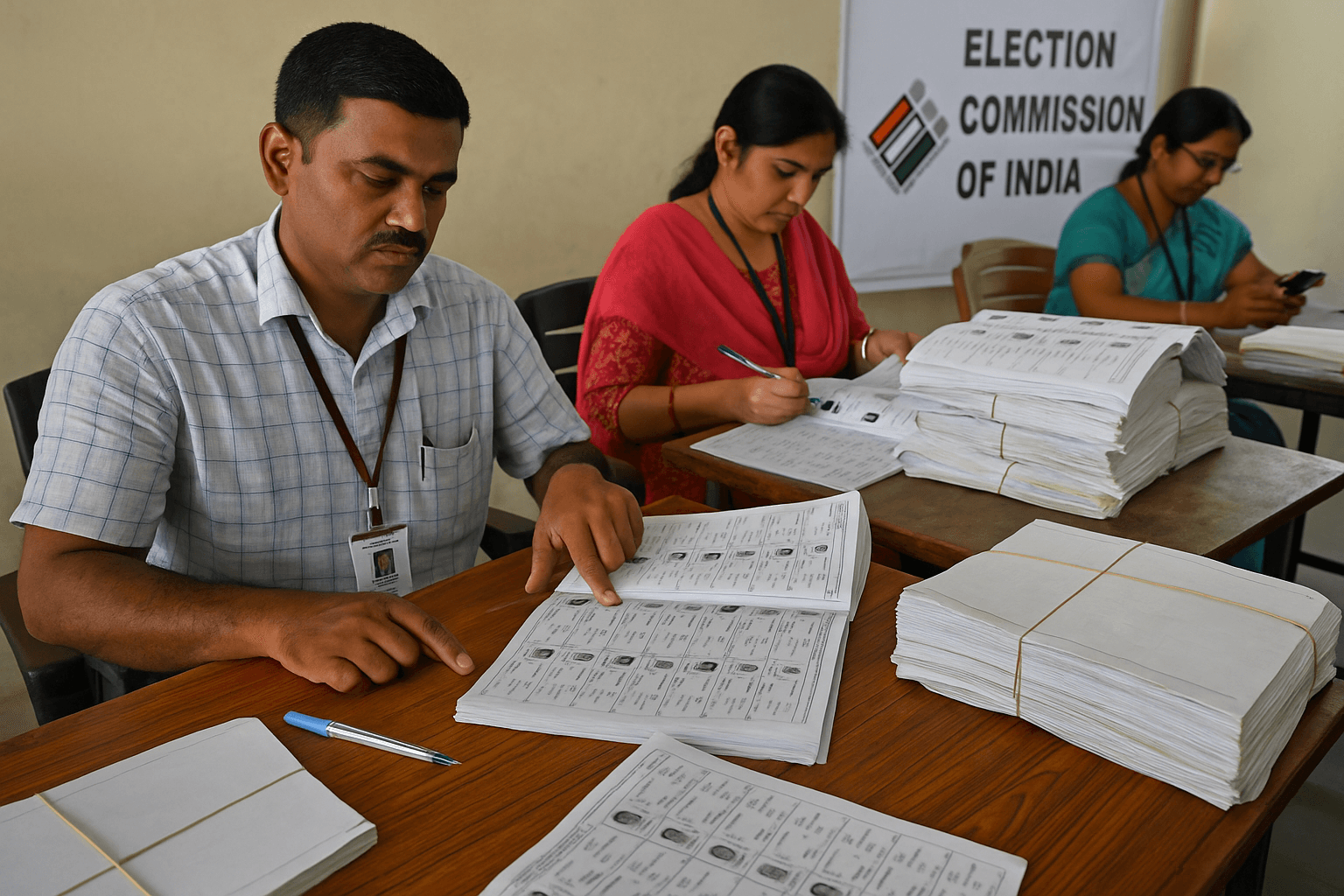
The Election Commission of India (EC) has asked State Chief Electoral Officers to be ready for a Special Intensive Revision (SIR) of electoral rolls by September 30. The directive signals that the nationwide clean-up of voter lists could begin as early as October, ahead of major State elections due in 2026.
The Story
At a recent conference in New Delhi, EC leadership directed State officials to prepare the groundwork for the revision exercise. Voter lists from the last SIR in each State — many dating back two decades — have been ordered to be published online as a baseline.
The Commission cited Bihar as an example, where the 2003 voter roll has been used as the cut-off for mapping electors during the current revision. Other States, including Delhi (last SIR in 2008) and Uttarakhand (2006), have already made their archival rolls public. Most States conducted their last SIR between 2002 and 2004.
Officials said that once Bihar’s process concludes, the EC intends to extend the exercise across the country, ensuring that all States have updated, verified rolls ahead of upcoming polls.
Why It Matters
Free and fair elections rest on accurate voter rolls. Outdated or flawed lists risk disenfranchising citizens or enabling fraud. The SIR, by revisiting electoral data in detail and cross-checking with past records, helps eliminate errors, duplicate entries, and ghost voters.
The exercise also carries symbolic weight. In India’s democracy, the EC stands as an independent constitutional authority, insulated from executive control. By launching SIR on its own schedule, the Commission reinforces that its primary loyalty is to the voter, not to governments of the day.
Background / Context
-
What is SIR?
A Special Intensive Revision is a comprehensive re-verification of electoral rolls. Unlike routine annual updates, it involves mapping current electors against historic lists, ground verification, and door-to-door checks in some cases. -
Why does it matter?
Clean rolls ensure that every eligible citizen is included while ineligible or duplicate names are removed. This strengthens trust in the electoral process. -
Constitutional basis:
Article 324 of the Constitution vests the “superintendence, direction and control of elections” in the EC. India’s constitutional framers, mindful of colonial misuse of elections, deliberately designed the Commission as an independent body. Its autonomy in tasks such as SIR underlines this principle. -
Past precedent:
Earlier SIRs were conducted in the early 2000s across most States. They remain vital benchmarks, used today as reference points for mapping electors.
Implications
-
For Voters: Citizens can expect door-to-door verification or targeted corrections. This ensures that migrant workers, young voters, and women — often left out — are properly enrolled.
-
For Political Parties: A credible roll reduces disputes and accusations of bias, supporting level playing fields during elections.
-
For the EC: Undertaking SIR before the 2026 assembly polls in Assam, Kerala, Puducherry, Tamil Nadu, and West Bengal signals its preparedness to guarantee clean elections.
-
For Democracy: By asserting its timeline and procedure, the EC underscores its constitutional role as a neutral guardian of electoral integrity.
Conclusion
By directing States to prepare for a Special Intensive Revision by September 30, the Election Commission has underlined its commitment to electoral credibility. The exercise, rooted in constitutional independence, is more than an administrative update — it is a reaffirmation that free and fair elections in India begin with clean, trustworthy rolls.