

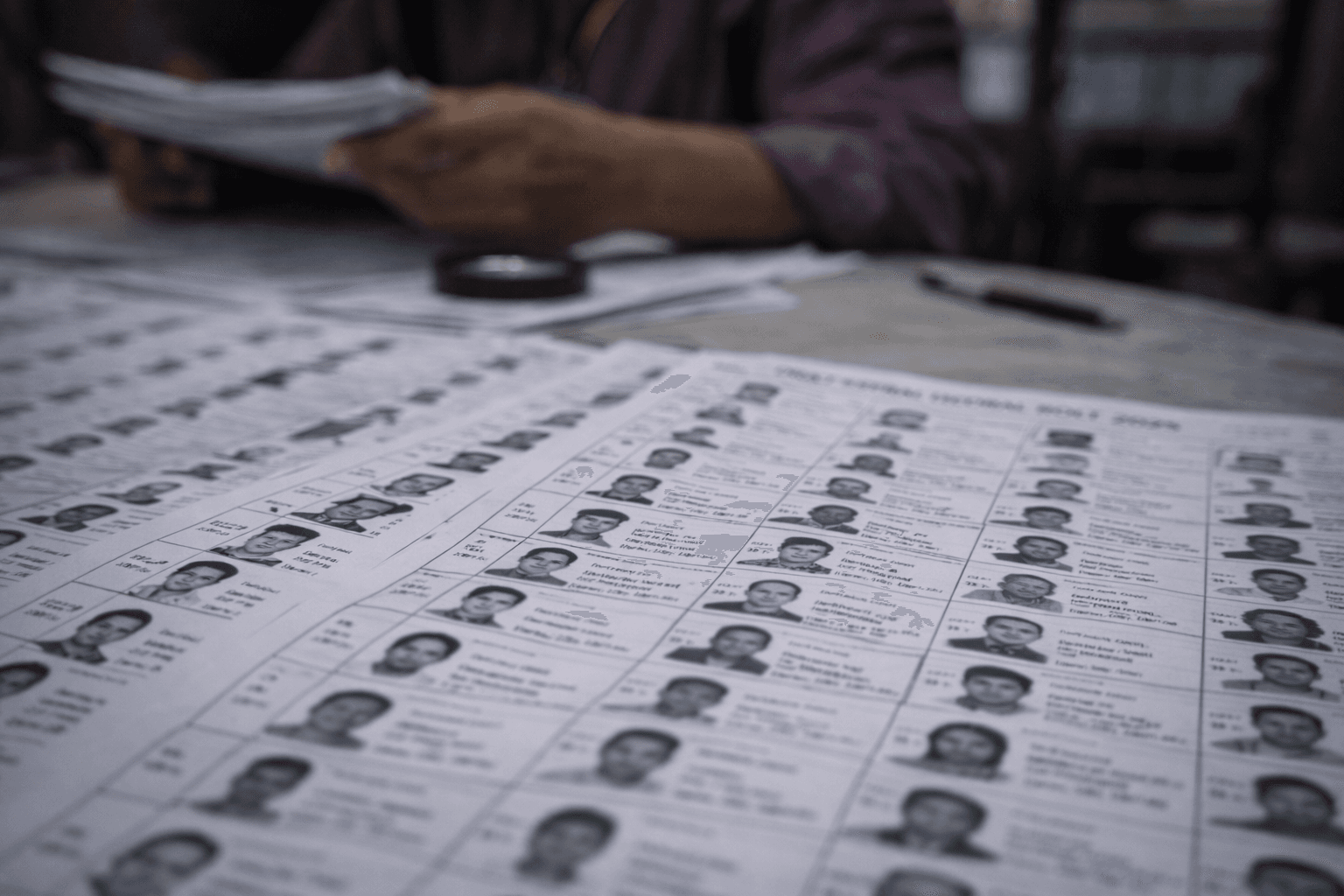
Draft voter lists are more than administrative paperwork; they are the gatekeepers of democratic participation. The Election Commission’s publication of draft electoral rolls for five States and two Union Territories under the Special Intensive Revision (SIR) has brought that reality into sharp relief, especially because the exercise records sizeable deletions in some regions. The next few weeks—when claims, objections and verification begin—will determine whether this becomes a story of cleaner rolls or contested exclusions.
What’s in the news
The Election Commission has published draft electoral rolls for:
-
West Bengal
-
Rajasthan
-
Goa
-
Puducherry (U.T.)
-
Lakshadweep (U.T.)
Key deletions reported:
-
West Bengal: over 58 lakh names removed
-
Rajasthan: nearly 42 lakh removed
-
Goa: 10 lakh removed
-
Puducherry: a little over 1 lakh removed
-
Lakshadweep: nearly 1,500 removed
A significant operational feature of this phase: unlike an earlier SIR exercise in Bihar, voters were not required to submit the set of “indicative documents” to be included in the draft list; those who submitted the enumeration form were included. Where doubt arises, notices may be issued and documents may be sought during verification.
The numbers that shape the story
Deletions and reasons (as reported)
West Bengal
-
Included in draft: 7.08 crore (92.4%) of 7.6 crore
-
Deleted: dead (24.16 lakh), shifted/absent (32.65 lakh), multiple enrolment (1.38 lakh)
Rajasthan
-
Included in draft: 5.04 crore (92.34%) of 5.46 crore
-
Deleted: deceased (8.76 lakh), shifted/absent (29.6 lakh), multiple enrolment (3.44 lakh)
Goa
-
Included in draft: 10.84 lakh (91.56%) of 11.85 lakh
-
Deleted: deceased (25,574), shifted/absent (72,471), multiple enrolment (1,997)
Puducherry
-
Included in draft: 9.18 lakh (89.87%) of 10.21 lakh
-
Deleted: deceased (20,798), shifted/absent (80,645), multiple enrolment (2,024)
Lakshadweep
-
Included in draft: 56,384 (97.53%) of 57,813
-
Deleted: dead (705), shifted/absent (252), multiple enrolment (472)
Why large deletions can mean two different things
A sign of roll hygiene
Voter rolls accumulate “natural noise”: deaths, migration, duplicates, and mapping errors over time. A revision that removes such entries can improve:
-
polling-day efficiency,
-
credibility of turnout data,
-
and the integrity of booth-level management.
A risk of wrongful exclusion
The same scale that improves hygiene can also magnify error. “Shifted/absent” is particularly sensitive because it can catch:
-
migrant workers,
-
students,
-
seasonal movers,
-
and citizens away for health or employment.
If the verification stage is uneven across districts, the burden of proof can fall hardest on the least connected citizens.
How the process is designed to reduce errors
Claims and objections window
A defined claims-and-objections phase creates a corrective channel for:
-
missing names,
-
wrong deletions,
-
and incorrect entries.
Notice-and-verification approach
The EC’s stated method—issuing notices where doubt exists—matters because it converts “suspicion” into a due-process step. The quality of this phase will be judged by:
-
whether notices reach voters in time,
-
whether reasons are clearly stated,
-
and whether response options are accessible.
Booth-wise deletion lists and reasons
Publishing booth-wise deleted lists with reasons can strengthen transparency, but only if:
-
reasons are precise and consistent,
-
and local officials can explain the trail to citizens without ambiguity.
The deeper governance question: accuracy vs access
The administrative challenge
A roll revision at this scale is a classic public-administration stress test:
-
data quality,
-
frontline staffing,
-
grievance-handling capacity,
-
and uniformity in decision-making.
A clean roll requires consistency; a legitimate roll requires fairness.
The political temperature
In States where elections are due, revisions tend to be read through a political lens. The EC’s best defence against perception battles is process credibility:
-
predictable timelines,
-
traceable reasons,
-
and swift correction mechanisms.
What to watch in the coming weeks
Quality of verification, not just the headline numbers
The credibility of the exercise will be shaped less by “how many removed” and more by:
-
how many are restored after valid claims,
-
how quickly Form 6 additions are processed,
-
and how consistently duplication is handled.
Treatment of “shifted/absent”
This single category can decide whether the exercise is viewed as:
-
a neutral clean-up,
-
or an exclusion risk for mobile populations.
Source credits
The Hindu report; Election Commission’s stated process and timelines as described in the report; State-wise draft roll inclusion/deletion figures and reasons as reported.