

The Election Commission has decided to change how votes are counted. Beginning with the Bihar Assembly election, postal ballot counting will be completed before the penultimate round of electronic voting machine (EVM) counting. The decision comes after a sharp rise in postal ballots due to home voting for the elderly and persons with disabilities.
The Story
Until now, counting of postal ballots began at 8 a.m., with EVM rounds starting at 8:30 a.m. This sometimes led to EVM results being declared before postal ballots were fully tallied. Under the new system, the second-last round of EVM and voter-verified paper audit trail (VVPAT) counting will start only after all postal ballots are counted.
The Election Commission said the change ensures “uniformity and utmost clarity in the counting process.” It also directed Returning Officers to deploy more counting tables and staff where large numbers of postal ballots are expected.
Postal ballots have grown in number following measures that allow voting from home for citizens above 85 years of age and for persons with disabilities.
Why It Matters
Postal ballots represent sensitive votes cast by service voters, election staff, the elderly, and the differently-abled. If their counting lags behind EVM tallies, it can create doubts about transparency. Opposition parties have long demanded that postal ballots be completed before EVM rounds end, to avoid a situation where final results appear to be declared without accounting for all ballots.
Background / Context
-
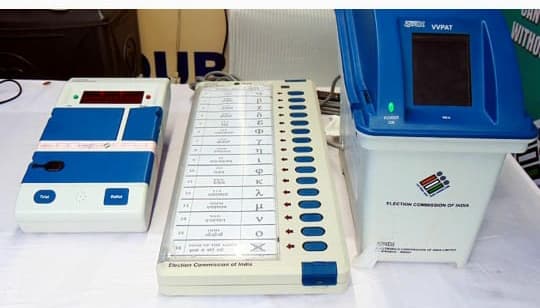
EVMs: Electronic Voting Machines record votes digitally. Each machine has two units — a control unit with polling officials and a balloting unit used by voters.
-
VVPATs: Voter Verified Paper Audit Trail machines generate a paper slip each time a vote is cast, showing the voter their choice. These slips are kept in a sealed box for audit.
-
How much is verified: As per Supreme Court orders, slips from VVPATs in five randomly chosen polling booths per Assembly constituency are matched with EVM counts. This is a small fraction of total booths, but courts have said it provides a reasonable balance between accuracy and speed.
-
Postal ballots: Traditionally used by service voters and government staff on duty, now expanded to elderly and disabled citizens. Their share, though smaller than EVM votes, is rising rapidly.
Implications
-
For voters: The elderly and disabled who now use postal ballots gain assurance that their votes will be counted before EVM results near completion.
-
For political parties: Reduces suspicion that postal ballots are ignored or sidelined, improving credibility.
-
For the EC: Requires better staffing and infrastructure at counting centres to handle higher postal ballot volumes.
-
For transparency: Strengthens the perception that no result is declared until every vote — paper or digital — has been tallied.
Conclusion
The Election Commission’s decision to complete postal ballot counting before the penultimate EVM round addresses long-standing demands for greater transparency. As postal ballots rise with home voting initiatives, the change is expected to enhance voter trust and uniformity in the election process.