

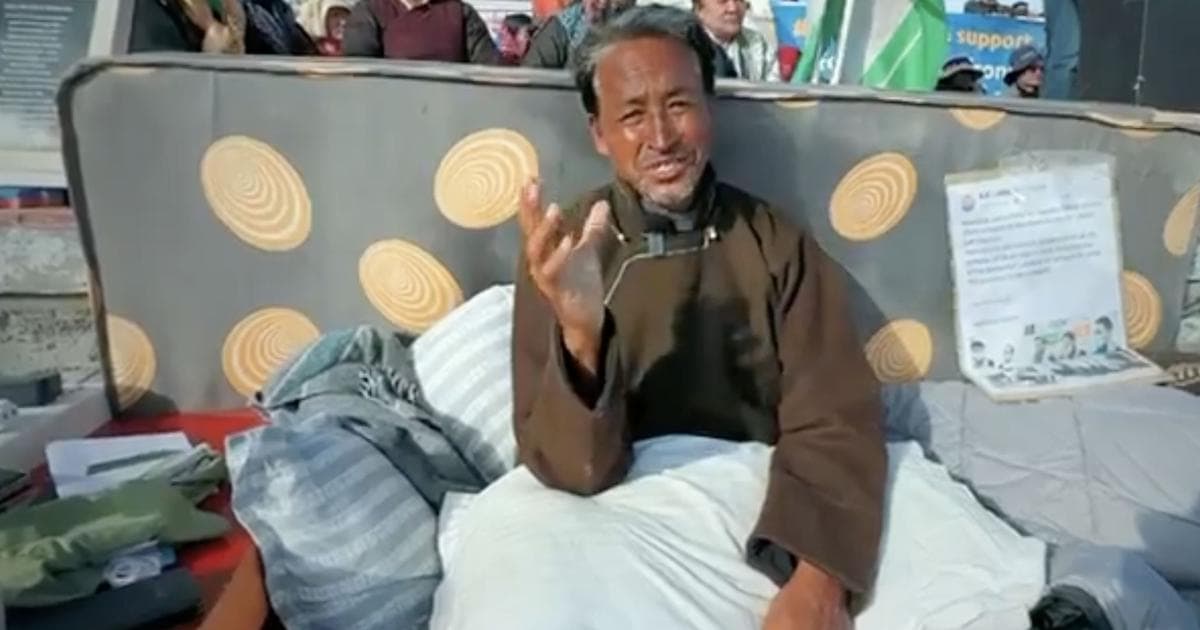
The detention of Sonam Wangchuk, a respected environmentalist and activist, under the National Security Act (NSA) has once again thrown into sharp relief the uneasy relationship between dissent and authority in Indian democracy. While protests in Leh turned violent, critics argue that punishing peaceful advocacy for Statehood and Sixth Schedule status risks shrinking the constitutional space for free expression.
The Argument
At the heart of the controversy is a tension every democracy must face: how far can citizens go in questioning their government, and when does criticism slide into threat? The Indian Constitution guarantees the Right to Freedom of Speech and Expression (Article 19(1)(a)), subject to reasonable restrictions for public order and security. This is the sacred space that allows voices like Wangchuk’s to emerge.
Wangchuk, known for his climate advocacy and grassroots work, has become a symbol of Ladakh’s struggle for greater autonomy. His preventive detention under the NSA, a law designed to neutralise threats to national security, appears to many as a blunt instrument applied to a nuanced political problem.
The Role of Criticism in Democracy
Healthy democracies thrive on criticism. To criticise the government is not to undermine the nation; it is to strengthen the feedback loop that prevents arrogance of power. India’s democratic journey is replete with examples—be it Jayaprakash Narayan’s call for “Total Revolution” in the 1970s or the Anna Hazare-led anti-corruption protests a decade ago—where criticism acted as a corrective.
Suppressing such voices risks converting legitimate discontent into alienation. In regions like Ladakh, where geography already isolates communities, silencing peaceful agitators can deepen mistrust between citizen and state.
The Law-and-Order Perspective
Yet, to view the issue solely through the prism of free speech risks ignoring the very real challenge of law and order. On 24 September, violent protests in Leh led to the death of four civilians and injuries to nearly 90. Offices were attacked, and public property was damaged. In such a volatile atmosphere, governments argue that preventive detention is a tool to prevent further escalation.
The NSA provides for detention without trial for up to 12 months. While controversial, its use is often justified as a last resort when immediate preventive action is needed. The administration will claim that Wangchuk’s stature gave him the power to influence large groups, making his presence a risk in a tense environment.
Why It Matters
The wider lesson from Ladakh is not about one man but about the system’s resilience. A government that cannot be questioned risks alienating its citizens; a citizenry that cannot accept restrictions risks chaos. Democracies are not defined by the absence of conflict but by how they manage it.
The balancing act is delicate. Overuse of preventive detention risks eroding civil liberties; underuse risks public disorder spiralling out of control. The courts have often reminded the state that “dissent is the safety valve of democracy.” But safety valves cannot justify riots, nor can riots justify silencing peaceful protest.
Global and Historical Parallels
Across democracies, dissenters have often been branded as threats before history vindicated them. From Martin Luther King Jr. in the United States to Nelson Mandela in South Africa, today’s “troublemakers” can become tomorrow’s moral voices. Yet even these figures acknowledged the responsibility that comes with protest—the need for discipline, restraint, and non-violence.
India itself has walked this path during the Emergency (1975–77), when preventive detention laws were used to stifle critics. The eventual backlash cemented free expression as a non-negotiable democratic value. Wangchuk’s case revives that uncomfortable memory.
The Way Forward
Three principles should guide the resolution of such conflicts:
-
Dialogue over detention: Agitations for Statehood or special status are political questions, best settled through negotiations, not jail terms.
-
Proportionality: The state must calibrate its response—violent actors must be held accountable, but peaceful advocates must not be conflated with them.
-
Trust-building: In sensitive regions, building trust between people and government is security in itself. Alienation fuels unrest far more than dialogue ever will.
Conclusion
Sonam Wangchuk’s detention is a reminder that democracies are judged not by how they treat the obedient, but by how they respond to the dissenting. The government has a duty to maintain order; citizens have a duty to protest peacefully. Between these duties lies the fragile space of democracy, which must be guarded with restraint and wisdom. In the end, criticism of the government is not disloyalty—it is the very oxygen of freedom.