

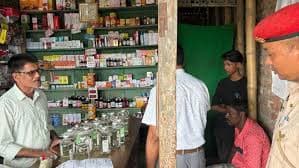
A government doctor in Madhya Pradesh has been arrested for prescribing the adulterated cough syrup Coldrif, which has claimed 14 children’s lives across the State. Police said Dr. Praveen Soni prescribed the toxic syrup in his private practice, violating medical and drug safety norms.
The Story
Authorities confirmed on 6 October that Dr. Praveen Soni, a paediatrician at the Civil Hospital in Chhindwara, was taken into custody following an FIR lodged under Sections 105 and 276 of the Bharatiya Nyaya Sanhita and Section 27A of the Drugs and Cosmetics Act. He has also been suspended from government service.
The investigation revealed that Dr. Soni had prescribed Coldrif—manufactured by Sresan Pharmaceuticals, Kancheepuram (Tamil Nadu)—to several of the deceased children through his private clinic. The Drug Testing Laboratory confirmed the presence of 46.28% diethylene glycol, a toxic compound known to cause kidney and neurological failure.
Superintendent of Police Ajay Pandey said a special investigation team (SIT) has been formed to trace the supply chain. The team will visit Tamil Nadu and other connected locations to gather evidence and coordinate with local authorities.
The death toll rose to 14, including 10 from Parasia, two from Chhindwara city, one from Chaurai, and one from Pandhurna. Eight other children remain under treatment in Nagpur. The fatalities occurred over one month, beginning early September.
The State government has released ₹4 lakh in compensation to each affected family. Offices of distributors in Jabalpur were sealed after raids by the Food and Drugs Administration (FDA).
Why It Matters
The tragedy echoes earlier mass poisonings linked to toxic syrups in India and abroad, exposing persistent lapses in drug regulation and clinical accountability. It highlights gaps in the surveillance of rural medical practices and the urgent need for stricter oversight of over-the-counter paediatric medicines.
Background / Context
• Diethylene glycol (DEG) has caused fatal poisoning outbreaks globally—most notably in Gambia (2022) and Jammu (2020).
• The WHO has repeatedly urged member nations to strengthen testing for DEG and ethylene glycol in liquid drugs.
• India’s Health Ministry has intensified random drug sampling following multiple export-related warnings.
• Under the Drugs and Cosmetics Act, knowingly prescribing or selling adulterated drugs can lead to imprisonment of up to 10 years.
Implications
The case may prompt a nationwide audit of paediatric syrups and private prescriptions, especially in smaller towns. Legal proceedings against the doctor and manufacturer could set a precedent for shared liability in medical negligence involving banned or unsafe drugs. Public trust in rural healthcare delivery faces renewed strain.
Conclusion
As the probe expands to Tamil Nadu and other supply hubs, the incident underscores systemic cracks in India’s pharmaceutical regulation and medical ethics enforcement. Ensuring accountability from factory to clinic will be critical to restoring public confidence.