

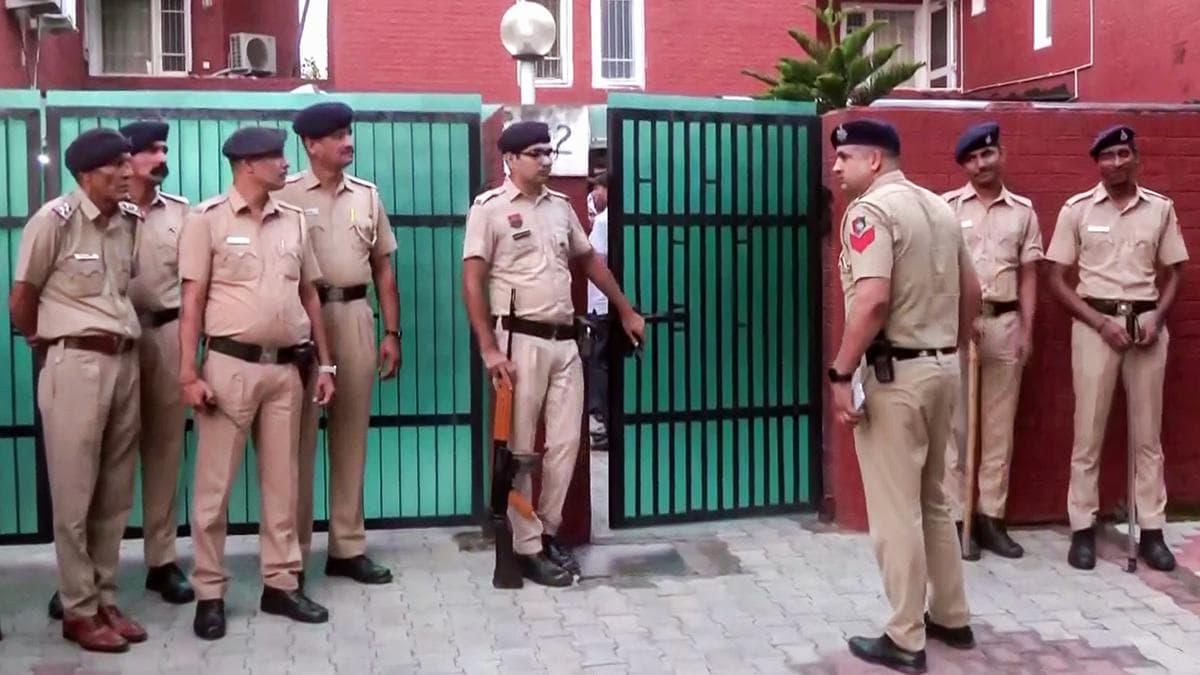
The news at a glance
-
The case: IPS officer Y. Puran Kumar (2001 batch) was found dead with a gunshot wound at his Chandigarh residence on Oct 7.
-
FIR update: On the family’s request, police added SC/ST Act Section 3(2)(v) to the FIR. Earlier, the FIR cited provisions including abetment of suicide and Section 3(1)(r) of the SC/ST Act.
-
Why it matters: A “final note” allegedly names senior IPS officers, prompting a 31-member citizens’ panel to demand removals/arrests and a judicial inquiry.
-
Status: Post-mortem is pending; the family has withheld consent citing concerns. A Special Investigation Team (SIT) is in place.
The legal backbone (in simple terms)
1) Abetment of suicide (IPC)
-
Investigators must test whether any person instigated, aided, or conspired such that it had a direct and proximate link with the death.
-
Courts look for more than workplace friction; they look for specific acts, continuing harassment, or clear causation close in time to the death.
2) SC/ST (Prevention of Atrocities) Act
-
Section 3(1)(r): deals with intentional insult/intimidation to humiliate a member of an SC/ST in any place within public view.
-
Section 3(2)(v): adds enhanced punishment if any IPC offence punishable with ≥10 years is committed on the ground that the victim belongs to SC/ST.
-
Process safeguards: Investigation must be led by not-below DSP rank; cases are tried in Special Courts; victim compensation and witness protection provisions apply under the Rules (2016).
Key threshold for 3(2)(v): Investigators must examine motive—was the alleged IPC offence linked to the victim’s SC/ST identity? This is a fact-heavy inquiry, not automatic.
3) Inquest & post-mortem (CrPC)
-
Suspicious or unnatural deaths trigger CrPC 174 inquest and forensic autopsy. While families are often consulted, authorities can seek court direction to ensure a lawful, timely post-mortem in public interest.
-
Delay risks degradation of evidence (toxicology windows, GSR patterns, lividity).
What a robust investigation should cover
Forensics & scene
-
Two-doctor post-mortem with video, gunshot trajectory analysis, gunshot residue (GSR) on hands/clothing, soot/tattooing patterns, distance of fire.
-
Weapon forensics (ballistics, fingerprints/DNA), blood spatter, and scene reconstruction to test suicide vs. foul play.
-
Toxicology (alcohol/sedatives), time-since-death estimation.
Digital & documentary
-
Authenticity of the “final note” (handwriting/forensic linguistics; if digital, hashing/metadata).
-
Call detail records, messaging apps, email logs, CCTV, access control.
-
Personnel files: postings, complaints, warnings, or grievance records relevant to alleged harassment.
Witnesses & chain of command
-
Immediate colleagues/staff, officers named in the note, prior complainants, and any witnesses to earlier incidents.
-
Conflict-of-interest firewall: given that senior police are named, consider independent supervision (e.g., judicial oversight or an external agency) to preserve credibility.
The contested points—and how law approaches them
-
“Final note” naming accused: It is relevant but not conclusive. Courts require corroboration (messages, witnesses, pattern of conduct).
-
Atrocities Act motive test: Prosecution must show nexus to SC/ST identity, not just workplace disagreements.
-
Delay in autopsy: Courts have emphasised timely post-mortems in suspicious deaths; delay can be justified for family concerns but should be minimised with independent observers and video-documentation.
Institutional angles beyond the FIR
1) Judicial probe vs. SIT
-
A judicial commission can enhance public trust, especially when top officers are named. The SIT can continue fact-gathering; the two aren’t mutually exclusive.
2) Workplace safeguards
-
Police forces need formal anti-harassment channels, protected disclosures, and whistleblower guarantees that bypass immediate superiors.
-
Mental-health support: confidential counselling, rotation from high-stress posts, and mandatory debriefs after contentious assignments.
3) Evidence integrity
-
Sealing the residence and office, independent seizure lists, and tamper-evident storage for electronics are basic but crucial.
What to watch next
-
Post-mortem: whether it proceeds with court-monitored videography and an independent forensic expert present.
-
Forensic findings: GSR, trajectory, and toxicology—often decisive in firearm deaths.
-
Digital trail: corroboration (or not) of alleged harassment and timeline.
-
Application of 3(2)(v): how investigators establish (or fail to establish) motive linked to caste identity.
-
Supervisory structure: any move toward a judicial inquiry or external oversight to address conflict-of-interest claims.
-
Protective orders: witness protection steps for the family and key witnesses under the SC/ST Rules.