

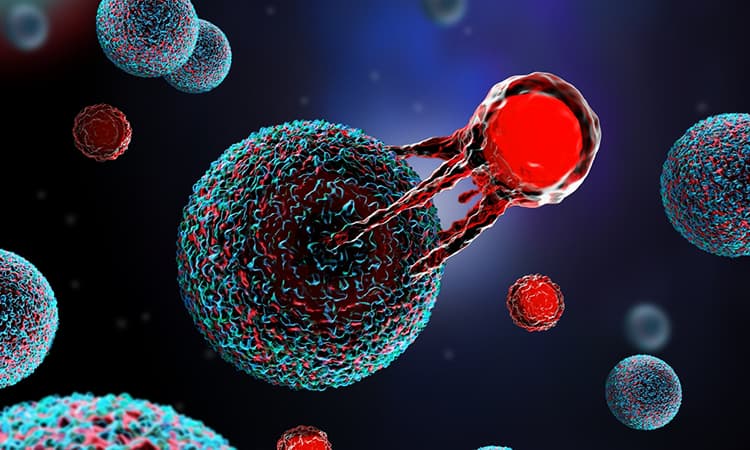
The immune system is a formidable army. Without restraint, it can turn on the very tissues it is meant to protect. The 2025 Nobel Prize in Physiology or Medicine recognises the scientists who revealed the body’s brake pedal, regulatory T cells that enforce tolerance in the periphery, and the FOXP3 program that makes these cells what they are. Their discoveries explain why most of us do not develop runaway autoimmunity and show how to deliberately dial immunity up or down in disease.
The Story
Central vs peripheral tolerance
Developing T cells are “educated” in the thymus to avoid strong reactions to self, a process called central tolerance. But many potentially dangerous responses still arise after T cells enter the body. A second safety layer, peripheral tolerance, is therefore essential to keep everyday immunity from harming self.
Sakaguchi’s clue and the first Tregs
In classic mouse experiments, removal of the thymus in newborns did not weaken immunity; it unleashed it. The animals developed multi organ autoimmunity. Shimon Sakaguchi traced protection back to a subset of T cells that expressed high levels of the IL 2 receptor alpha chain, CD25. In 1995 he proposed that these CD4⁺CD25⁺ cells were a distinct population that suppresses immune responses, now called regulatory T cells, or Tregs.
Brunkow, Ramsdell and the FOXP3 key
Working with a peculiar mouse strain prone to fatal autoimmunity and the human disorder IPEX, Mary Brunkow and Fred Ramsdell pinpointed mutations in a single transcription factor, FOXP3. Loss of FOXP3 collapsed the Treg program and released uncontrolled effector T cells. This genetic proof cemented Tregs as a lineage, not a fleeting state. Two years later, FOXP3 was shown to be both necessary and sufficient for the development and function of Tregs, providing a molecular handle to identify, track and engineer them.
What Are Regulatory T Cells and How Do They Work
Identity and survival
Tregs are CD4⁺ T cells that stably express FOXP3, high CD25, and inhibitory receptors such as CTLA 4. They depend on IL 2 made by other T cells for survival and expansion.
Core mechanisms of suppression
-
Checkpoint control of antigen presenting cells, CTLA 4 on Tregs removes costimulatory ligands (CD80/CD86) from dendritic cells, lowering the activation of other T cells.
-
Anti inflammatory cytokines, Tregs secrete IL 10, TGF β and IL 35 that dampen inflammation and promote tissue repair.
-
Metabolic control, high CD25 expression lets Tregs act as an IL 2 sink, starving overactive T cells; ectoenzymes CD39/CD73 generate adenosine that suppresses local responses.
-
Cytolysis and contact dependent cues, in some contexts Tregs directly kill overactive immune cells or reprogram them by contact.
-
Tissue specialisation, in skin, gut, adipose tissue and muscle, Tregs acquire organ specific programs that support barrier function, microbiome tolerance and regeneration.
What keeps Tregs stable
FOXP3 partners with other factors, epigenetic marks at Treg specific enhancers, and tonic TCR signals to lock in lineage identity. Inflammation can erode this program, a challenge for therapy design.
Why the Discoveries Matter
Fundamental insight
They explain why immunity is precise most of the time. Tregs are the adjudicators that decide when a response should stop, and when a harmless signal should be ignored.
Clinical blueprint
Once FOXP3 marked Tregs as a lineage, researchers could purify, count, expand and engineer them. That turned a concept into a therapeutic platform.
Applications Taking Shape
Autoimmune and inflammatory diseases
-
Boost Tregs, low dose IL 2 selectively expands Tregs and is being tested in type 1 diabetes, lupus, graft versus host disease and other conditions.
-
Adoptive Treg therapy, ex vivo expanded polyclonal Tregs are infused to restore balance; next generation antigen specific Tregs and CAR Tregs aim for precision in diseases such as T1D, multiple sclerosis, inflammatory bowel disease and severe allergy.
-
Small molecules and biologics that stabilise FOXP3 or enhance IL 2 signalling bias expansion toward Tregs.
Transplantation and tolerance
Tregs reduce rejection and graft versus host disease by calming donor or host immune responses. Trials are testing Treg infusions alongside reduced immunosuppression to achieve durable graft acceptance with fewer drug toxicities.
Cancer immunotherapy
In tumours, Tregs accumulate and shield cancer from attack. Strategies include:
-
Local Treg depletion using antibodies to targets enriched on intratumoural Tregs, for example CCR4 or OX40.
-
Anti CTLA 4 can deplete Tregs in some tumour beds and augment priming of anti tumour T cells.
-
Reprogramming the tumour microenvironment to weaken Treg recruitment or function while sparing systemic tolerance.
The same brake that prevents autoimmunity is therefore a hurdle in oncology, so the art is to lift it only within tumours.
Precision measurement and prognosis
FOXP3⁺ Treg numbers and function serve as biomarkers of disease activity and treatment response in autoimmunity, cancer and transplantation.
Background and Timeline
-
1980s, thymectomy in newborn mice triggers systemic autoimmunity, implying missing regulation.
-
1995, CD4⁺CD25⁺ regulatory T cells described as a suppressive lineage.
-
Early 2000s, FOXP3 identified as the master regulator; human IPEX linked to FOXP3 mutations; Treg purification and expansion protocols established.
-
2010s onward, translational studies scale up, including low dose IL 2, adoptive Tregs and early CAR Treg designs.
-
2025, Nobel recognises peripheral tolerance and Tregs as the immune system’s brake.
How This Opens a New Field
The trio’s work transformed tolerance from a black box to an editable program. It launched tolerance engineering, combining:
-
Genetics, to define lineage stability and antigen specificity.
-
Bioengineering, to expand, arm and deliver Tregs to the right tissues.
-
Systems immunology, to map Treg crosstalk with stroma, neurons and microbiota.
This field now underpins efforts to design disease specific “immune set points” rather than blunt immunosuppression.
Implications and Open Questions
For patients
Targeted Treg therapies promise remission without broad immune suppression in autoimmunity, and better graft survival with fewer side effects after transplant.
For oncology
Understanding tumour resident Tregs guides combinations that de shield cancers while avoiding systemic autoimmunity, a central challenge for durable checkpoint therapy.
Open problems
Keeping engineered Tregs stable in inflamed tissues, making them antigen specific at scale, and measuring in vivo fate and function with precision. Safety guardrails are essential to avoid unintended immunodeficiency.
Conclusion
By discovering regulatory T cells and the FOXP3 program, Brunkow, Ramsdell and Sakaguchi showed how the immune system applies brakes in real time outside the thymus. Their insights built a playbook to either strengthen those brakes in autoimmunity and transplantation, or lighten them inside tumours so immunity can attack cancer. From first principles to first patients, peripheral tolerance has become a toolkit for precision immunotherapy.