
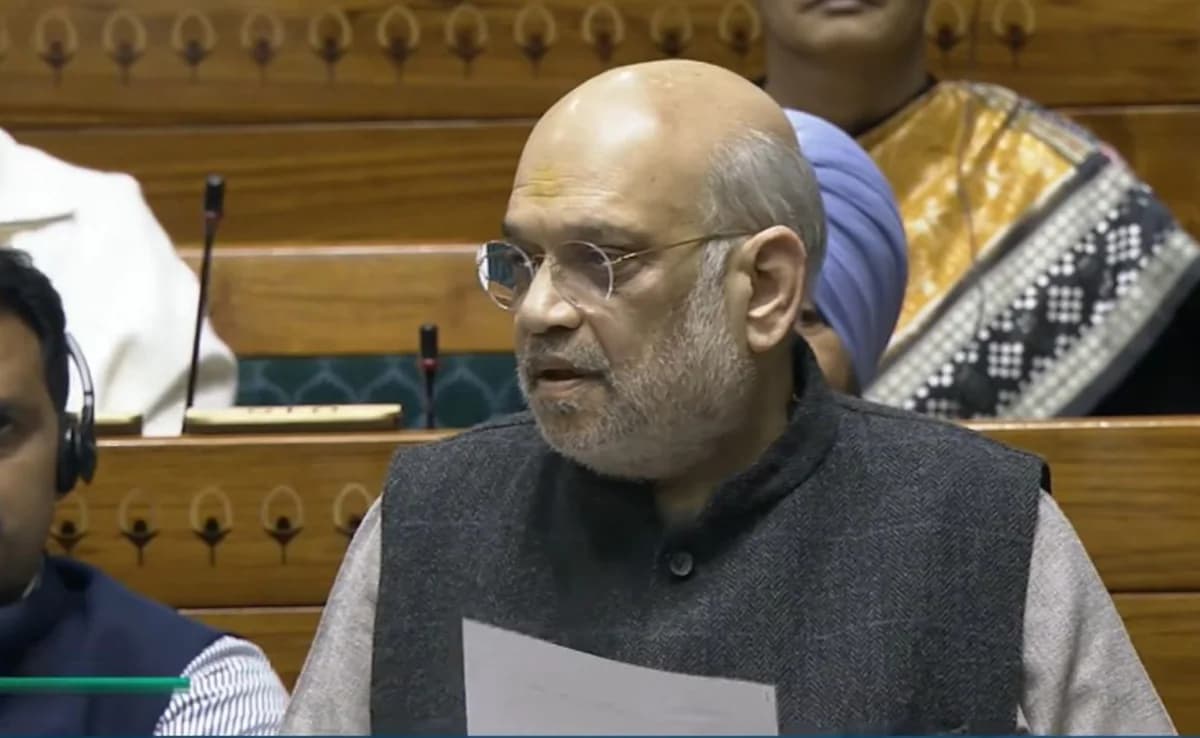
A discussion on electoral reforms in the Lok Sabha turned into a sharp political confrontation as Union Home Minister Amit Shah defended the special intensive revision of electoral rolls and announced the government’s motto to “detect, delete and deport” illegal immigrants. Leader of the Opposition Rahul Gandhi countered by questioning the immunity granted to Election Commissioners under the 2023 law and accusing the government of avoiding accountability. The exchange ended with the Opposition walking out, underscoring the growing polarisation around how India’s voter lists are cleaned and who gets to vote.
The Story
The immediate context of the clash was the special intensive revision, or SIR, of electoral rolls announced by the Election Commission earlier this year. The exercise, which is constitutionally mandated to keep rolls updated and error free, has become politically charged after the Opposition alleged that it could be used to selectively delete genuine voters.
Speaking in a combative tone, Amit Shah rejected those allegations and turned the charge back on the Opposition. He accused “some families” of being “generational vote chors”, claiming that political forces which benefited from inflated or distorted rolls now feared a transparent clean-up. According to him, the real motive behind resistance to the SIR was the desire to keep “infiltrators” on the voter lists.
Shah framed the SIR as a process of “purifying” the electoral rolls. He posed a series of rhetorical questions, asking whether any democracy could remain secure if the choice of Prime Minister or Chief Minister was influenced by foreign nationals, if one voter cast a ballot in multiple constituencies, or if the names of deceased persons continued on the rolls. In his telling, the revision is therefore central to national security and the integrity of the popular mandate.
The Home Minister also tried to demonstrate that the ruling coalition does not selectively trust the Election Commission only when it wins. He listed elections since 2014 to argue that the Bharatiya Janata Party has lost more polls than it has won and yet never blamed the Commission or the rolls. If the voter list was fundamentally flawed, he asked, why did Opposition parties accept victories and take oath in the very Houses elected from those rolls.
Rahul Gandhi’s intervention pulled the debate in a different direction. Rather than focusing only on individual deletions or insertions, he questioned the institutional framework created by the 2023 law on the appointment of the Chief Election Commissioner and other Election Commissioners. Gandhi asked why the law grants them immunity from prosecution and why the selection panel is structured in a way that gives the government a numerical advantage over the Opposition.
When Shah began responding in his own sequence, Gandhi repeatedly pressed him to answer those specific questions first. Shah insisted that no one could dictate the order of his speech. Gandhi then accused the Home Minister of looking defensive and “worried”, and after further exchanges the Opposition benches walked out, later telling the media that the core questions on EC immunity and independence remained unanswered.
Inside the House, Shah continued his speech in the absence of the Opposition. He reiterated that the National Democratic Alliance government would not allow a single infiltrator to remain on the rolls and repeated the three-word motto “detect, delete and deport”, switching briefly into English for emphasis in an otherwise Hindi speech. In contrast, he alleged, the Opposition’s policy was to “normalise” infiltrators and “formalise” them as voters.
Shah also invoked history, pointing out that the first SIR was carried out in 1952 when Jawaharlal Nehru was Prime Minister and that, for decades, no party objected to such exercises. The problem with the SIR, he said, arises only when some parties fear that a genuinely updated list will expose their reliance on irregular or inflated voter segments. In his view, the current controversy is less about legal process and more about political discomfort with tighter scrutiny.
On the broader issue of institutional design, Shah defended the 2023 law governing the appointment of Election Commissioners. He noted that for nearly seventy three years, there was no dedicated law and appointments were effectively at the discretion of the Prime Minister. The new law was framed after the Supreme Court called for a more transparent process. While the Opposition now complains that it has only one third representation on the panel, Shah reminded the House that earlier the Opposition had no formal role at all.
Through this layered argument, the government is attempting to present itself as a defender of both electoral integrity and institutional clarity, while painting the Opposition as obstructionist and soft on illegal immigration. The Opposition, on the other hand, is trying to recast the debate as one about the neutrality and accountability of the Election Commission itself, especially when it undertakes politically sensitive exercises like the SIR.
Why It Matters
This confrontation goes beyond ordinary parliamentary sparring. It raises fundamental questions about who is counted as a legitimate voter, how the State treats undocumented residents and migrants, and how much trust citizens can place in the institutions that referee elections.
For the government, linking voter roll revision to the removal of “infiltrators” helps weave electoral management into a broader narrative of national security and demographic protection. For the Opposition, the worry is that the same framework could be used to target vulnerable communities, migrants and political opponents under the broad label of “foreigners”.
For democratic legitimacy, the crucial test is whether reforms strengthen the perception that the electoral umpire is impartial and that no genuine citizen is wrongly disenfranchised in the name of cleansing rolls.
Background / Context
The Election Commission is constitutionally mandated to prepare and maintain electoral rolls so that only eligible citizens above eighteen years vote and each voter is counted once. Periodic revisions, both routine and special, are used to add new voters, remove deceased or migrated individuals and correct errors. The special intensive revision is a more detailed exercise that involves field verification and cross checks.
Historically, the SIR has existed since the early years of the Republic and was first used in 1952, soon after Independence, without attracting major controversy. Over time, however, demographic shifts, internal migration, border security concerns and rising political competition have raised the stakes around who gets included or excluded.
The 2023 law on the appointment of the Chief Election Commissioner and Election Commissioners created a statutory selection panel with the Prime Minister, a Cabinet Minister and the Leader of the Opposition. It also introduced provisions relating to the conditions of service and protection of these constitutional authorities. Supporters say this brings clarity and stability; critics worry it may tilt the balance towards the executive and reduce the Commission’s perceived independence.
Implications
If the SIR is carried out in a transparent and fair manner, it could strengthen public confidence in electoral rolls, especially in states where allegations of duplicate or bogus voting are frequent. A cleaner roll can reduce disputes, improve polling logistics and reinforce the legitimacy of outcomes.
However, if deletions are perceived as concentrated in particular regions, communities or political strongholds, the exercise could deepen mistrust and trigger litigation. For citizens at the margins such as internal migrants, poorer voters and minorities, the risk of being wrongly classified or deleted is not abstract. Restoring a wrongly deleted name can be cumbersome and may effectively amount to losing a vote in a crucial election.
Politically, the language of “vote chor” and “infiltrator” is likely to sharpen polarisation. It frames electoral reform not as a technocratic clean-up but as a moral and security battle between “protectors” of the nation and those allegedly sheltering foreigners. That framing may mobilise certain voter bases but it can also harden social divides and make bipartisan consensus on electoral laws more difficult.
Institutionally, the unresolved debate about Election Commission appointments and immunity will continue to shadow its decisions. Even if the Commission acts fairly, perceptions of proximity to the executive can erode trust, especially when it takes decisions that have clear political consequences. For a body whose strength rests largely on perceived neutrality, this is a serious concern.
For UPSC aspirants and serious readers of governance, the episode is a live case study on the relationship between constitutional bodies, the executive, Parliament and the Opposition. It shows how legal design, political rhetoric and administrative exercises like SIR interact to shape the health of electoral democracy.
Conclusion
The Lok Sabha exchange on electoral reforms is a reminder that voter lists are not merely administrative spreadsheets but the foundation of democratic power. Cleaning them is essential, yet how that cleaning is done, who supervises it and how political actors speak about it will determine whether reforms boost trust or deepen suspicion. Going forward, India’s challenge will be to reconcile the need for secure, accurate rolls with an equally strong commitment to inclusion, due process and institutional independence.