
Saturday, July 18, 2026
The UPSC Times
THe Upsc Times

“A nation thinks through its readers.”

ADVERTISEMENT

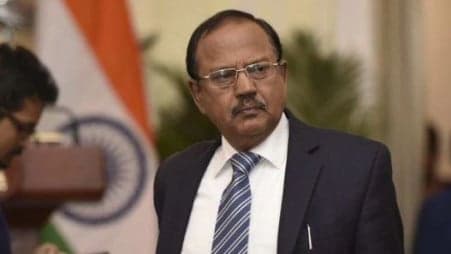
In News | Explained: NSA Doval in Bishkek for India–Central Asia security talks

Ajit Doval reaches Bishkek for an NSA meet with Central Asian partners—terror, Afghanistan, and drug routes top the agenda.
India’s NSA Ajit Doval is in Bishkek for a security dialogue with the five Central Asian republics. Expect focus on Afghanistan–Pakistan tensions, ISIS-K, radicalisation, and narcotics flows. The meet follows recent “Moscow format” talks and aims to deepen intel-sharing, counter-terror cooperation.
PUBLISHED OCTOBER 17, 2025
UPDATED JULY 16, 2026
5 MIN READ212 VIEWS
SHARE THIS ARTICLE
NSA Doval in Bishkek for India–Central Asia security talks

With Afghanistan volatile and Pakistan–Taliban tensions spilling across borders, India is working the Central Asian security circuit. NSA Ajit Doval’s Bishkek visit seeks to lock in counter-terror coordination, curb drug trafficking, and keep connectivity plans on track despite a shaky regional security picture.

What’s on the table

1) Terror & extremism

  • Afghanistan spillovers: ISIS-K activity, safe-haven concerns, cross-border facilitation networks.

  • Radicalisation & online ecosystems: Joint takedown requests, watchlists, and counter-narrative exchanges.

  • Foreign fighter flows: Vetting and travel-document security to prevent transit through Central Asia.

2) Narcotics & crime

  • Northern Route of Afghan opiates transiting Central Asia; rise of synthetics (meth/precursors).

  • Track-and-trace of consignments, controlled deliveries, and shared financial-intelligence to hit cartels.

3) Border security tech

  • Sensors, drones, PNR/API data, biometric gates, and training for land-border interdiction and forensics.

4) Connectivity under risk

  • Keeping INSTC and Chabahar corridors viable; contingency planning given sanctions, insurance, and regional instability.

  • Customs digitisation and mutual recognition of standards to cut transit time/costs.

5) Defence & intel links

  • Table-top and field exercises, special forces exchanges, cyber incident drills, and secure comms channels among NSAs.
Why this matters for India

  • Strategic depth without boots: Partnerships north of Afghanistan help monitor threats early and shape responses.

  • Drug-crime nexus: Narcotics profits fund terror networks; choking the Northern Route protects India’s streets and finances.

  • Energy & trade: Stable Central Asia means steadier energy/uranium supplies and a market for Indian pharma, IT, and engineering.

  • Great-power balance: Quietly diversifies beyond SCO optics and gives India agency amid Russia–China weight in the region.


Recent context

  • Moscow format talks saw India at the table with Central Asians, Pakistan, Russia, and a Taliban delegation.

  • Earlier this year, India hosted the 4th India–Central Asia Dialogue in New Delhi—placing connectivity and security as joint priorities.

  • In Bishkek, Doval met Kyrgyz Security Council Secretary Lt. Gen. Baktybek Bekbolotov to deepen cooperation on terror, radicalisation, extremism, and drugs.


Likely outcomes to watch

  • A joint working plan on terror-finance and narcotics (shared watchlists, FIU nodal points).

  • Time-bound measures for customs/API-PNR data exchange along priority corridors.

  • Training calendar: border-management, counter-IED, forensic labs, cyber ops.

  • Crisis hotline among NSAs for rapid coordination after major incidents.


The roadblocks

  • Afghan uncertainty: No recognised inclusive political framework; ISIS-K resilience.

  • Sanctions & insurance risks for INSTC/Chabahar legs.

  • Resource constraints in some Central Asian services and competing great-power agendas.


What India should prioritise

  1. Intel fusion cells with Central Asian partners to track ISIS-K, Haqqani-linked facilitators, and drug-finance flows.

  2. Border tech grants (drones, scanners, mobile labs) paired with long-term training.

  3. Legal cooperation: Extradition/mutual legal assistance fast-lanes for terror and narcotics.

  4. Resilient logistics: Alternative rail/road legs, warehousing, and risk-pooling for cargo insurance.

  5. People-to-people safety nets: Scholarships and language training for law-enforcement officers; medical evacuation and disaster-response cooperation.


Bottom line

The Bishkek NSA meet is about converting convergent threat perceptions into shared tools and timelines. If India and Central Asia can synchronise counter-terror, anti-narcotics, and corridor security, they’ll buffer the region against Afghan spillovers and keep commerce—and stability—moving.


Source: The Hindu


Stay Informed

Get our weekly digest of the most important news and analysis delivered to your inbox.

Trending

Loading trending articles...

Latest News

Loading latest articles...

Categories

Loading categories...

About the Author

Anandy

Anandy

Chief Editor

Chief Editor at The Upsc Times and Co-founder & CFO at Scorpyns Technologies. Culture, education, technology, and features.

Related Articles

ADVERTISEMENT
NSA Doval in Bishkek for India–Central Asia security talks | The Upsc Times