

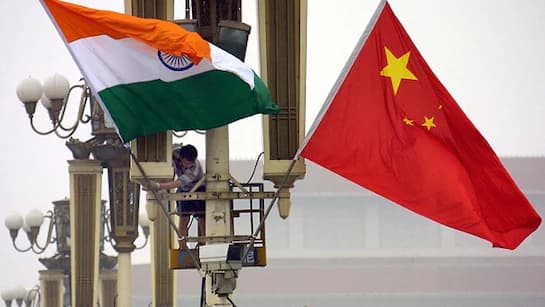
India and China will resume direct flights from October 26 after a five-year gap, marking a cautious step toward normalising relations. IndiGo and Air India plan new routes, while talks continue on revising the bilateral air service agreement to expand capacity and strengthen connectivity.
The News
India and China will resume direct commercial flights from October 26, 2025, ending a five-year suspension imposed during the COVID-19 pandemic and worsened by border tensions in 2020.
-
The Ministry of External Affairs (MEA) confirmed that both sides have agreed to restart passenger and cargo flights, coinciding with the winter schedule of international aviation.
-
IndiGo announced a daily Kolkata–Guangzhou flight beginning October 26 and plans a Delhi–Guangzhou route pending approvals.
-
Air India aims to restart Shanghai services before the end of the year, while Akasa Air has expressed intent to operate to China.
-
On the Chinese side, China Eastern has been cleared to operate five weekly Shanghai–Delhi flights, while Air China and Shandong Airlines have applied for passenger routes. China Southern and Sichuan Airlines have sought permissions for cargo services.
A senior government official said the two nations “remain engaged on revising the bilateral air service agreement” but decided not to delay flight resumptions while negotiations continue.
“Technical-level discussions have been ongoing since early this year as part of the government’s strategy for the gradual normalisation of relations,” the MEA said.
Background: The Bilateral Air Service Agreement
What Is an Air Service Agreement (ASA)?
An ASA is a treaty between two countries that defines:
-
The number of flights and seat capacity permitted.
-
The cities and routes each side’s airlines can operate.
-
Ownership and control standards for designated carriers.
-
Rights for cargo operations, code-sharing, and tariffs.
India has over 120 bilateral ASAs, including with the U.S., EU, and ASEAN countries.
The India–China ASA, signed in the early 2000s, allowed carriers to operate flights connecting Beijing, Shanghai, Guangzhou, and Delhi. However, capacity restrictions and limited reciprocal access kept connectivity modest even before COVID-19.
Timeline of Suspension
-
2019: Regular Air India and China Eastern flights operational.
-
2020: Services suspended amid pandemic lockdowns.
-
Mid-2020: Galwan Valley clashes caused diplomatic freeze; flights were not reinstated post-pandemic.
-
2023–24: Gradual reopening discussions began alongside trade normalisation.
Why the Resumption Matters
1. Economic Normalisation Despite Political Chill
Bilateral trade crossed $136 billion in 2024, making China India’s second-largest trading partner. Yet, passenger connectivity remained frozen — symbolic of strained ties.
Resumption signals economic pragmatism: both nations separating commerce and connectivity from strategic disagreements.
2. Business and Academic Mobility
Thousands of Indian professionals, students, and pharma traders have been stranded due to lack of flights. With Chinese universities reopening to foreign students, this resumption restores people-to-people and business movement crucial for sectors like IT, pharmaceuticals, and manufacturing.
3. Aviation Industry Boost
Indian carriers, especially IndiGo and Air India, view China as a vital short-haul international market for expansion. Cargo routes are equally strategic for pharmaceuticals, electronics, and e-commerce logistics.
4. Diplomatic Symbolism
Restarting flights while “remaining engaged” on air agreement renegotiations mirrors both sides’ approach: controlled thawing without concessions on political issues like the Line of Actual Control (LAC).
Outstanding Issues and Negotiations
1. Revising the ASA
The current ASA is outdated — capped at limited frequencies and cities. Indian carriers want:
-
Increased seat capacity (beyond pre-2020 levels).
-
Additional destinations like Chengdu, Shenzhen, and Chongqing.
-
Parity in market access, as Chinese carriers historically dominated traffic.
2. Regulatory Bottlenecks
Both sides’ civil aviation regulators — DGCA (India) and CAAC (China) — are coordinating approvals amid new compliance protocols for aircraft, crew, and airspace safety.
3. Political Constraints
-
The LAC standoff in eastern Ladakh remains unresolved.
-
Public opinion in both countries remains cautious.
Thus, engagement is being pursued quietly through technical channels, without political fanfare.
Broader Context: Aviation as Diplomacy
Aviation links have often mirrored India–China political temperature:
-
2000s: Warming ties under PM Vajpayee and Premier Wen Jiabao saw new flight openings.
-
2010s: Economic expansion drove tourism and business routes.
-
Post-2020: Complete freeze amid geopolitical hostilities.
Resumption now forms part of a “managed stabilisation” process — following recent bilateral talks on trade, pharmaceuticals, and multilateral cooperation (BRICS, SCO).
Challenges Ahead
-
Demand Uncertainty: Passenger confidence and tourism between the two nations remain low.
-
Route Profitability: Operating costs and restricted access may deter full-scale resumption.
-
Political Volatility: Any border flare-up or diplomatic provocation could again freeze aviation ties.
-
Air Service Modernisation: Unless the ASA is fully updated, connectivity will stay capped at minimal levels.
The Road Ahead
-
Short Term: Limited resumption for business and students; focus on rebuilding trust.
-
Medium Term: Modernised ASA to expand capacity and ensure reciprocity.
-
Long Term: Integrated economic cooperation under “health corridors,” “education exchange routes,” and “green trade channels.”
If handled prudently, aviation could become the first confidence-building measure (CBM) in restoring limited normalcy — much like how air links preceded trade normalisation with the U.S. and Japan in the past.
Conclusion
The decision to resume flights between India and China after five years is more than a commercial move — it’s a strategic signal of cautious engagement between two major Asian powers locked in complex rivalry.
While border issues remain unresolved, restarting civil aviation represents a pragmatic bridge, reflecting India’s broader strategy: cooperate where possible, compete where necessary, and contain where required.
The skies may open before the borders do — but even controlled connectivity marks progress in an otherwise frozen relationship.
Feature Image Prompt (16:9):