
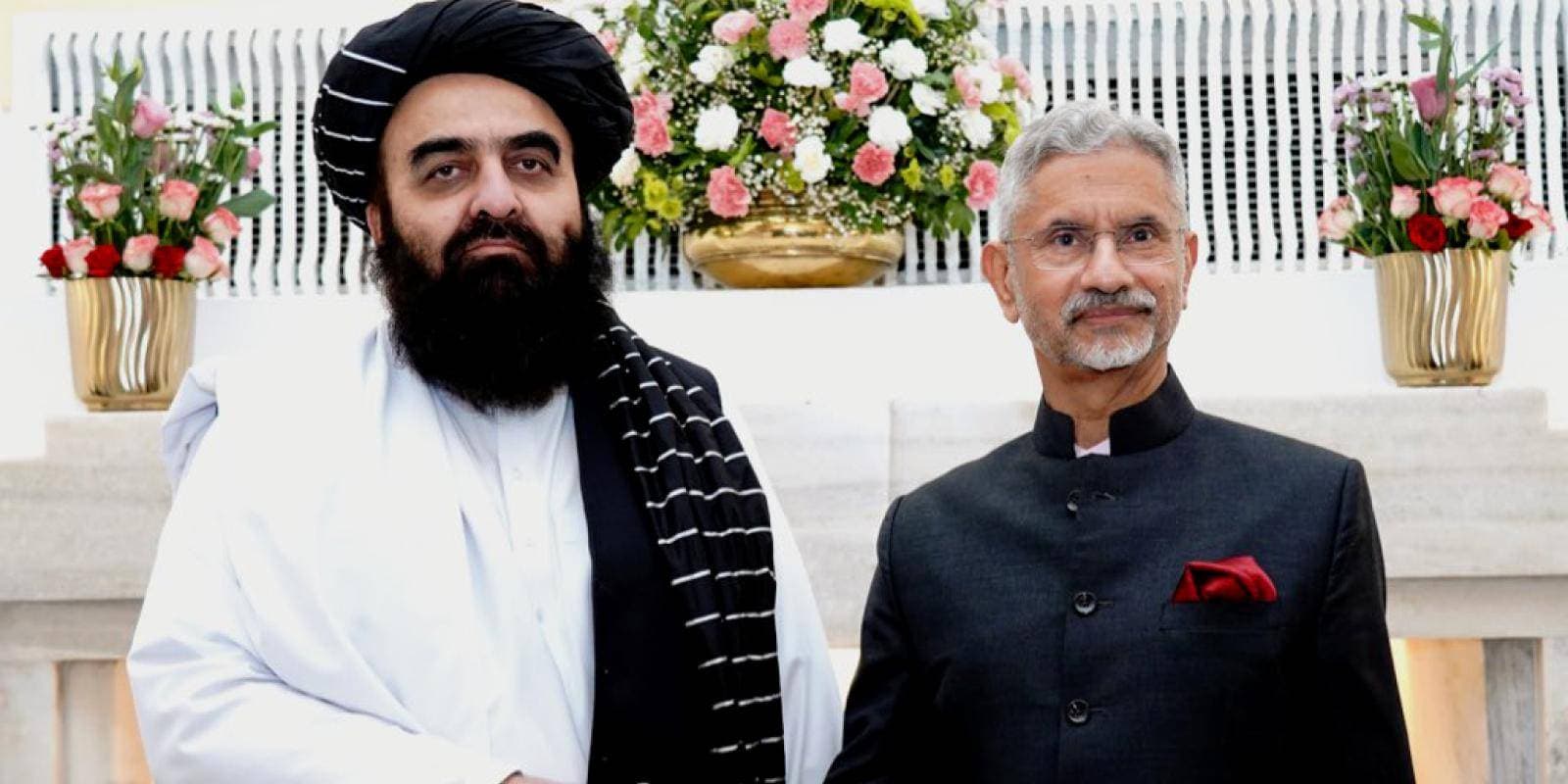
India has restored a full-fledged embassy in Kabul, upgrading its Technical Mission with immediate effect on 21 October 2025, the Ministry of External Affairs announced. The move follows the week-long visit of Taliban administration’s acting Foreign Minister Amir Khan Muttaqi to India. New Delhi framed the step as a bid to “deepen bilateral engagement” and expand development and humanitarian cooperation.
In a formal statement, the MEA said it was “restoring the status of the Technical Mission of India in Kabul to that of Embassy of India in Afghanistan with immediate effect,” underscoring an intent to engage the Afghan side “in all spheres of mutual interest.” The announcement came on Tuesday, 21 October 2025.
The upgradation was foreshadowed during Muttaqi’s visit to New Delhi earlier in October, the first such high-level trip since the Taliban returned to power in 2021. During that engagement, External Affairs Minister S. Jaishankar indicated India would scale up its presence in Kabul.
Indian media reports said the mission will initially be headed by a chargé d’affaires, with the government exploring a fuller staffing transition over time. Kabul, for its part, publicly welcomed the step, portraying it as a positive turn in ties.
This marks India’s first full diplomatic presence in Afghanistan in four years. New Delhi had evacuated its embassy in August 2021 after the Taliban takeover, before deploying a limited “technical team” in June 2022 to oversee humanitarian and development assistance. Tuesday’s decision elevates that footprint back to an embassy.
The MEA linked the restoration to India’s long-standing development partnership in Afghanistan, which has included infrastructure, health, education and capacity-building projects across the country. Officials framed the move as continuity with those commitments, while remaining silent on the question of formal recognition of the Taliban administration.
Why It Matters
A full embassy gives India more leverage and visibility in Kabul at a time of shifting regional dynamics. It enables closer monitoring of security concerns, faster facilitation of humanitarian assistance, and direct engagement on trade and connectivity, even as concerns persist over rights and inclusivity under Taliban rule. The decision also helps India hedge against growing influence of other regional players in Afghanistan.
Background / Context
-
Embassy status: India shut its Kabul embassy in August 2021 after the Taliban takeover, then returned in June 2022 with a small technical team focused on aid delivery.
-
Trigger event: Afghan acting Foreign Minister Amir Khan Muttaqi visited India in mid-October 2025, meeting EAM S. Jaishankar and other officials.
-
MEA stance: New Delhi says the upgrade will “deepen bilateral engagement” and “augment” India’s role in Afghanistan’s development and capacity-building.
-
Recognition: India has not formally recognized the Taliban administration; the engagement is framed as pragmatic and interest-driven.
Implications
-
Diplomatic channel re-opened: A resident embassy, even under a chargé d’affaires, improves access to Afghan authorities and on-ground situational awareness, including on security and counter-terrorism assurances.
-
Development pipeline: India can more efficiently coordinate ongoing humanitarian aid and restart stalled development projects, subject to security and sanction constraints.
-
Regional calculus: The move positions India to compete and cooperate amid Pakistan and China’s activities in Afghanistan, while keeping options open on eventual political recognition.
-
Constraints remain: International concerns over women’s rights, education, and inclusive governance persist, which could limit the scope and optics of deeper engagement.
Conclusion
By restoring its embassy in Kabul, India is moving from minimal, aid-focused engagement to a fuller diplomatic presence without crossing the line of formal recognition. The shift is calibrated, interest-based, and tied to development and security priorities, with a cautious eye on conditions inside Afghanistan.
Credits: Reporting reference: The Hindu (Kallol Bhattacherjee). Primary confirmation: MEA press release, 21 October 2025.