
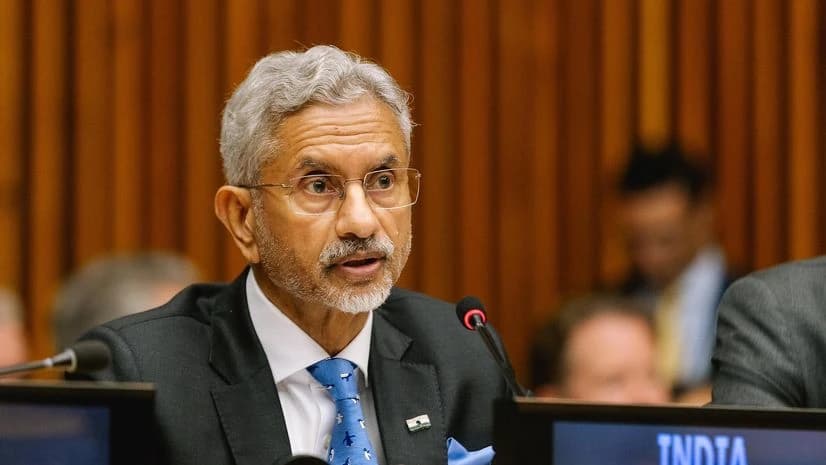
At the 80th UN General Assembly high-level week in New York, External Affairs Minister S. Jaishankar used more than 30 bilateral and multilateral meetings to underscore India’s role as a bridge for the Global South. From backing stronger statements on Gaza to leading forums like BRICS and IBSA, New Delhi signaled that it is aligning its diplomacy with the priorities of developing nations. This shift matters because the Global South is not just a rhetorical bloc, but a coalition whose unity could reshape trade, governance, and security debates.
The Story
India’s diplomatic calendar at the UNGA was packed with meetings involving Global South groupings: BRICS, IBSA (India–Brazil–South Africa), India–CELAC (Latin America), India–SICA (Central America), FIPIC (Pacific Islands), L-69 (developing nations lobbying for UN reform), and C-10 (African Union representatives). Nearly all were focused on structural inequities—from vaccine access and trade tariffs to climate finance and representation in global institutions.
On Gaza, India departed from its cautious abstentions of the past. It joined sharper statements by BRICS and IBSA condemning Israeli strikes and highlighting civilian suffering. This was interpreted as India realigning more firmly with the Global South consensus, where solidarity with Palestine is widespread.
Yet the backdrop was tense: U.S. tariffs on Indian goods, restrictive visa measures, and diplomatic signaling with Pakistan highlighted the friction with Washington, even as India sought new coalitions elsewhere.
Why It Matters
The Global South represents nearly 80% of the world’s population but has disproportionately little influence in global decision-making. For India, championing this bloc is both a geopolitical opportunity and a moral stance.
In a world where economic shocks and conflicts are often mediated by the West, the Global South seeks to rewrite rules of engagement—on trade, technology, and peace. India’s pivot is a reminder that the legitimacy of global governance cannot rest solely with the G7 or NATO.
An analogy helps: if the world is a table where rules are set, the Global South is demanding not just a seat but also a say in deciding the menu.
Background / Context
What is the Global South?
-
The term loosely refers to countries in Asia, Africa, Latin America, and Oceania with shared histories of colonialism and ongoing developmental challenges.
-
It is not a formal bloc, but an identity forged around demands for equity in trade, technology, climate, and governance.
Why Unity is Needed
-
Economic Inequity: Global South nations account for less than 40% of global GDP despite housing most of the world’s population.
-
Climate Burden: They face the harshest effects of climate change but contribute least to global emissions.
-
Health Gaps: The COVID-19 pandemic revealed vaccine apartheid, where poorer nations waited months for access.
-
Political Marginalisation: Despite decades of debate, the UN Security Council still reflects the power balance of 1945, not 2025.
Key Organisations and Forums of the Global South
-
BRICS (Brazil, Russia, India, China, South Africa): Expanded to include new members in 2023; a platform for economic and political coordination.
-
IBSA (India–Brazil–South Africa): Democratic middle powers coordinating on multilateral reform.
-
CELAC & SICA: Platforms for Latin American and Central American countries.
-
FIPIC (Forum for India–Pacific Islands Cooperation): India’s outreach to Pacific nations.
-
L-69 & C-10: Coalitions pressing for UN reform and greater African representation.
-
Non-Aligned Movement (NAM): The Cold War-era body that still provides a platform for Global South solidarity.
Implications
For India
-
Strategic Autonomy Recalibrated: By leaning into Global South forums, India demonstrates it will not remain tethered solely to the Quad or Western partnerships.
-
Soft Power Strengthening: Leading on issues like Gaza or pharma tariffs enhances India’s credibility as a voice for justice, not just self-interest.
-
Trade Pressures: Aligning with Global South also sharpens India’s resistance to Western tariffs and protectionism, but risks retaliation in other forums.
For the Global South
-
Unity as Leverage: A cohesive bloc can demand fairer terms in trade, technology transfer, and climate finance.
-
Challenges of Diversity: Divergent political systems and national interests often fragment the South’s bargaining power. For example, BRICS members themselves differ on Ukraine or digital rules.
-
Risk of Tokenism: Without institutional reforms at the UN, IMF, or WTO, even strong statements may remain symbolic.
For Global Governance
-
The Global South’s growing visibility forces Western powers to confront structural inequities. If ignored, the risk is parallel institutions—development banks, digital standards, or trade corridors—that bypass traditional structures. This could fragment the global order further.
Conclusion
India’s assertive stand at the UNGA reflects more than tactical diplomacy—it signals a recalibration towards the Global South, with Gaza as a symbolic pivot. The path forward will demand balancing Western partnerships with Southern solidarity. If the Global South can transcend rhetoric and forge true unity, it could redefine the rules of global governance for a more equitable century.