

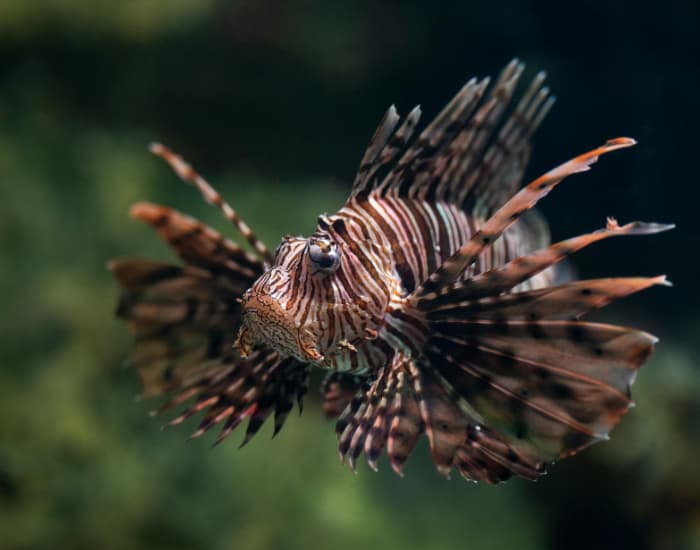
Across India’s wetlands, forests, and farmlands, a silent conquest is unfolding. Invasive alien species (IAS)—non-native plants and animals introduced accidentally or intentionally—are overwhelming native biodiversity, altering soil and water systems, and even transforming entire landscapes. Conservation scientists now face a dilemma: should India invest years in documenting these invasions, or act immediately to conserve and restore ecosystems before it’s too late?
The Story
The invasive takeover of Indian ecosystems began innocently—with colonial-era shrubs, ornamental fish, and exotic trees meant to “beautify” or “revegetate” land. Over time, they escaped cultivation, spread rapidly, and displaced native species.
-
Lantana camara, introduced as a colourful hedge, now carpets large tracts of India’s forests, restricting elephant and deer movement.
-
Prosopis juliflora, planted to combat desertification in Gujarat’s Banni grasslands, now consumes water faster than native plants, raising soil salinity.
-
Water hyacinth (Pontederia crassipes) clogs rivers and wetlands from Assam to Kerala, threatening migratory birds and aquatic biodiversity.
Such invasions, said ecologist K.V. Sankaran, represent an expanding crisis: “Around 37,000 alien species are established globally, and 3,500 of them cause serious harm. India alone hosts 139 invasive alien species, many unrecorded or poorly studied.”
How Invasives Alter Nature
Invasive species reshape ecosystems at multiple levels:
1. Species Level – They outcompete or prey on native organisms, reducing their population or driving them locally extinct.
2. Population Level – Native species lose genetic diversity and resilience.
3. Community Level – The entire structure of flora and fauna shifts, altering food webs.
4. Ecosystem Level – Invasives change soil chemistry, reduce water availability, and alter energy flow and nutrient cycling.
Examples abound:
-
Yellow crazy ants decimate native insect populations, upsetting natural pest control systems.
-
Prosopis monopolises surface water, worsening saltwater intrusion in Gujarat.
-
Water hyacinth, listed among the world’s top 10 invasives, blankets lakes, blocking sunlight and oxygen—choking life below the surface.
The Research Gap
Despite their scale, invasive species are poorly documented in India. Only a handful—like Parthenium, Lantana, and Prosopis—have well-studied invasion histories.
According to Alok Bang of Azim Premji University, “Freshwater invasion biology in India is still in its infancy. We lack detailed maps of species distributions, ecological interactions, and cumulative impacts.”
India’s 626 alien aquatic species—introduced for aquaculture, mosquito control, or ornamental purposes—illustrate this gap. Without baseline data, eradication or containment efforts often fail or even worsen invasions.
Document or Conserve?
This is the core dilemma: should India first catalogue every invasive species, or should conservation proceed simultaneously?
Dr. Bang warns that waiting for complete documentation is unrealistic: “There is no end to site-specific data collection, and we may not have the time or resources. The ecological clock is ticking.”
He advocates a hybrid approach:
-
Conduct targeted impact studies while designing parallel management plans.
-
Use global research to anticipate impacts in India.
-
Develop standardised, quantitative frameworks to measure cumulative effects and prioritise “hotspots” for intervention.
Policy and Management Imperatives
India needs a coordinated national response that combines science, local knowledge, and governance:
1. Standardised Mapping
Create a national atlas of invasive species using remote sensing, AI-based monitoring, and citizen science reporting.
2. Risk-Based Prioritisation
Identify high-impact species and regions (e.g., Western Ghats, Northeastern wetlands) for immediate action.
3. Early Detection and Rapid Response (EDRR)
Adopt a system similar to New Zealand and Australia, where newly detected invasives trigger pre-funded containment action within weeks.
4. Restoration and Bio-Control
Invest in native plant restoration and research into biological control—using natural predators or pathogens to regulate invasives.
5. Legal Strengthening
Include IAS management explicitly under the Wildlife Protection Act and link it to India’s Biodiversity Act, 2002 for accountability.
Global Context
The Intergovernmental Science-Policy Platform on Biodiversity and Ecosystem Services (IPBES) estimates that invasive species cost the global economy over $400 billion annually in lost crops, water stress, and disease spread.
Countries like Australia, South Africa, and New Zealand have pioneered national invasive species strategies combining prevention, surveillance, and community engagement—models India could adapt through its National Biodiversity Authority and State Forest Departments.
The Way Forward
Dr. Bang suggests an interdisciplinary and participatory approach: “Scientists must step out of silos and collaborate with farmers, fishers, forest dwellers, and civil society. Citizen science can fill data gaps faster than institutional surveys.”
With climate change accelerating species migration, India’s invasion crisis will deepen unless mitigated early. What began as ornamental gardening has now become an ecological emergency—one that blurs the line between documentation and action.
Conclusion
India’s challenge is no longer just about protecting endangered species, but reclaiming entire ecosystems from stealth invaders. The solution lies in parallel tracks: document, act, and adapt. Waiting for perfect knowledge may cost the country its biodiversity—acting too late could make restoration impossible.
Credit: Reporting inputs adapted from The Hindu (by T.V. Padma).