

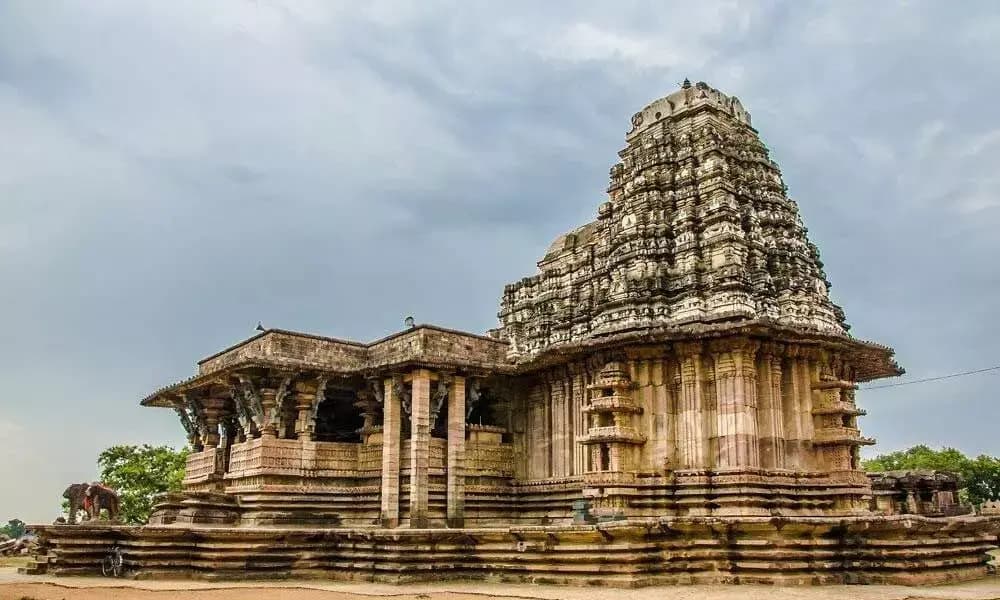
Ambassador and Permanent Representative of India to UNESCO (Paris) Vishal V. Sharma visited the Rudreswara (Ramappa) Temple at Palampet in Telangana’s Mulugu district to review preservation and conservation efforts being undertaken by the Archaeological Survey of India and the State government. The visit comes at a time when World Heritage Sites are increasingly judged not only by inscription prestige but by day-to-day maintenance, scientific conservation, and responsible visitor management.
What’s in the news
Site review and institutional coordination
The UNESCO envoy reviewed ongoing conservation work at Ramappa Temple along with ASI officials and associated stakeholders, indicating active coordination between the Union’s heritage custodian and the State administration.
Link to UNESCO processes
The report flags Mr. Sharma’s role in UNESCO’s World Heritage ecosystem, including leadership positions and involvement during the period when Ramappa Temple was inscribed on the World Heritage List in 2021.
Wider cultural recognition context
The mention of ‘Deepavali’ being inscribed on UNESCO’s Intangible Cultural Heritage list highlights how India’s cultural footprint spans both built heritage (monuments) and living traditions (intangible heritage), requiring different safeguards and governance models.
Background and context
Why Ramappa is significant
Ramappa Temple, also known as the Rudreswara Temple, is widely associated with Kakatiya-era temple architecture and craftsmanship. Its World Heritage status elevates its international visibility, but also brings higher expectations for authenticity, structural safety, visitor facilities, and long-term site planning.
How World Heritage status changes governance
World Heritage inscription is not a one-time badge. It creates a continuing obligation to protect “outstanding universal value” through periodic reporting, defined buffer zones, regulation of development impacts, and credible site management arrangements. In practice, this means conservation becomes an ongoing administrative and technical project, not merely a ceremonial milestone.
Key focus areas in conservation
Scientific preservation over cosmetic repair
Effective conservation prioritises structural stability, compatible material use, and minimal intervention, so that repairs do not dilute authenticity or introduce future deterioration.
Site management and visitor pressure
World Heritage visibility often increases footfall. Without crowd-flow planning, signage discipline, and carrying-capacity management, even well-intended tourism can cause gradual damage to stone, flooring, and micro-structures.
Risk preparedness
Increasingly, heritage conservation planning must account for climate-linked stresses such as intense rainfall events, humidity variations, biological growth, and drainage issues around temple complexes.
Why it matters
Cultural diplomacy with domestic credibility
India’s growing influence in UNESCO forums is strengthened when flagship sites demonstrate world-class conservation practices. A visible gap between global stature and local upkeep can weaken trust; strong maintenance does the opposite and enhances India’s cultural leadership.
Heritage as a development asset
Well-managed heritage sites can support sustainable local livelihoods through guided tourism, crafts, and services. The keyword is sustainable—growth that protects the monument, respects local communities, and avoids unplanned commercial sprawl.
Governance template for other sites
A high-level review at a World Heritage Site can set a benchmark for similar conservation frameworks across protected monuments, especially those transitioning from “protected” to “high-visibility international” status.
Arguments for and against
The case for more intensive conservation and monitoring
Supporters argue that World Heritage recognition justifies higher budgetary priority, advanced conservation techniques, and stricter development control around the site, because reputational stakes are now global.
The caution against over-restoration and tourism-first decisions
Critics worry that hurried beautification, excessive reconstruction, or tourism-driven infrastructure can harm authenticity. They stress that conservation should not become a festival of fresh plaster and new stone that quietly replaces original heritage fabric.
Constitutional and legal angle
Institutional responsibility framework
ASI functions as the primary national custodian for centrally protected monuments, while State governments play a decisive role in local infrastructure, tourism management, and law-and-order support around high-footfall sites.
Legal guardrails
Conservation and protection typically operate within the framework of monument protection laws and rules, including regulated areas, restrictions on construction, and permissions for interventions. For World Heritage Sites, UNESCO’s operational expectations also push for management plans, buffer zone discipline, and impact-aware development choices around the monument.
Implications and way forward
Stronger site management plan execution
A clear, living site management plan should guide conservation scheduling, visitor management, signage, vendor regulation, and emergency response.
Heritage impact discipline around the site
Development around the monument should be assessed for visual, structural, and cultural impact—not only legality. What looks “modern and useful” can still be harmful to heritage character.
Community-linked conservation
Local communities benefit most when conservation is paired with trained local guides, responsible tourism livelihoods, and better civic facilities that reduce stress on the monument ecosystem.
Documentation and transparency
Regular public updates on conservation work, timelines, and technical approach build trust and reduce misinformation, while also creating a learning model for other heritage sites.
Source credits
The Hindu (Hyderabad Bureau report)