

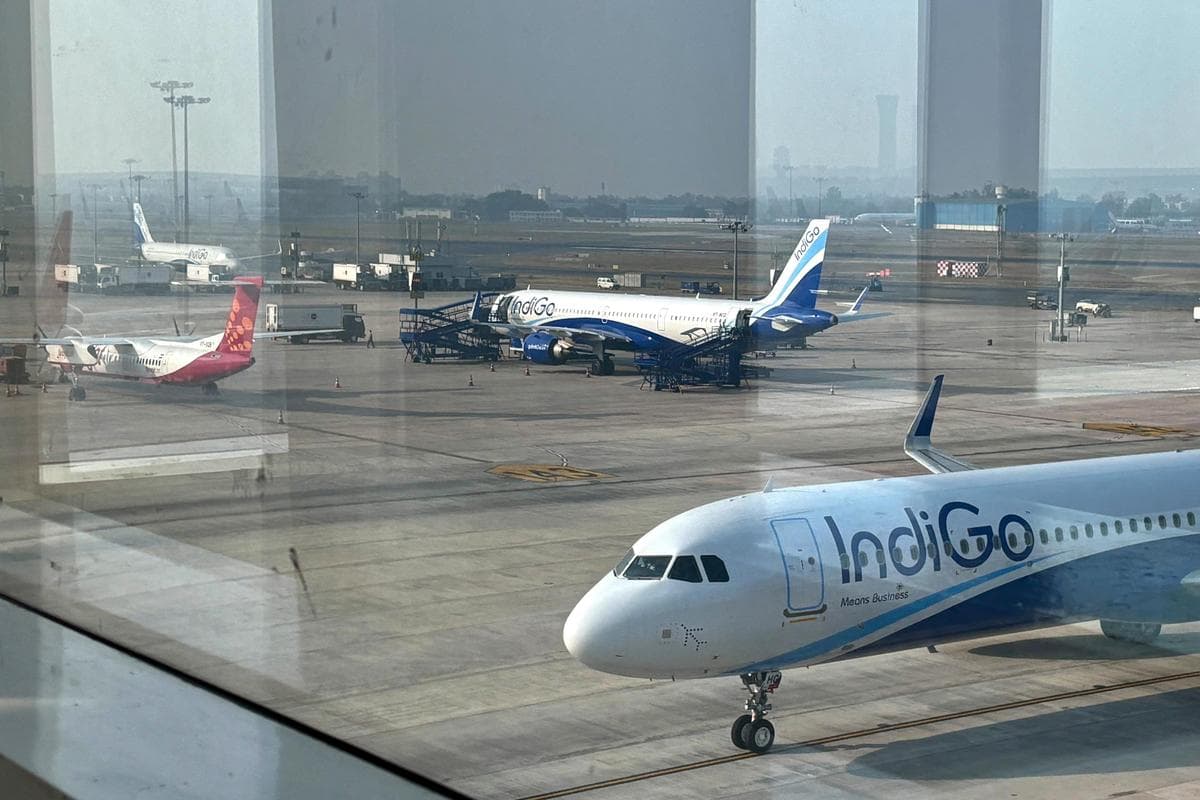
India’s largest airline, IndiGo, has moved into full-scale recalibration mode. After a week in which indigo flight cancellations spiralled and on-time performance collapsed to almost zero, the carrier has now chosen to cut 400–500 flights a day to “fully stabilise” its network. This is a sharper curtailment than the government’s order to reduce capacity by 10%, and it will leave tens of thousands of passengers checking indigo flight status today and scrambling for indigo refund and rescheduling options in the days ahead.
The Story
An IndiGo executive has confirmed that the airline will now operate 1,800–1,900 flights daily, down from the 2,300 flights it was running earlier. With an average 180-seat configuration and assuming 90% seat occupancy, this implies roughly 81,000 fewer seats available per day until full capacity is restored.
The immediate trigger is the airline’s failure to allocate sufficient pilots after stricter night-flying and fatigue rules for crew came into force. The new norms, framed under DGCA rules for IndiGo and other carriers, sharply limited night landings and expanded the definition of night duty. Poor planning around these changes produced an acute indigo crew shortage, forcing hundreds of last-minute cancellations and reducing on-time performance to as low as 3.5% on some days.
Civil Aviation Minister K. Rammohan Naidu told Parliament and later posted on X that IndiGo had been ordered to slash 10% of its flights as a regulatory response to the disruption. IndiGo’s own recalibration, however, amounts to a 17–21% cut, signalling that internal network stress was far more severe than official minimum requirements.
In a recorded statement prior to his meeting with the Minister, IndiGo CEO Pieter Elbers said that operations had now “fully stabilised”, claiming on-time performance had improved to 85–90% with flights operating to all 138 destinations in the network. The airline has also said it will inform passengers of cancellations 72 hours in advance, a critical assurance for those repeatedly refreshing indigo flight status today and chasing indigo refund and rescheduling through call centres and apps.
Mr. Naidu has underlined that “no airline, however large, will be permitted to cause such hardship to passengers through planning failures, non-compliance or non-adherence to statutory provisions,” and reiterated that safety in civil aviation is “completely non-negotiable”.
Why It Matters
For passengers, this episode has practical and immediate consequences:
-
A reduced schedule means more people facing indigo flight cancellations, rebookings and missed connections.
-
Many are turning online to track indigo flight status today, and to understand how quickly they can secure indigo refund and rescheduling when flights are cancelled or significantly delayed.
-
Questions are being asked about indigo plan b refund policies, compensation, and how proactively the airline is communicating alternative options.
For regulators and policymakers, the episode is also a stress-test of the new DGCA rules for IndiGo and other carriers on pilot fatigue and night operations. The regulator’s decision to prioritise safety by tightening Flight Duty Time Limitations (FDTL) was the right call. The crisis emerged not from the rules themselves but from how IndiGo adapted—or failed to adapt—its crew planning and rostering.
The indigo crew shortage that followed shows that robust regulation must be matched by equally robust contingency planning by airlines. If carriers cannot manage transitions to safer standards without paralysing their networks, it will inevitably invite deeper regulatory scrutiny and potential penalties.
Background / Context
The latest disruption comes on top of broader churn in Indian aviation—fleet groundings, supply-chain issues, and an aggressive expansion race in a market where IndiGo holds a dominant domestic share. The new fatigue rules, aimed at reducing pilot exhaustion and improving long-term air safety, restrict consecutive night duties and limit the number of night landings.
IndiGo’s failure to anticipate the real-world impact of these rules on its existing roster led to a sharp mismatch between scheduled flights and available rested crew. The result was a wave of indigo flight cancellations that cascaded across metro and non-metro routes, leaving airport terminals crowded and social media filled with real-time complaints.
While operations are now recovering, the airline’s decision to voluntarily cut deeper than mandated suggests that the earlier schedule was simply not sustainable under the new safety regime.
Implications
-
Short-term pain for travellers
-
Fewer daily flights mean higher load factors and less flexibility.
-
Passengers will rely heavily on accurate indigo flight status today updates and fair handling of indigo refund and rescheduling.
-
-
Operational reset for IndiGo
-
The airline must rebuild its roster model to comply fully with DGCA rules for IndiGo while avoiding fresh indigo crew shortage episodes.
-
Transparent communication around indigo plan b refund processes and alternative travel options will be key to restoring brand trust.
-
-
Regulatory signal to the sector
-
Mr. Naidu’s warning that planning failures and non-compliance will not be tolerated is a message to the entire industry, not just IndiGo.
-
Other airlines will likely revisit their own crew planning under the revised FDTL framework to avoid similar crises.
-
Conclusion
IndiGo’s decision to cut 400–500 flights a day is an attempt to restore reliability after a bruising week of disruptions. The move underscores a simple reality: in a tightly scheduled, high-volume aviation market, safety-driven regulatory changes cannot be managed with business-as-usual crew planning.
As IndiGo recalibrates its network, the focus will be on how well it serves affected passengers—through clear indigo flight status today updates, fair indigo refund and rescheduling pathways, and credible indigo plan b refund arrangements. For regulators, the episode reinforces why safety norms must stay firm even when they expose weak spots in airline operations. For the travelling public, it is a reminder that reliable air travel depends not only on low fares and dense networks, but also on invisible systems of planning that honour both safety and consumer rights.