

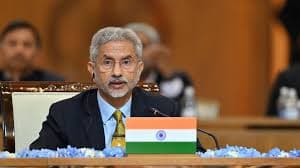
External Affairs Minister S. Jaishankar said on Sunday that India’s non-negotiables must be respected in any trade pact with the United States, noting that talks have struggled to reach a “landing ground.” The comments, made at an interactive session in New Delhi, follow heightened tariff frictions and recent attempts to restart a deal template.
The Story
Jaishankar acknowledged “issues” in the bilateral relationship tied to the failure to conclude a long-discussed trade package. He underlined a basic reality of negotiations: “there are things you can negotiate and there are things you can’t.” The Minister said an understanding is necessary given the U.S. is the world’s largest market, but insisted India’s red lines—on tariffs, market access asymmetries, and strategic autonomy—must be honoured.
Bilateral ties have been strained by sharp U.S. tariff hikes on Indian goods and extra duties linked to India’s discounted Russian crude purchases. New Delhi termed the measures “unfair, unjustified and unreasonable.” A phone call between Prime Minister Narendra Modi and President Donald Trump last month reopened channels to work toward a limited deal. Jaishankar’s remarks came during a discussion titled “Shaping foreign policy in turbulent times” at the Kautilya Economic Enclave.
Why It Matters
India–U.S. trade is a key pillar of a broader strategic partnership spanning technology, defence, and supply-chain diversification. Without a stable trade framework, tariff shocks and regulatory uncertainty can deter investment, raise costs for exporters and consumers, and complicate cooperation in critical sectors such as electronics, energy, and pharmaceuticals.
Background / Context
-
Trade backdrop: Years of talks to stitch a limited deal—covering tariff rollbacks, agricultural access, and digital trade principles—have repeatedly stalled.
-
Tariff overhang: Elevated U.S. duties on Indian exports and additional levies tied to energy purchases have widened the gap to a compromise.
-
Strategic overlay: Despite trade frictions, security and technology cooperation have expanded; both sides routinely signal intent to compartmentalise disputes and keep strategic ties on track.
-
India’s stance: Protect sensitive sectors (agri, MSMEs), maintain policy space for industrial and digital strategies, and seek reciprocal market access.
Implications
For negotiations: A deal is possible only if the U.S. offers credible tariff relief and India receives fair terms on market access without conceding core policy space in agriculture, data, and industrial incentives.
For business: Persistent tariff uncertainty encourages China+1 diversification into India but also raises landed costs for Indian exporters to the U.S. Companies will hedge via supply-chain re-routing, localised production, and contract clauses addressing tariff risk.
For geopolitics: Trade discord can spill into technology standards, export controls, and energy flows. Conversely, a narrow pact that defuses tariff pressures would stabilise the economic leg of the partnership and enable focus on critical and emerging tech.
Conclusion
Jaishankar’s message reframes the talks: engagement is essential, but not at any price. A workable landing ground will balance U.S. market access asks with India’s red lines on tariffs and strategic policy space—turning a tariff standoff into a platform for durable economic cooperation.