

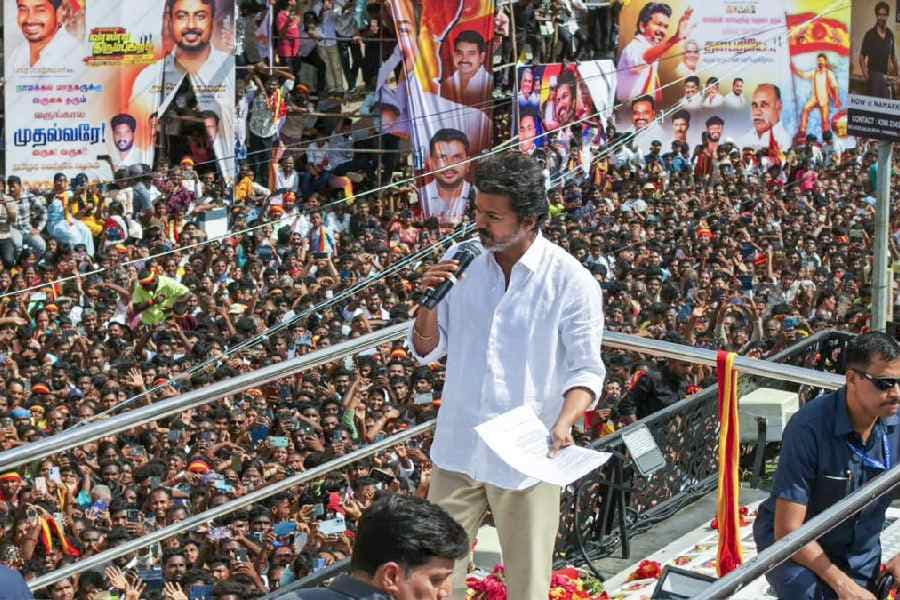
Acting on interim directions, a CBI team reached Karur to take over the TVK stampede investigation from the SIT, with a three-member panel led by former SC judge Ajay Rastogi set to oversee the probe. Parallel chatter about burnt papers has already turned this into a stress test of procedure, chain of custody, and institutional credibility.
The case status (quick brief)
-
SC transfer & oversight: The Supreme Court moved the probe from the Madras HC-appointed SIT to the CBI and constituted a three-member oversight committee led by Justice (Retd.) Ajay Rastogi.
-
CBI team on ground: A team led by SP Praveen Kumar began work from the PWD/Circuit House near the Collectorate; SIT files and local police records were handed over.
-
Evidentiary concerns: Viral images of burnt documents/pen drive at a government premises have sparked allegations of tampering; these will be early tests for the CBI’s forensics and chain-of-custody protocols.
CBI: Origin, legal basis, and constitutional position
-
Not a constitutional body: The CBI is not created by the Constitution; it functions under the Delhi Special Police Establishment (DSPE) Act, 1946, originally to investigate certain offences in Union Territories and extendable to states by consent.
-
How it came to be: The investigative “force” in law is the DSPE; the entity we call CBI flows from executive resolutions and later practice, with courts noting this legal architecture (e.g., Gauhati HC discussion on DSPE vs “CBI” nomenclature).
-
Scope expansion: Over time, the Centre has notified more offences (corruption, serious fraud, special crimes), and courts can direct CBI probes anywhere in India even without a state’s consent.
Where the CBI can investigate (and where it cannot)
-
Default rule—state consent: Under Section 6, DSPE Act, CBI needs state consent to exercise jurisdiction in that state. States give either general consent (standing) or specific consent (case-by-case).
-
Union Territories & central areas: No state consent is needed in UTs or for matters squarely within Union jurisdiction under DSPE notifications.
-
Court-ordered probes: SC/HC directions override the consent barrier; once a constitutional court orders a CBI investigation, the agency can proceed in that territory.
-
Practical constraint: In states that have withdrawn general consent, the CBI typically cannot register new FIRs there without specific consent or a court order—though it can continue probes it already registered elsewhere (subject to law).
General consent vs specific consent: the map and the politics
-
General consent withdrawn (recent years): Multiple states—Punjab, Jharkhand, Kerala, Rajasthan, Chhattisgarh, West Bengal, Mizoram, Telangana, Meghalaya, Tamil Nadu—have withdrawn general consent, citing federalism and alleged misuse.
-
Implication: Without general consent, CBI must seek specific consent for each new case or rely on a SC/HC mandate. This has meaningfully slowed or deterred new registrations in those states.
-
Continuing churn: Policy committees and testimonies note operational friction for inter-state cyber/financial crimes when consent is withdrawn, with CBI flagging delays from case-specific approvals.
Key court touchstones you should know
-
Courts can compel CBI entry: CBI’s own FAQ reiterates that Supreme Court/High Courts can order CBI probes anywhere, consent or not—crucial in politically sensitive matters.
-
DSPE structure acknowledged: Judicial discussions (e.g., Gauhati HC) underscore that CBI’s authority is rooted in DSPE Act + executive resolution; helpful context when federal competence is litigated.
-
Consent withdrawals litigated: West Bengal’s original suit and allied commentary map the centre–state tensions as more states withdraw general consent, alleging partisan targeting.
ED’s rise vs CBI: why the ED often looks “bigger” today
-
Different laws, different teeth: The Enforcement Directorate (ED) operates under PMLA (money-laundering). In Vijay Madanlal Choudhary (2022), the SC upheld wide ED powers: arrest, attach property, and conduct inquiries distinct from police investigations—diluting some CrPC-style safeguards. This ruling is a watershed in ED’s expansion.
-
Ongoing scrutiny: Subsequent hearings have cautioned that ED must act “within the four corners of law,” but the 2022 framework stands, keeping ED’s tool-set formidable pending any successful review/legislative change.
-
Why this eclipses CBI:
-
Jurisdictional friction slows CBI where consent is withdrawn; ED’s central statute with pan-India reach in laundering cases suffers fewer such speed-breakers.
-
Asset-freezing leverage (attachments under PMLA) creates immediate coercive effect absent in many CBI cases (which depend on prosecution post-investigation).
-
Political optics: Many high-profile financial probes today are routed via PMLA hooks, naturally putting ED at centre stage.
-
What this means for the Karur probe (institutional lens)
-
Legality of entry: SC’s order cleanly vests CBI jurisdiction in Tamil Nadu notwithstanding the state’s consent stance—so searches, seizures, and summons are on firm footing if done per DSPE/CrPC.
-
First 72-hour priorities:
-
Secure evidence depots/venues, log every handover, and capture hash values for digital media;
-
Witness protection roster for crowd managers, venue operators, police control-room staff;
-
Reconstruct crowd-flow via GIS/site plans, wireless logs, and CCTV time-sync;
-
Forensic audit of any burnt/altered documents and chain-of-custody gap analysis.
-
-
Oversight utility: The Rastogi panel gives a neutral dashboard for progress, a pressure valve against political jousting, and a forum to escalate resource needs (forensics, crowd science expertise).
Editor’s value-add: a quick “know your law” card
-
CBI’s legal spine: DSPE Act, 1946 (not a constitutional/statutory commission like EC/CAG).
-
Consent rule: General consent = standing permit; specific consent = case-wise clearance. SC/HC orders override consent barriers.
-
Why states withdrew: Federalism, forum-shopping concerns, and allegations of partisan use; 10 states have pulled general consent since 2018–25.
-
ED vs CBI today: ED’s PMLA powers, reaffirmed in Vijay Madanlal (2022), + pan-India bite = more visibility than CBI in headline cases.
Bottom line
The Karur stampede case brings three live questions into one frame: How fast can the CBI stabilise evidence and witness accounts? How cleanly can it operate inside a consent-withdrawn state under SC oversight? And will the public read this as a fair, skills-first probe in an era when the ED, not the CBI, has become the government’s most potent investigative brand? The answers will shape not just this tragedy’s accountability trail, but also the ongoing federal argument over who investigates what, where, and under whose consent.
Credits: With inputs from The Hindu.