

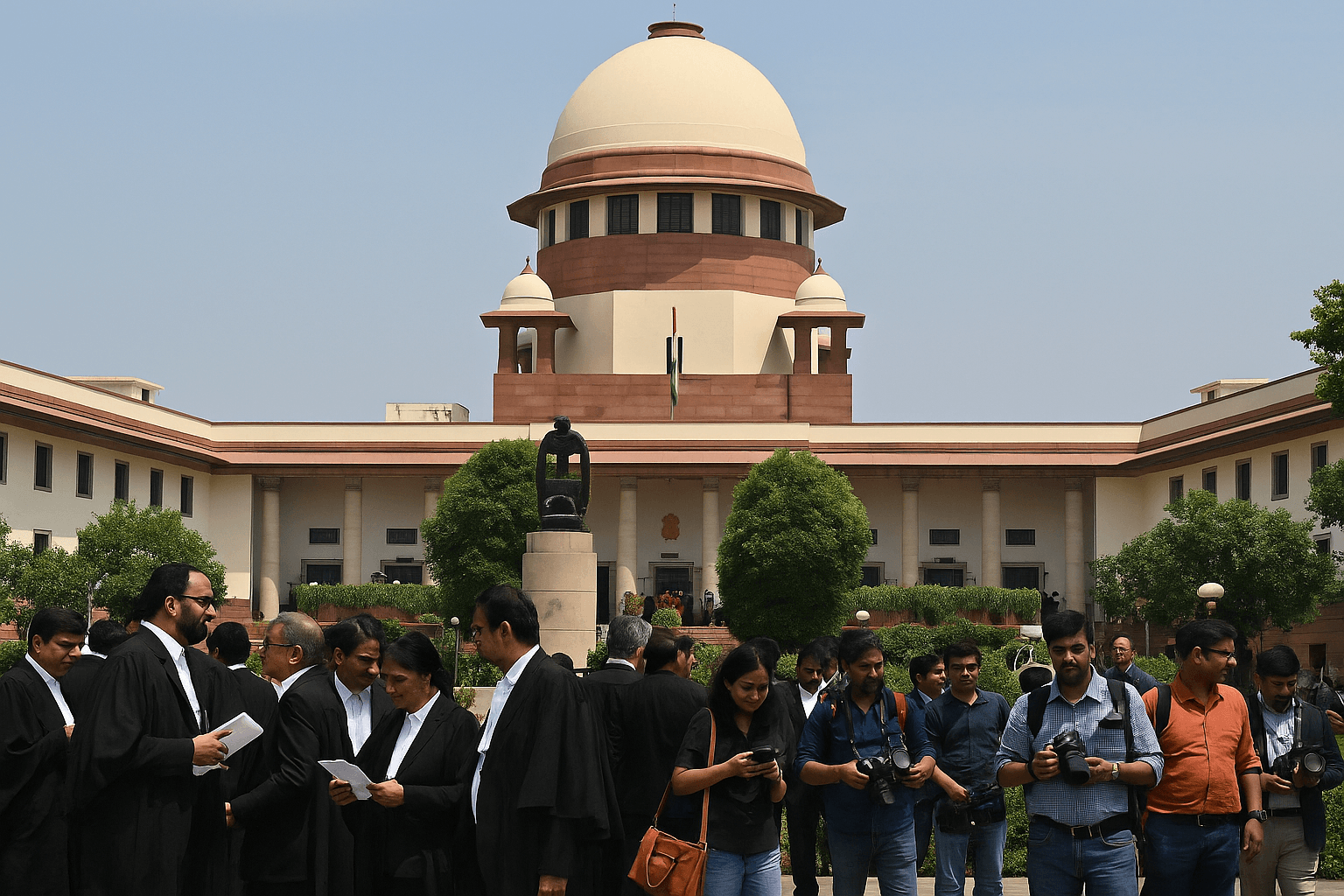
Supreme Court judge M.M. Sundresh on Monday voiced concern over the rising misuse of criminal defamation, suggesting it may be time “to decriminalise” the offence. His remark, made during a hearing involving The Wire, reopens debate on whether defamation should remain a crime or be treated only as a civil wrong.
The Story
Justice Sundresh’s oral observation came while hearing a petition filed by the Foundation for Independent Journalism and a journalist challenging criminal defamation summons. Senior advocate Kapil Sibal, appearing for the petitioners, pointed to multiple cases where political leaders — including Congress leader Rahul Gandhi — have faced criminal defamation complaints.
The Bench stayed proceedings against the petitioners and tagged their case with those already filed by Gandhi. In recent months, the Supreme Court has stayed summons in several similar matters, often cautioning complainants not to use courts as platforms to settle political scores.
Earlier this year, the Court stayed cases against Gandhi over remarks on Union Home Minister Amit Shah and Hindutva ideologue V.D. Savarkar, as well as against Congress MP Shashi Tharoor for his “scorpion on Shivling” comment.
Why It Matters
The debate touches the core of India’s democratic framework: how to balance free speech with the right to reputation. Criminal defamation cases can have chilling effects on public debate, forcing journalists, politicians, and citizens to defend themselves in lengthy criminal trials for statements that might otherwise fall within civil law.
At the same time, defenders argue that reputation is part of the fundamental right to life under Article 21, and criminal sanctions act as a deterrent against malicious attacks.
Background / Context
What is defamation?
-
Defamation refers to statements that harm a person’s reputation.
-
In India, it can be pursued both as a civil wrong (seeking damages) and as a criminal offence under Sections 499–500 of the Indian Penal Code (punishable with up to two years’ imprisonment).
Supreme Court’s stance in 2016:
In Subramanian Swamy v. Union of India, the Court upheld criminal defamation, ruling it a “reasonable restriction” on free speech under Article 19(2). The judgment emphasised that reputation is integral to dignity and must be protected.
Current tension:
Justice Sundresh’s remark reflects growing concern that criminal defamation is increasingly being filed by private individuals and political actors as a tool of harassment, rather than to protect genuine reputational harm.
Implications
-
For free speech: Decriminalisation would reduce the threat of imprisonment for speech-related offences, giving greater protection to journalists and political opponents.
-
For reputation: Civil remedies would remain available, ensuring victims can still seek damages.
-
For judiciary: Reducing criminal defamation cases would ease court dockets burdened by politically charged complaints.
-
For politics: The change could discourage the use of criminal law as a political weapon but might invite concerns over unchecked defamatory speech.
Conclusion
Justice Sundresh’s call to reconsider criminal defamation law signals a potential shift in judicial thinking, less than a decade after the Court upheld its constitutionality. As more benches express unease at its misuse, the larger debate remains: should protecting reputation justify criminal punishment, or should civil law alone safeguard dignity in a democracy?