

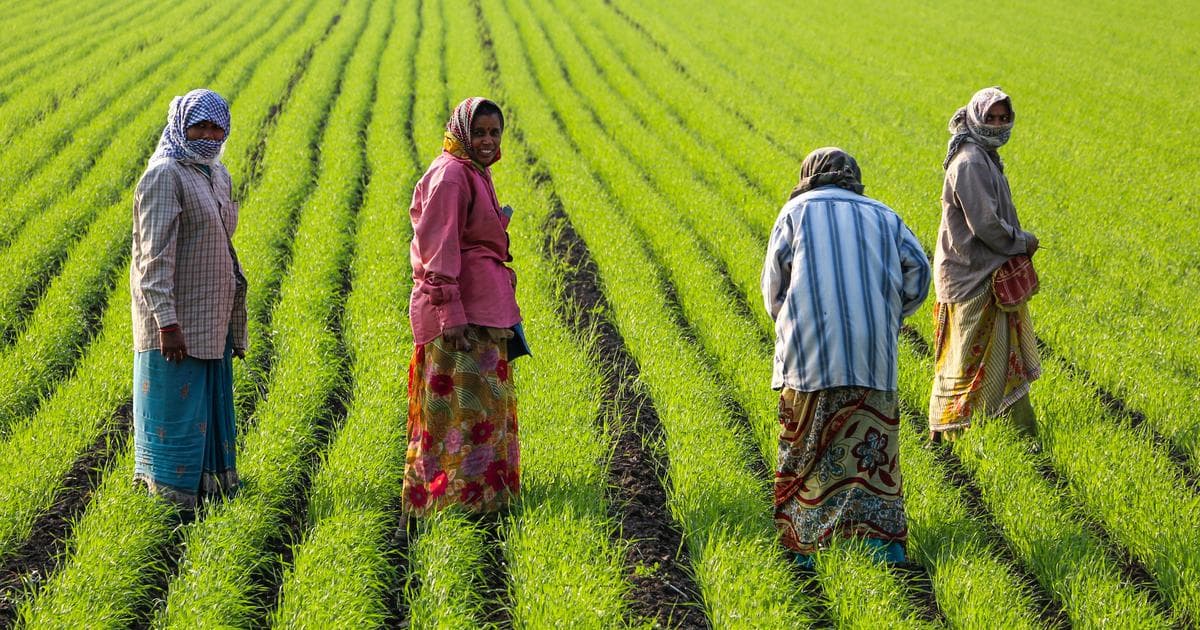
In New Delhi on Saturday, the Prime Minister urged India’s farmers to grow for global markets and for better nutrition at home. Launching the Dhan Dhaanya Krishi Yojana and the Pulses Self-Reliance Mission, he said GST reforms had lowered costs for rural households and reduced the price of farm machinery.
The Story
Addressing the Special Krishi Programme, the Prime Minister called on farmers to “think beyond flour and rice” and increase production of protein-rich pulses. He said the Pulses Self-Reliance Mission, with an outlay of more than ₹11,000 crore, aims to expand pulse cultivation by 35 lakh hectares and directly benefit about two crore farmers. He framed the push as both an economic and a nutrition strategy, noting that India still imports significant quantities of pulses and that protein intake is critical for children and vegetarians.
He paired the nutrition pitch with an export pivot, urging growers to align crop choices with international demand so that India can cut imports and raise farm exports. The government’s stated objective is to move from basic self-sufficiency toward value-added, globally competitive agriculture.
On costs and affordability, he said GST reforms have translated into higher savings for rural households and lower prices for daily-use items and farm tools. Citing tractors as an example, he contrasted the pre-GST tax burden with post-reform prices and claimed that tractors have become cheaper, which he linked to brisk festive-season purchases.
The Dhan Dhaanya Krishi Yojana was positioned as complementary to the pulses push, with a focus on easing input costs, expanding credit access, and improving post-harvest support so farmers can respond to price signals and export demand. The government also stressed that reducing expenses and improving profitability remain central policy aims.
Why It Matters
A nutrition-first crop strategy can lift household health outcomes while substituting imports with domestic produce. At the same time, nudging growers toward export-oriented crops, coupled with better logistics and quality standards, can diversify farm incomes and reduce vulnerability to local price shocks. If tractor and tool costs have indeed fallen, that can accelerate mechanisation, improve productivity, and ease labour bottlenecks during peak seasons.
Background / Context
India’s pulse gap
For years, domestic demand for pulses has outpaced supply, prompting periodic imports. Expanding acreage, productivity, storage, and assured procurement are recurring policy levers to narrow the gap.
From self-sufficiency to exports
India is a top global producer in several staples, yet a smaller share of farm output meets export-grade quality and traceability norms. Moving up the value chain requires seed quality, extension services, post-harvest infrastructure, and predictable trade policies.
GST and farm economics
GST restructured indirect taxes on inputs and machinery. Any durable reduction in the total cost of ownership for tractors and implements can influence adoption rates, fuel efficiency, and timely field operations.
Implications
1) Crop choice and income mix
Acreage shifts toward pulses and export-fit crops can stabilise incomes if backed by seeds, credit, irrigation, MSP operations where applicable, and reliable market linkages. Without last-mile support, targets risk remaining on paper.
2) Nutrition dividends
Greater domestic availability of pulses can lower retail volatility and improve protein intake, especially in school meals and public distribution channels, if procurement and distribution are aligned.
3) Machinery uptake
If tractor and implement costs remain contained, small and medium farmers may adopt shared services and custom hiring, improving timeliness of sowing and harvesting and reducing post-harvest losses.
4) Trade readiness
Export orientation will demand residue compliance, grading, cold-chain, and predictable export policies. Cooperatives, FPOs, and private agri-logistics will be pivotal in aggregating volumes at consistent quality.
Conclusion
The twin push, pulses for nutrition at home and export-oriented crops for markets abroad, ties India’s farm strategy to both household welfare and global competitiveness. The promise will hinge on execution, from seed to storage to shipping, and on whether input-cost relief and market access reach the last-mile farmer.