

Mongolian President Ukhnaa Khurelsukh arrives in India on 13–16 October for his first presidential visit, with a cabinet-level team to discuss energy, mining and defence. India and Mongolia established diplomatic ties in 1955 and upgraded to a strategic partnership in 2015. The visit aims to deepen cooperation built on minerals, Buddhism-linked cultural links, and growing defence engagement.
Geography: Steppe Nation Between Two Giants
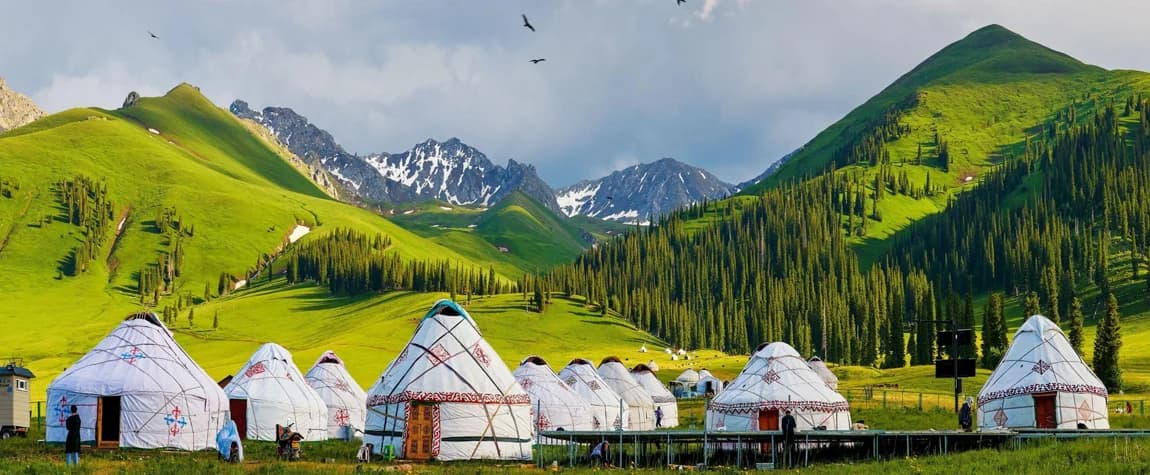
Mongolia is a vast, landlocked country in Inner Asia, bounded by Russia to the north and China to the south, with upland steppe, semi-desert and Gobi desert belts, and harsh continental winters. Capital: Ulaanbaatar. The population is a little over 3.4 million, among the world’s lowest densities.
Polity: Semi-Presidential, Unicameral Parliament
Mongolia is a unitary semi-presidential republic. The directly elected President is head of state, while the Prime Minister and Cabinet exercise executive power and are accountable to the 76-member State Great Khural, the unicameral parliament.
Culture: Buddhism, Nomadism and the Three Manly Games
Tibetan Buddhism is the majority faith alongside a strong nomadic heritage, with shamanic traditions persisting. Naadam, the national festival in July, celebrates wrestling, horse racing and archery as living nomadic skills. The soundscape features throat singing and the morin khuur, the horse-head fiddle.
India–Mongolia: History and Strategic Logic
Civilisational links
For centuries, Buddhist scholarship tied the Mongol steppe to Indian seats of learning such as Nalanda. Modern monastic exchanges and cultural scholarship kept these links alive, framing the idea that India and Mongolia are “spiritual neighbours.”
Diplomatic arc
India recognised Mongolia in 1955. In 2015 both sides declared a Strategic Partnership and India extended a one-billion-dollar line of credit, catalysing projects such as the Dornogobi oil refinery aimed at cutting Mongolia’s fuel import dependence.
Defence and security
The armies train together in Exercise Nomadic Elephant. Mongolia also hosts the multilateral peacekeeping drill Khaan Quest. Recent editions have focused on interoperability and UN peacekeeping skills.
Trade Snapshot: What Mongolia Sells and Buys
Mongolia’s export basket
Mining dominates. Coal briquettes and copper concentrates are the top earners, followed by gold, iron ore and crude. Cashmere is a globally known non-mineral export. China is by far the main buyer.
Mongolia’s key imports
Petroleum products, machinery, vehicles and consumer goods dominate.
India–Mongolia bilateral trade
The bilateral merchandise base is small due to distance and logistics, but growing. India’s exports to Mongolia are led by pharmaceuticals, machinery and vehicles. India has also explored coking coal purchases from Mongolia to diversify sourcing.
What Is on the Table During the Visit
Energy and the Mongol Refinery
The Dornogobi refinery, funded largely via India’s credit line, is intended to reduce Mongolia’s fuel import dependence and open opportunities for Indian EPC services, training and operations support. Timely commissioning and product evacuation logistics will be key.
Mining and critical minerals
Copper and coal cooperation is the near-term focus. Over the medium term, exploration and processing of battery minerals and rare-earth-related inputs can expand if policy stability and environmental safeguards hold.
Defence and UN peacekeeping
Expect emphasis on training, mountain warfare know-how, and UNPKO preparedness, building on Nomadic Elephant and Khaan Quest takeaways.
People and Buddhism
Heritage diplomacy via monasteries, manuscript preservation and pilgrimages to Bodh Gaya, Sarnath and Nalanda are low-cost, high-trust force multipliers.
Where the Relationship Can Grow Next
1) Coking coal corridor
Structured offtake for Indian steel along a Russia transit route can reduce over-reliance on traditional suppliers, provided freight economics and compliance remain workable. Pilot shipments would test the model.
2) Pharma and medical devices
India can scale essential generics and low-cost diagnostics suited to Mongolia’s dispersed populations, coupled with telemedicine links from Ulaanbaatar to aimag hospitals.
3) Refinery skills and fuels marketing
Post-commissioning, India can help with refinery optimisation, product quality standards and retail logistics, deepening long-horizon interdependence.
4) Clean energy and grids
Wind and solar integration on the steppe needs grid stability solutions. Indian firms can offer project development, SCADA and storage solutions backed by climate finance.
5) Culture and education
Scholarships for Buddhist studies and conservation science, digitisation of Mongol Kanjur manuscripts, and exchanges for museum professionals would anchor the spiritual neighbour narrative in practical projects.
Balanced Assessment: Opportunities and Frictions
Logistics friction
No shared border and winter weather impose costs on trade. Most Mongolian exports head to China. India must target niches where its value is unique and margins can absorb freight.
Policy stability
Mining cycles, local permitting and environmental safeguards can delay projects. Guarantees and stepwise pilots reduce risk.
Asymmetry of scale
India’s market size is vast compared to Mongolia’s. Calibrated expectations, with a focus on quality projects like the refinery and targeted offtakes, can keep the partnership credible.
Conclusion
Mongolia offers India a mineral-rich, values-friendly partner in the heart of Inner Asia. For Ulaanbaatar, India is a trusted “third neighbour” that diversifies options beyond its two great neighbours. The October visit is a chance to lock in refinery timelines, test a coking coal route, scale pharma and skills, and give fresh content to a relationship rooted in steppe, scripture and strategy.