

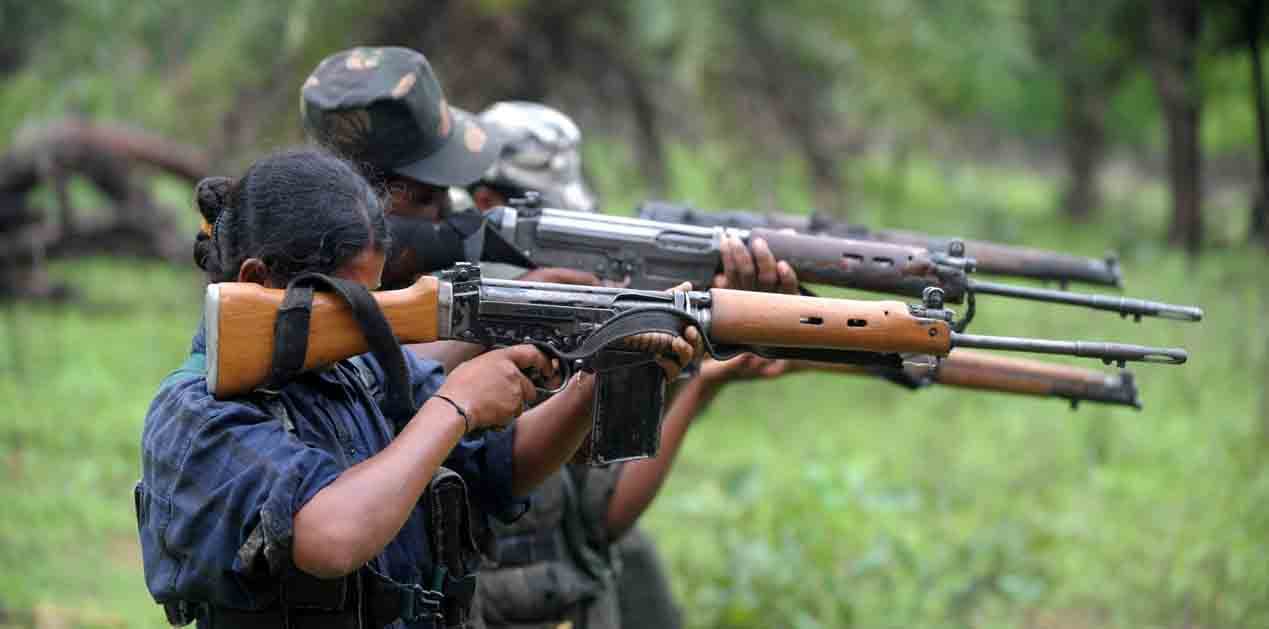
Raipur, Sept 2025 — As Chhattisgarh Chief Minister Vishnu Deo Sai declared that Naxalism has been “eliminated” from Bastar, the claim capped nearly six decades of conflict that began with a peasant revolt in West Bengal’s Naxalbari village in 1967. Once described as India’s “biggest internal security threat,” the Maoist movement has ebbed after years of security offensives, but its legacy of inequality and unrest still shadows tribal heartlands.
What Happened at the UN
In his UNGA address, External Affairs Minister S. Jaishankar delivered pointed remarks about terror infrastructure operating “at industrial scale,” and referred to a neighbour (without naming it) as being behind recent attacks.
He also invoked the Pahalgam terror attack of April 22, which claimed 26 lives, as an example of cross-border terrorism.
In its right of reply, India’s UN mission used a stark tone, calling the neighbour “Terroristan,” and insisting that the other side had effectively admitted its “longstanding practice of cross-border terrorism.”
Pakistan, in its response, accused India of “maligning” Pakistan and demanded that New Delhi present evidence for its accusations. It claimed India distorted its name and sought to defame the country.
Thus, the UN stage became a public battleground where both sides pressed their narratives before the international community.
The Pahalgam Attack: Key Facts & Investigations
To understand India’s forceful posture, one must revisit the Pahalgam attack and how it has shaped the current crisis.
On 22 April 2025, heavily armed militants attacked tourists in the Baisaran Valley near Pahalgam, Jammu & Kashmir, killing 26 civilians and injuring about 20 others.
The attackers reportedly asked victims to state their religion and singled out non-Muslims before opening fire.
The Resistance Front (TRF), widely seen as a front for Lashkar-e-Taiba (LeT), initially claimed responsibility.
Indian agencies have investigated the role of both local and foreign handlers. Some suspects traced have been alleged to be from Pakistan.
In a later counterterror operation codenamed Operation Mahadev (July 2025), security forces reportedly killed three terrorists linked to the Pahalgam attack.
The attack escalated Indo–Pakistan tensions. India accused Pakistan of complicity; Pakistan denied involvement and called for an independent, neutral investigation — a demand which India rejected.
In May 2025, India launched Operation Sindoor, a retaliatory missile strike targeting terror infrastructure in Pakistan and Pakistan-administered Kashmir.
A ceasefire was brokered on May 10 after days of cross-border missile and artillery exchanges.
The Pahalgam attack thus sits at the heart of the current diplomatic escalation, providing India with a strong rhetorical and security anchor.
Why the UN Confrontation Matters
Symbolic Stakes and Narrative Battle
At the UN, optics and narrative matter almost as much as facts. By framing Pakistan as “Terroristan,” India sought to shape global perception, reinforcing its long-standing argument that militant groups in Pakistan enjoy sanctuary, logistical support, or safe havens. This moves the debate from bilateral recriminations to the arena of global legitimacy.
Diplomacy and Global Audiences
India’s approach aimed for a broader audience — not just Pakistan, but other nations observing how New Delhi frames counterterrorism and sovereignty issues. The move also underscores India’s desire to hold Pakistan accountable in multilateral fora rather than limiting the discussion to bilateral channels.
Risks of Escalation
Putting such sharp accusations on record at the UN carries risks:
-
Pakistan may feel compelled to retaliate diplomatically or militarily.
-
The demand for hard evidence grows louder in international diplomacy.
-
The tone of confrontation can limit room for quiet back-channel de-escalation.
The Credibility Question
For India’s narrative to stick, it must back accusations with credible intelligence, forensic evidence, and sustained prosecution. Without these, the rhetoric might be dismissed as political posturing.
Broader Strategic and Political Dimensions
The Cross-Border Terrorism Narrative
India has long accused Pakistan of backing terrorist groups that target Indian soil. The UN confrontation, in conjunction with the Pahalgam incident, reinforces that claim. But for India, global sympathy and support hinge on proving not just involvement but sustained intent, command, control, finances, and safe havens.
Domestic Pressures
The Pahalgam victims included tourists from various states; the political fallout domestically is intense. The Indian government faces pressure to deliver justice, show deterrence, and maintain public confidence in its security machinery.
Pakistan’s Diplomatic Posture
Pakistan has denied complicity and demanded evidence. By painting India’s naming as defamatory, it seeks to gain moral high ground in diplomatic forums, especially where non-aligned or neutral countries look critically at allegations without corroboration.
Third-Party Mediation and Global Attention
International actors — U.S., China, and the UN — may be drawn in to urge restraint, push for investigation, or mediate. How India and Pakistan play their cards at the UN will affect whether global powers engage or distance themselves.
What to Watch
-
Evidence Disclosure: Will India present new declassified intelligence or forensic evidence linking the attack to agents in Pakistan?
-
International Reaction: Responses from UN Security Council members, G-20 nations, and key middle powers could either validate or undercut India’s narrative.
-
Pakistan’s Next Moves: Will Pakistan accept bilateral or multilateral investigation? Will it respond with its own allegations or push for “false flag” claims?
-
Progress of Prosecutions: Success in convicting perpetrators or disrupting terror networks will bolster India’s claims and credibility.
-
Conflict Escalation Risk: Any misstep could spiral into further border skirmishes or air exchanges — the UN back-and-forth is just part of the larger tension.
Conclusion
This episode at the UN marks a diplomatic intensification of the India–Pakistan conflict over terrorism. Beyond words, the challenge for India is to anchor its assertions in facts and actions that the world cannot easily dismiss.