

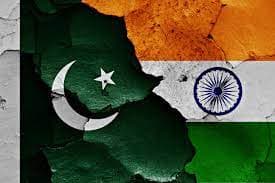
In New Delhi, Taliban Foreign Minister Amir Khan Muttaqi said Kabul seeks dialogue with Pakistan to end current hostilities, warning that if talks fail Afghanistan has “other means.” He rejected Islamabad’s allegations that the TTP operates from Afghan soil, counter-accusing Pakistan of sheltering Islamic State elements and failing to police its own territory. The remarks came amid claims of cross-border strikes, captured outposts, and closed crossings—while the minister simultaneously courted Indian business groups.
The Story
Muttaqi’s second press conference in Delhi followed criticism that women journalists were excluded from a prior interaction—an omission he called a “technical error.” He framed recent Afghan actions as defensive responses to Pakistani airstrikes near Kabul. Taliban spokesperson Zabiullah Mujahid claimed heavy Pakistani casualties across the Durand Line and alleged Pakistan harbours IS fighters implicated in attacks abroad. Pakistan, for its part, maintains the Tehreek-e-Taliban Pakistan enjoys sanctuary in Afghanistan and said its strikes targeted TTP leadership.
Beyond the kinetic claims, border posts reportedly changed hands and crossing points shut down, disrupting communities tied together by trade and kinship. Even as the security rhetoric hardened, Kabul signalled a softer line in India: a planned meeting at FICCI to pitch Afghan-Indian trade and investment, and reassurances—contested by many observers—about women’s access to education.
Why It Matters
For regional security: Afghan–Pak tensions risk a repeat of cyclical escalations along the Durand Line, with spillovers into civilian areas and militant realignments.
For counterterrorism: Mutually contradictory narratives—TTP safe havens in Afghanistan vs. IS cells in Pakistan—complicate trilateral security planning with Gulf and Western partners.
For India’s calculus: Delhi’s cautious re-engagement with Kabul (aid, technical mission, trade outreach) must navigate reputational risks on women’s rights while leveraging access for security de-escalation and connectivity.
For people on the ground: Border closures, refugee expulsions, and retaliatory strikes punish communities that can least absorb shocks.
Background / Context
Durand Line friction: An unresolved border and overlapping tribal geographies make patrols and posts flashpoints. Fences, checkpoints, and expulsions amplify grievance.
TTP vs. Kabul: Pakistan accuses Kabul of tolerating TTP leadership; Taliban say they dismantled transnational groups and point to Pakistan’s internal lapses.
IS factor: Each side points to the other’s permissiveness toward IS cells; attribution is politicised and often opaque.
Women’s rights: Since 2021, severe restrictions on girls’ secondary schooling, women’s employment, and public life have drawn broad condemnation. Official Afghan statements stress “Islamic rights” with “limitations” in “specific parts,” promising gradual change—claims at odds with many documented decrees.
India angle: Delhi kept channels open via humanitarian aid and a technical mission. Business outreach (e.g., FICCI) and cultural links provide leverage—without formal recognition.
The Strategic Arguments
1) Kabul’s Signalling: Deterrence + Dialogue
By pairing “doors open” with “other means,” Kabul seeks bargaining power—deterring further strikes, rallying domestic support, and projecting control. The message also courts Gulf mediators (Saudi Arabia, Qatar) to keep shuttle diplomacy alive.
2) Islamabad’s Imperatives
Pakistan faces rising TTP violence at home, political flux, and economic pressure. Cross-border strikes aim to raise costs for TTP enablers and reassure domestic audiences. But kinetic moves risk international censure and tit-for-tat erosion of border stability.
3) India’s Realpolitik Window
India gains situational leverage: humanitarian access, trade niche plays (pharma, food staples), and quiet CT dialogue. Yet reputational exposure on women’s rights and a volatile border counsel a calibrated, conditional engagement—aid and commerce tied to verifiable on-ground outcomes.
Security Mechanics: What Could Happen Next
Escalation ladder
-
Limited artillery/drone exchanges and temporary post seizures
-
Targeted strikes on claimed militant nodes
-
Retaliatory raids and prolonged border closures
De-escalation levers
-
Gulf-brokered hotlines and incident-prevention protocols
-
Quiet detainee/prisoner exchanges and humanitarian crossings
-
Intelligence deconfliction on IS/TTP targets to align incentives
Humanitarian and Economic Dimensions
Border economies: Closures choke off food, fuel, and remittances for border districts. Rapid humanitarian corridors and simplified customs for staples reduce pressure and undercut militant recruiting narratives.
Refugees: Forced returns without screening strain Afghan towns already coping with drought and job scarcity; unmanaged flows risk criminalisation and cross-border crime.
Trade with India: Kabul’s FICCI outreach hints at a “humanitarian-plus” track—pharma, staples, medical devices, scholarships, and limited services trade—if banking channels and insurance/transport risks are addressed.
Women, Rights, and Credibility
Muttaqi’s “technical error” explanation for excluding women journalists collides with a wider pattern of restrictions. For Delhi and other partners, any expanded engagement will be judged against verifiable steps: secondary schooling access, safe mobility for women professionals, and the presence of women in public forums, including press events. Without measurable change, Kabul’s diplomatic bandwidth will remain limited.
Implications for India
Near-term
-
Use access to press for border de-escalation and refugee protection
-
Tie trade facilitation to concrete humanitarian benchmarks (schooling, clinics staffed by women, safe travel protocols)
-
Reinforce CT red lines on cross-border terror, request case-based cooperation
Medium-term
-
Back third-party hotlines and border incident boards
-
Pilot small, auditable projects (clinics, agri inputs, skill centres) to build confidence without large fiduciary risk
-
Maintain clear public messaging that engagement ≠ endorsement; publish measurable indicators
Scenarios
Best case: Gulf-mediated cooling; targeted CT coordination reduces cross-border attacks; controlled reopening of crossings; limited, monitored India–Afghanistan trade corridors expand.
Base case: Episodic flare-ups and closures; rhetorical sparring; ad-hoc humanitarian passages; slow, symbolic economic ties with India.
Worst case: Expanded air/ground exchanges; mass displacement; militant opportunism; sanctions talk re-enters; India pauses outreach to avoid entanglement.
Way Forward: A Realist Playbook
-
Guardrails first: Incident-prevention and crisis hotlines across the Durand Line; third-party verification to lower misattribution.
-
Humanitarian-plus: Pair aid with service delivery guarantees (women-staffed clinics, school feeding with attendance metrics).
-
Targeted commerce: Narrow, insurable trade lanes—pharma, staples, medical consumables—using escrow and auditable logistics.
-
Rights by design: Bake women’s participation into program conditions (press access, workplace quotas, safe-travel codes).
-
CT compartmentalisation: Quiet, case-based cooperation on specific threats to avoid grandstanding and preserve deniability.
-
Public clarity: Communicate that engagement aims at stability and people welfare, not political endorsement.
Conclusion
Muttaqi’s line—“open to talks, but with options”—is classic crisis bargaining. It signals resolve while courting mediators and markets. For India, the opening is tactical: press de-escalation, protect civilians and refugees, and test small, auditable trade and aid steps tied to women’s participation. Progress will depend less on podium statements and more on verifiable changes at border posts, in classrooms, and in the lives of people who cannot afford another round of strategic theatre.