

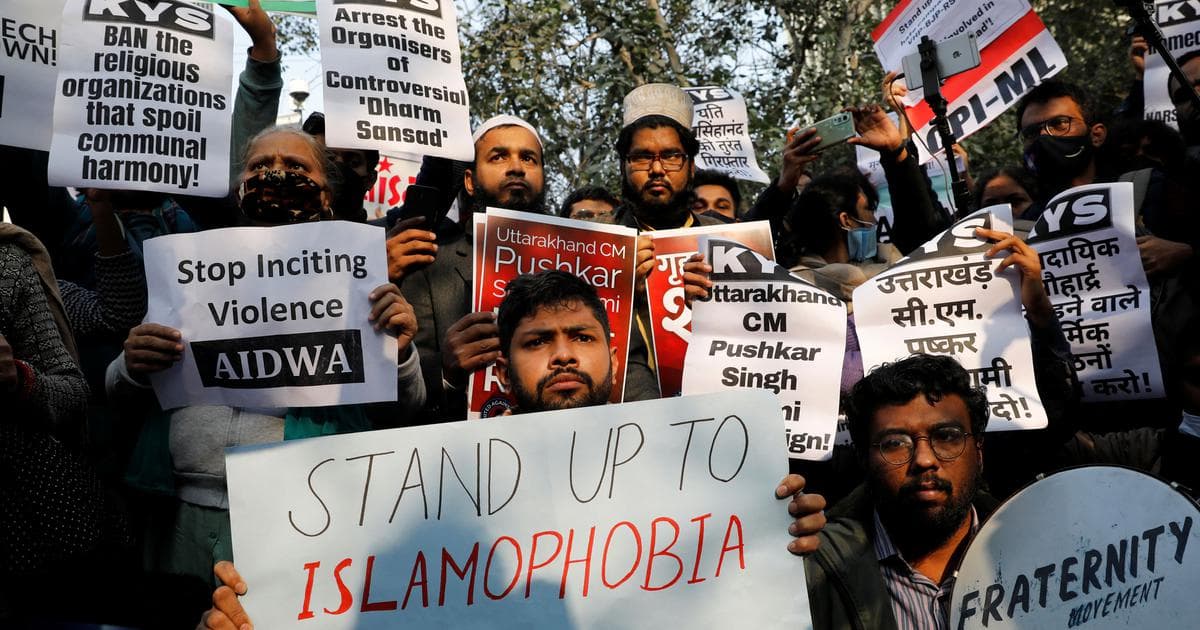
Karnataka’s Hate Speech and Hate Crimes (Prevention) Bill, 2025 arrives in a moment when public discourse is visibly rougher, more polarised, and more profitable for those who weaponise prejudice. Few disagree that targeted hostility can spill into discrimination and violence, and that social media has amplified both scale and speed. The harder question is whether this Bill’s design narrows harm or widens state discretion. Because when a law is drafted broadly enough to capture legitimate speech, it often becomes less of a shield for the vulnerable and more of a shortcut for control.
What’s in the news
The Karnataka government has tabled a draft law to define and punish hate speech and hate-motivated acts, with stiff jail terms and stringent criminal procedure. The Bill has triggered sharp political contestation and civil-liberty criticism, with concerns centred on its breadth, enforcement design, and the risk of misuse.
Background and context
Why hate speech laws become politically volatile
Modern hate-speech debates sit at the intersection of three forces:
-
Genuine harm: vilification can dehumanise groups and raise the temperature for violence.
-
Political incentives: outrage travels faster than nuance; parties often want rules that hit rivals, not allies.
-
Digital amplification: platforms reward attention, and attention often rewards provocation.
The friction point is that free societies do not protect speech because it is always noble. They protect it because the power to decide what is “permissible” can itself become the greatest threat to freedom.
What existing frameworks already do
Indian criminal law already penalises speech that promotes enmity, outrages religious feelings, defames individuals, or incites offences, and election-time regulation exists to curb inflammatory campaigning. The case for a new dedicated statute, therefore, depends on whether it is narrower, clearer, and more enforceable than existing provisions — not merely harsher.
Key provisions
How the Bill defines “hate speech”
The Bill defines hate speech widely — covering spoken, written, visual and electronic expression made “in public view”, aimed at causing “injury”, “disharmony”, “enmity”, “hatred” or “ill-will” against a person or group, linked to protected characteristics.
Punishment and procedure
-
First offence: imprisonment that can extend up to seven years, along with a fine.
-
Repeat offence: imprisonment that can extend up to ten years, along with a higher fine.
-
Offences are proposed as cognisable and non-bailable, meaning arrest powers are stronger and bail becomes harder.
Collective and organisational liability
The Bill proposes liability structures where persons “in charge” of an organisation can be held responsible for offences associated with it, subject to defences such as lack of knowledge or due diligence.
Online takedown and blocking powers
A key provision is the ability to direct removal or blocking of hate-related content from online platforms through a designated mechanism, raising questions about safeguards, oversight, and error correction.
Victim compensation and exclusions
The Bill includes victim-focused elements such as compensation, and also indicates that certain content may be exempted if it can be shown to be in the public good — though how this is applied depends heavily on the interpreter.
Why it matters
This is not only a “speech” law, it is a “power” law
The most consequential feature is not the moral objective but the enforcement structure. A law that is broad, coupled with tough criminal procedure, changes the everyday incentive landscape:
-
it becomes easier to file complaints,
-
easier to arrest,
-
harder to get bail,
-
and easier to silence through process rather than proof.
“Process as punishment” becomes a governance risk
When offences are non-bailable, the cost of accusation rises sharply even if the allegation is weak. This produces a chilling effect far beyond extremists — affecting journalists, academics, artists, comedians, activists, whistleblowers, and ordinary citizens who cannot predict how authorities will interpret intent or “disharmony”.
The definition problem is the core problem
Words like “disharmony” and “ill-will” are socially contested and politically elastic. In polarised environments, elasticity invites selective interpretation. A law that depends on subjective thresholds often ends up protecting whichever group has better access to the machinery of complaint and enforcement.
Online takedowns can become “censorship at speed”
Fast takedown powers can be justified where violence is imminent. But when safeguards are weak, platforms tend to over-comply and remove first, ask later. That creates a quiet regime where:
-
controversial but legitimate speech disappears,
-
citizens self-censor,
-
and accountability becomes opaque.
Arguments for and against
The case for the Bill
-
Deterrence: strong penalties may curb habitual provocateurs and organised hate ecosystems.
-
Recognition: a dedicated framework can signal that hate-motivated harm is not “routine politics”.
-
Victim focus: compensation and classification can acknowledge real social injury.
The case against the Bill
-
Vagueness and overbreadth: wide definitions risk pulling in lawful criticism and satire.
-
Misuse potential: complaint-driven policing can become partisan or selective.
-
Disproportionate procedure: non-bailable design can convert allegations into punishment.
-
Institutional load: more cases without stronger investigative standards can increase arbitrariness, not justice.
Constitutional and legal angle
The proportionality and reasonableness test
Speech restrictions must remain within constitutional grounds and be reasonable. Laws that are vague or excessively broad face the risk of being treated as disproportionate — especially when they criminalise ambiguous categories rather than targeting clear harm.
The “proximity” principle
A durable speech law usually hinges on proximity to tangible harm — incitement, discrimination, or a real risk to public order — rather than merely offensive or polarising expression. When proximity is not clearly built into drafting, enforcement tends to drift.
Arrest, bail and liberty
Where the law makes arrest easier and bail harder, courts often scrutinise whether liberty is being curtailed without adequate safeguards. A speech law that defaults to custodial risk can be challenged as a disproportionate intrusion into personal liberty
Implications and way forward
Narrow the offence to prevent the law from swallowing the space of dissent
If the objective is to prevent hate-fuelled harm, the drafting must focus on:
-
direct incitement, credible threat, or discriminatory harm, and
-
a clearer standard of intent plus likelihood.
Build oversight into takedown powers
Online blocking or removal should have:
-
written reasons,
-
a rapid review mechanism,
-
and clear boundaries that prevent permanent erasure of lawful speech.
Recalibrate criminal procedure for speech-only allegations
For speech offences without imminent harm, the law should avoid turning custody into the default risk. Stronger thresholds for arrest and a more balanced bail approach reduce misuse while preserving the ability to act in genuine emergency situations.
Transparency as an anti-misuse tool
A credible framework should publish periodic data on:
-
complaints received,
-
arrests made,
-
takedown directions issued,
-
disposal time,
-
conviction rates,
-
and compensation granted.
Without transparency, public trust collapses even if intentions are sincere.
Source credits
The Indian Express, NDTV, LiveLaw, Moneycontrol, Hindustan Times, Times of India; Bill summaries and legislative reporting.