

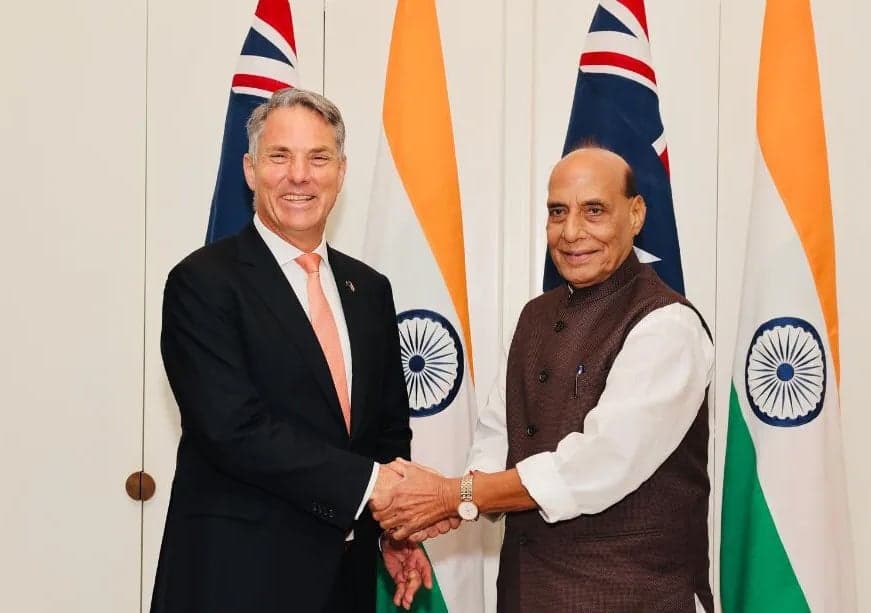
With ambitious climate targets and fragile global supply chains, Australia and India are trying to move their clean energy partnership from speeches to steel and skills. The agenda is clear: diversify inputs, share manufacturing and processing, and build human capital that can deliver solar, storage, and hydrogen at scale.
Why this partnership matters now
-
Shared ambition: India targets 500 GW non-fossil capacity by 2030 with a large solar buildout; Australia has raised emissions cuts for 2035 and is pushing net zero pathways.
-
Supply-chain risk: Solar modules, battery materials, magnets, and electrolyser inputs are concentrated in a single geography; recent shocks exposed how a missing component can stall entire programs.
-
Complementary strengths: Australia has resources and regulatory depth; India has scale, manufacturing drive, and a young workforce.
What the Renewable Energy Partnership covers (eight pillars)
-
Solar PV technology: research, manufacturing scale-up, and reliability testing.
-
Green hydrogen: standards, pilots, and offtake models for industry and mobility.
-
Energy storage: battery chemistries suited to hot climates and grid-scale applications.
-
Solar supply chains: upstream wafers, cells, glass, backsheets, EVA, and precision components.
-
Circular economy: recycling of panels, batteries, magnets; design for disassembly.
-
Two-way investment: blended finance for projects and joint ventures.
-
Capacity building: skills, certification, and safety standards for installers and operators.
-
Other priorities: grid digitalisation, forecasting, and resilience.
What each side brings
Australia
-
Large deposits of lithium, nickel, cobalt, manganese, rare earths.
-
Stable policy and permitting for mines and midstream facilities.
-
University–industry R&D and a growing net zero workforce plan.
India
-
Market scale for solar, storage, and hydrogen adoption.
-
Production-linked incentives and industrial parks.
-
A vast skills base via Skill India and experience deploying distributed renewables.
From vision to deals: a practical roadmap
1) Critical minerals to components
-
Joint processing hubs in Australia and India for lithium hydroxide, nickel sulphate, and rare earth separation, with take-or-pay offtakes for Indian cell, motor, and magnet makers.
-
Standards + traceability so components qualify for global low-carbon procurement.
2) Solar manufacturing beyond modules
-
Co-invest in glass, backsheets, silver-thrifty pastes, EVA, and high-quality testing labs to cut import bottlenecks.
-
Joint R&D on high-temperature stability and reliability for desert climates.
3) Storage fit for the tropics
-
Pilot LFP and sodium-ion cell lines with Indian assembly and Australian material inputs; validate safety under heat and grid stress.
-
Scale BESS for DISCOMs with performance-based payments and warranty-backed O&M.
4) Green hydrogen that pencils out
-
Publish common specs for purity, pressure, and certificates of origin.
-
Launch use-case pilots: refineries, fertilisers, mining haulage, and port bunkering.
-
Build ammonia logistics standards to enable near-term trade.
5) Circularity from day one
-
Producer-responsibility for panel and battery recycling; joint facilities that recover glass, aluminium, copper, and critical metals.
-
Design guides for repairable modules and swappable packs.
6) Skills and safety
-
A shared curriculum and certification for installers, battery technicians, hydrogen safety, and high-voltage O&M; mutual recognition for workers across both markets.
7) Finance that crowds in private capital
-
Blended finance (concessional + commercial), currency hedging tools, and offtake-backed bonds.
-
Fast-track land, grid connections, and bankable PPAs to cut project risk.
Risks to watch
-
Permitting delays for midstream minerals; community and environmental approvals must be predictable.
-
Grid integration bottlenecks—curtailment can derail investor returns.
-
Policy volatility on tariffs or incentives that whipsaws factories.
-
Workforce gaps: too few certified technicians can slow deployment.
Quick wins in the next 12 months
-
Announce two joint mineral-processing JVs with clear offtakes into Indian batteries/magnets.
-
Commission an India–Australia solar materials park for glass and backsheets.
-
Launch a hydrogen certification pilot and one industrial offtake project.
-
Train and certify 10,000 technicians with a common skills framework.
Bottom line
This partnership will be judged by kilowatts installed, tonnes processed, and people trained—not communiqués. If Australia’s resources and India’s manufacturing and talent are stitched together with stable rules and finance, both countries can meet their climate targets and make Indo-Pacific supply chains sturdier.
Source: The Hindu