

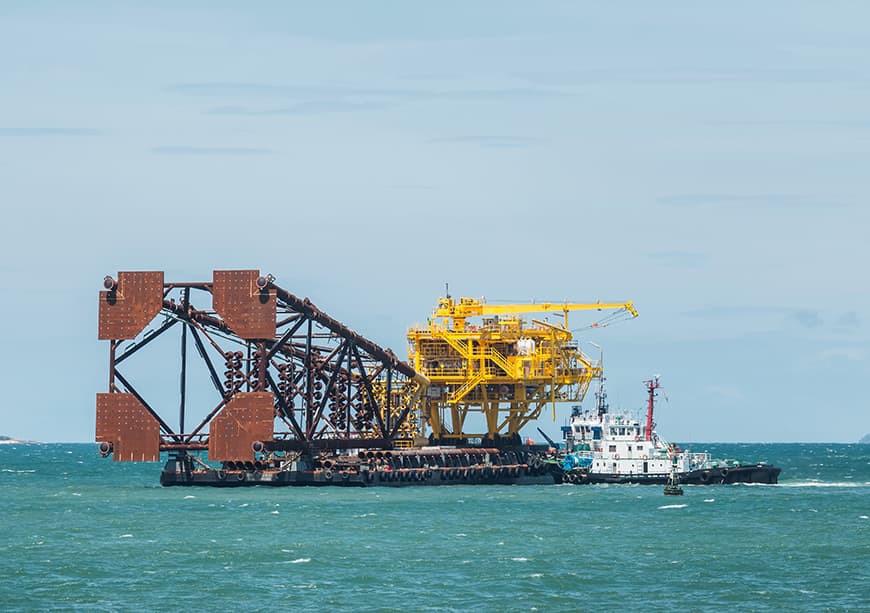
Responding to concerns over offshore mining India and its impact on marine biodiversity conservation India, the Union government has clarified in the Lok Sabha that offshore blocks identified for mineral and sea sand extraction do not overlap with recognised protected zones. Jitendra Singh Earth Sciences Minister informed the House that areas notified as marine protected areas India and Important Coastal and Marine Biodiversity Areas (ICMBAs India) were specifically excluded while carving out blocks for auction. The assurance comes against the backdrop of intense offshore blocks Kerala protest and fishermen protests Kerala offshore mining, particularly against sea sand mining Kerala coast and polymetallic nodules Great Nicobar proposals.
The Story
The immediate context is the Centre’s November 2024 proposal to auction multiple offshore blocks:
-
13 blocks off the Kerala coast for construction-grade sea sand mining Kerala coast,
-
3 offshore lime mud blocks Gujarat, and
-
7 blocks for polymetallic nodules Great Nicobar and crust in the seas around the Great Nicobar Island in the Andaman and Nicobar Islands.
These plans triggered a sharp political and social response. In Kerala, fishermen communities and coastal stakeholders led sustained offshore blocks Kerala protest, arguing that dredging and mining would damage spawning grounds, affect fish catch, and destabilise the fragile seabed. The Kerala Assembly even passed a resolution opposing the auctions, and Rahul Gandhi joined the chorus, asking the Centre to withdraw the proposal. So far, no company has been finally selected from the auction process.
It is in this backdrop that a Shashi Tharoor Lok Sabha question sought clarity on whether these offshore blocks overlap with ecologically sensitive zones. In his written reply, Jitendra Singh stated that:
-
The Environment Ministry has notified 130 Marine Protected Areas across coastal States and islands, and
-
106 coastal and marine sites have been identified and prioritised as Important Coastal and Marine Biodiversity Areas (ICMBAs India).
These designations are meant to act as the frontline for marine biodiversity conservation India and to safeguard coastal States marine ecology India from unregulated exploitation.
Key Clarification
According to the Minister, “the offshore blocks have been carved by excluding these areas”. That is, none of the auctioned blocks are supposed to fall inside the boundaries of notified marine protected areas India or the identified Important Coastal and Marine Biodiversity Areas.
Regulatory Framework: Rules Before Mining
The reply also highlights the legal safeguards under the Offshore Areas Mineral Conservation and Development Rules 2024. As per these rules:
-
No production operations can begin without an approved production plan.
-
This production plan must include a detailed environmental management plan (EMP) with:
-
Baseline environmental information,
-
Impact assessment on marine ecology and coastal communities, and
-
Specific mitigation measures and monitoring mechanisms.
-
The government argues that this framework is designed so that offshore mining India moves forward, if at all, in a “regulated, science-based and precautionary” manner, instead of becoming a free-for-all extraction regime.
Offshore Areas Mineral Trust: Financial Backstop for Ecology
To address long-term ecological impacts, the government has also established an Offshore Areas Mineral Trust. Coastal States are members of both the Governing Body and the Executive Committee of this Trust, giving them a formal say in how funds are used.
According to the statement, funds accruing to the Offshore Areas Mineral Trust will finance:
-
Research and scientific studies on offshore areas,
-
Administrative and monitoring expenditure, and
-
Mitigation of adverse ecological impacts caused by offshore operations.
In principle, this creates a ring-fenced corpus to support marine biodiversity conservation India when offshore mineral extraction takes place.
Why It Matters
From a UPSC and public policy lens, this issue sits at the intersection of:
-
Resource Security vs Environmental Security
-
India’s push towards offshore mining India for sand, lime mud, and polymetallic nodules is linked to infrastructure needs, strategic minerals, and reduced dependence on land-based extraction.
-
At the same time, unregulated activity can damage fisheries, coral systems and coastal States marine ecology India, threatening livelihoods and food security for millions.
-
-
Centre–State and Community Relations
-
Strong resistance, including fishermen protests Kerala offshore mining and the Kerala Assembly resolution, shows that any perceived top-down decision in coastal resource governance can generate serious political friction.
-
The Centre’s emphasis on excluded zones, EMPs and the Offshore Areas Mineral Trust is also a political signal that States and communities cannot be bypassed.
-
-
Law, Science and Public Trust
-
On paper, exclusion of marine protected areas India and ICMBAs India, plus the Offshore Areas Mineral Conservation and Development Rules 2024, provides a robust legal-scientific framework.
-
The real test is whether impact assessments are genuinely independent, cumulative impacts are studied, and monitoring is continuous—not merely a procedural box-ticking exercise.
-
Background / Context
Globally, deep sea and offshore mining are controversial. Many countries are debating a “precautionary pause” on seabed mining, especially for polymetallic nodules, due to limited knowledge of deep-sea ecosystems.
In India’s context:
-
Sea sand is widely used in construction, but coastal dredging can erode beaches, disturb fish breeding grounds and exacerbate storm damage.
-
Lime mud deposits and polymetallic nodules carry economic value but are located in ecologically sensitive seascapes.
-
Coastal communities, especially small-scale fishers, are often the first to feel the impact of sediment plumes, noise pollution and habitat disruptions.
The protests in Kerala are therefore not just about one auction but about the broader model of development along the coasts—raising the classic exam-worthy question: how do we balance “blue economy” ambitions with marine biodiversity conservation India?
Implications and UPSC Relevance
For General Studies answers and essays, this case can be mobilised under topics such as:
-
GS Paper 3 (Environment):
-
Conservation of biodiversity,
-
Environmental impact assessment,
-
Conservation vs development debates in fragile ecosystems.
-
-
GS Paper 2 (Governance & Policy):
-
Federal relations in natural resource governance,
-
Role of Parliament and judicial oversight in environmental decisions.
-
Key analytical angles:
-
Precautionary Principle in Practice
-
Even with exclusion of protected areas, offshore activities can have spillover effects (sediment plumes, noise, changes in currents).
-
Students can examine whether the legal framework truly reflects a precautionary approach or assumes impacts can always be mitigated.
-
-
Participatory Decision-Making
-
The offshore blocks Kerala protest and fishermen protests Kerala offshore mining highlight the importance of prior consultation with local communities and transparent sharing of scientific data.
-
-
Institutional Architecture
-
CAQM and related institutions are often discussed for air; here, the focus shifts to marine institutions like the Environment Ministry, Earth Sciences Ministry, coastal regulators, and mechanisms like the Offshore Areas Mineral Trust.
-
One can discuss whether overlapping jurisdictions create gaps or can be harnessed for stronger oversight.
-
Conclusion
The government’s clarification that offshore mining India blocks exclude marine protected areas India and Important Coastal and Marine Biodiversity Areas offers some reassurance, but it does not close the debate. The concerns of fishing communities, scientists and State governments remain valid, especially when the ecological consequences of large-scale sea sand mining Kerala coast, offshore lime mud blocks Gujarat and polymetallic nodules Great Nicobar are still not fully understood.
For a genuinely sustainable blue economy, India will need not just strong rules on paper—like the Offshore Areas Mineral Conservation and Development Rules 2024—but also transparent science, empowered coastal States, vigilant communities, and a proactive Offshore Areas Mineral Trust that actually funds long-term monitoring and restoration. Only then can coastal States marine ecology India and livelihoods be protected even as the country explores its offshore mineral frontier.