

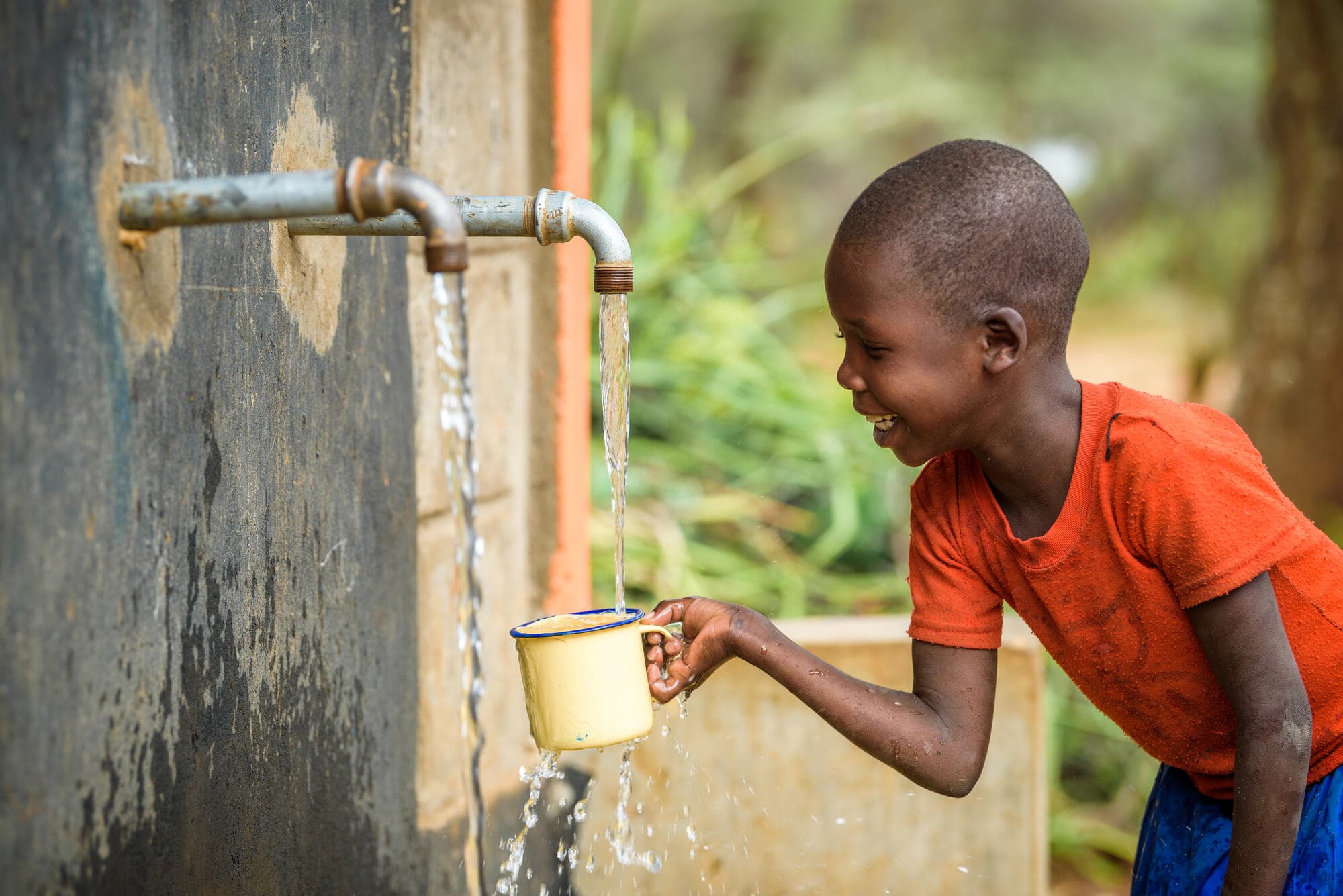
We often say “water is priceless”, but budgets, tariffs and schemes are built on very specific price assumptions. A new experimental study from rural Odisha tests those assumptions and finds that households value clean, potable, home-delivered water far more than conventional policy models suggest. By stripping away the usual burdens of rural water use — walking long distances, queuing at handpumps, taste issues, irregular supply — the researchers measured how much people are actually willing to pay for clean water and how much compensation they would need to give it up. The answer is clear: once made easy and reliable, safe water is treated as a necessity, not a discretionary extra.
Why this study matters
Globally, only about 30% of people in low-income countries, and barely 14% in rural areas, have reliable access to potable water. India is no exception: coverage has improved, but many villages still lack safe, piped drinking water, and households carry the burden of collecting and treating water themselves.
Most existing research infers “value” indirectly by looking at:
-
Adoption of chlorine or filters,
-
Time spent collecting water,
-
Or take-up of piped connections.
But these behaviours are shaped by:
-
The effort of using treatment technologies,
-
Taste of treated water,
-
Irregularity and labour involved,
-
And cash constraints.
This study asks a cleaner question: if we remove those frictions and simply bring safe water to your doorstep, what is it worth to you?
The Odisha experiment: design in brief
Odisha is a fitting site for such work:
-
As of 2021, it ranked 32nd out of 37 States/UTs in piped water coverage,
-
Around 83% of households had no piped connection,
-
A 2023 survey found 41% villages still without safe drinking water, and water access has been a major local grievance.
Researchers worked in 160 villages, successfully implementing the intervention in 99 villages where a private water-treatment provider already operated. Households were randomly assigned to one of three experimental “arms”:
-
Price arm – willingness to pay (WTP)
-
Households could order clean, home-delivered water at different subsidised prices.
-
Observing how quantity ordered changed with price revealed true demand and price sensitivity for safe water itself, not just for filters or chlorine.
-
-
Free-water arm – unconstrained demand
-
Households received safe water for free, delivered to their homes.
-
This showed how much they would consume if money was not a binding constraint.
-
-
Exchangeable entitlement arm – willingness to accept (WTA)
-
Households received an entitlement that could be redeemed either for water or for cash of equivalent value.
-
Their choice between the two revealed how much compensation they required to forgo safe water.
-
By removing non-monetary burdens and randomising within villages, the study gets closer to the real, pure valuation of clean water.
What the study found about the value of water
1. Households value clean water more than we thought
Both WTP and WTA were substantially higher than earlier estimates based on adoption of chlorine or filters. That means:
-
People do care deeply about water quality,
-
Previous work systematically underestimated this value because it was entangled with taste, labour and uncertainty.
2. Giving up clean water is very costly to people
The WTA figures were especially high: households demanded significant compensation to give up home-delivered safe water and take cash instead.
In other words, once they had experienced reliable, clean water:
-
They were reluctant to trade it even for seemingly attractive cash amounts,
-
They saw water as a non-substitutable, everyday necessity, not a “nice to have” service.
3. Demand is price-sensitive, but not fragile
Demand did fall as prices rose, but the response was moderate:
-
Clean water behaves like a necessity good,
-
Households adjust quantities but do not quickly walk away from safe water when prices inch up.
This has direct implications for tariff design and targeted subsidies.
4. People shift away from risky sources
With home-delivered water:
-
Households reduced reliance on unprotected or unreliable sources,
-
Collection time fell, lowering the physical and time burdens – often borne disproportionately by women and girls,
-
Households reported better physical well-being, even though these health outcomes were self-reported rather than clinically measured.
Rethinking “low demand” narratives
These findings challenge a common interpretation in development debates:
“Poor households don’t really care about water quality; they won’t pay for clean water.”
The Odisha study suggests something subtler and more hopeful:
-
People do care about quality,
-
But they dislike the methods or burdens that come with existing solutions (chlorine taste, complicated filters, long walks, erratic supply),
-
And they are often held back by credit and income constraints.
When water quality is separated from taste, distance, effort and uncertainty, the true underlying valuation becomes visible – and it is high.
The strong gap between WTP and WTA also has a psychological dimension: once households experience dignified, reliable access, they fear losing it; the security of safe water is worth more than an equivalent cash payout.
Policy takeaways: what should governments do?
The study’s design and results translate into several concrete policy lessons:
1. Focus on service, not just technology
Policies should not view success only as “X filters installed” or “Y chlorine bottles distributed”.
Instead, the unit of analysis should be:
-
Does the household have easy, reliable, dignified access to potable water every day?
This reframes success around the service outcome rather than the technology input.
2. Support decentralised delivery models
In areas with weak piped infrastructure, governments can:
-
Partner with or enable local treatment providers for home-delivered water,
-
Use these models as an interim bridge while large-scale infrastructure catches up.
3. Calibrate prices to actual WTP, use subsidies wisely
Since clean water is a necessity, tariffs must be:
-
Affordable enough to sustain high uptake,
-
But not so low that systems become financially non-viable.
The experiment’s WTP estimates give data-based anchors to design:
-
Lifeline tariffs for basic consumption,
-
Targeted subsidies or cross-subsidies for poor and vulnerable households.
4. Use entitlement-based designs for the poorest
The exchangeable entitlement arm hints at creative ways to blend:
-
Water entitlements for vulnerable groups,
-
With limited cash convertibility where appropriate.
Done carefully, this can secure universal access while acknowledging household cash needs.
Broader implications for environmental and welfare policy
This study sits within a larger conversation in environmental and development economics about how people in low-income settings value environmental quality – clean air, safe water, sanitation.
Key takeaways:
-
Behavioural signals (like not adopting chlorine) may mislead policymakers into thinking “people don’t value quality”, when they actually reject the form of the intervention.
-
Directly measuring WTP and WTA by removing frictions gives a more accurate picture of how communities perceive environmental quality.
-
Well-designed, people-centric experiments can reveal the real “welfare gain” from public investments far better than rough proxies.
Conclusion
“Priceless” does not mean “beyond measurement” – it often means “grossly undervalued in policy”. The Odisha experiment shows that when safe water is made easy, reliable and dignified, rural households treat it as the essential good it truly is, not a dispensable luxury.
For India, where water access is deeply unequal and climate risks are intensifying, this offers a clear message:
-
Invest in service-oriented, user-friendly water delivery,
-
Design tariffs and subsidies around real household valuations,
-
And treat access to clean water not just as a technical challenge, but as a central pillar of equitable development and everyday dignity.
-