

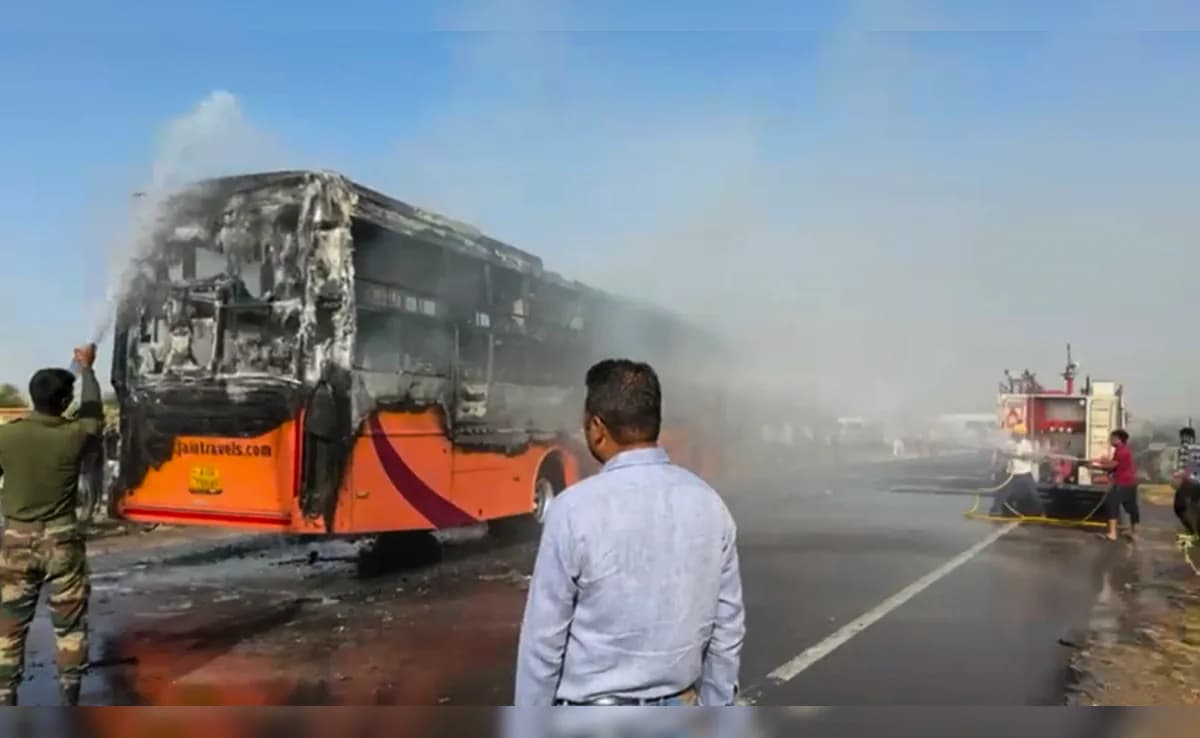
What happened (as reported)
-
Private AC sleeper bus on the Jaisalmer–Jodhpur route caught fire around 3:30 p.m., ~20 km from Jaisalmer.
-
Blaze appears to have started at the rear; 57 on board.
-
20 fatalities, 16 injured (many with severe burns).
-
Evacuation hampered by intense heat; several passengers jumped from the moving bus.
Why AC coaches are vulnerable: the usual failure chain
-
Electrical faults in aftermarket wiring (AC blowers, inverters, lighting for sleeper berths) → short circuits, arcing behind panels.
-
Overheating in the engine/compartment (turbo, exhaust manifolds, oil mist) at the rear where many AC units and fuel lines sit.
-
Fuel leaks (diesel/oil) atomised onto hot surfaces → flashover.
-
High fire load inside: mattresses, curtains, PVC panelling, luggage—often not fire-retardant—producing toxic smoke.
-
Difficult egress in sleeper layouts: narrow aisles, blocked gangways, locked or unfamiliar emergency exits, night-time disorientation.
India’s safety rulebook—what should be on the bus
-
Type approval & body code (AIS-052) for large buses: prescribes emergency exits, flammability of materials, wiring protection, and signage.
-
Fire Detection & Suppression (AIS-135): automatic FDSS for engine compartments and smoke/heat detection for passenger areas in many new types; retrofit compliance varies widely.
-
Periodic fitness tests under Motor Vehicles rules: brake, lighting, emissions, and basic electrical checks—quality depends on execution.
Reality check: Older or re-bodied sleeper coaches, heavy aftermarket electrical loads, and lax fitness checks create gaps between paper and practice.
What investigators will (and should) look for
-
Seat map & egress audit: Were emergency exits/windows functional and marked? Any obstructions?
-
Wiring & AC unit forensics: Evidence of arcing, melted insulation, improper fusing, bypassed circuit protection.
-
Engine bay & fuel system: Leaks, missing heat shields, FDSS presence/actuation logs.
-
Material compliance: Mattresses/curtains flammability certificates vs actual fittings.
-
Driver/crew actions: Was the bus stopped promptly? Were extinguishers used? PA alarms?
-
Operator compliance history: Fitness-cert trail, insurance, driver duty/maintenance logs.
Five fixes India should mandate immediately
-
Retrofit FDSS on all intercity buses (not just new ones): automatic fire suppression in engine/AC bays; smoke detection in saloon.
-
Sleeper coach egress redesign: minimum two unblocked exits per saloon, glow-in-the-dark path markings, hammer-accessible breakable windows at every bay, door-unlock overrides.
-
Wiring discipline: prohibition of unapproved aftermarket loads; compulsory circuit protection and cabling standards, with tamper-evident inspections at fitness renewal.
-
Crew training & passenger briefing: 60-second evacuation drill at boarding points; crew trained for stop–battery isolate–evacuate sequence and extinguisher use.
-
Data & deterrence: black-box style event loggers for electrical/fuel faults; public operator safety scores tied to permits and insurance pricing.
For operators (now)
-
Daily rear-compartment checks: fuel/oil seepage, loose clamps, frayed harnesses.
-
Battery isolation switches near driver; clear PA alarms.
-
Verified ABC/CO₂ extinguishers (in date), torch, first-aid, and window hammers at marked spots.
-
No cargo in aisle; enforce a clean gangway policy.
For passengers (practical tips)
-
Note exits on boarding; locate hammers/extinguishers.
-
Keep shoes handy at night; avoid blocking aisles with luggage.
-
If you smell burning plastic/diesel, alert crew; insist the bus pull over.
-
During fire: bend low (smoke layer), move to nearest exit/window; do not push towards front if rear is ablaze—use side exits.
Bottom line
Bus fires are rarely “freak” events; they’re predictable failures of wiring, fuel containment, materials and evacuation. India already has the standards—FDSS, safe egress, disciplined wiring—but must close the retrofit and enforcement gap, especially for sleeper coaches. Lives depend on it.
Source: The Hindu