

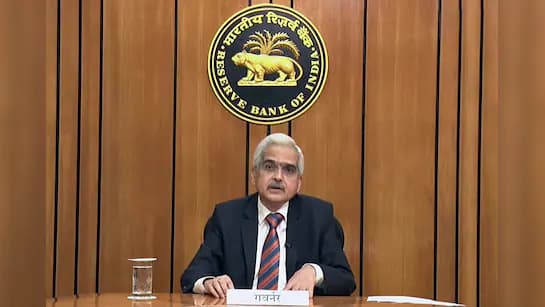
The Reserve Bank of India’s Monetary Policy Committee (MPC) has chosen to cut interest rates once again, reducing the policy rate by 25 basis points to 5.25%. This brings the total cuts in 2025 to 125 basis points — a scale of easing comparable to 2019, when the RBI slashed rates by 135 basis points to counter a sharp fall in GDP growth. The difference now is that India’s growth numbers are moving in the opposite direction: quarterly real GDP has climbed from 5.6% to 8.2% over the past year. Why, then, has the MPC opted for another RBI rate cut in a phase of rising GDP growth and benign inflation? The answer lies in how the central bank reads the quality of growth, the behaviour of inflation, and the risks from global trade shocks — and in its need to remain ready for a rapid policy pivot if conditions change.
The Story
The article begins by placing the latest interest rate cut in context. The MPC has now delivered 125 basis points of easing in calendar year 2025. Historically, such aggressive moves were associated with distress: in 2019, the RBI cut 135 basis points as quarterly GDP growth slid from 8.9% (March 2018) to 3.3% (December 2019).
Today’s macro picture is more nuanced:
-
Real GDP growth has accelerated from 5.6% in Q2 last year to 8.2% in Q2 this year.
-
Inflation is projected at a modest 2%, well below the upper band of the RBI’s inflation target.
From a growth perspective, the article says there are two ways to interpret the MPC’s decision:
-
Growth is not as strong as it looks
-
The MPC may suspect that headline GDP growth is overstated because the GDP deflator (the price index used to convert nominal GDP into real GDP) is unusually low.
-
In real terms, this inflates the growth figure, making the economy look stronger than it actually is.
-
In that reading, a supportive monetary policy through lower interest rates is still warranted.
-
-
Excess capacity and low overheating risk
-
Indian companies may still be operating with excess capacity; their factories and plants are not fully utilised.
-
That means the risk of overheating — where demand runs ahead of supply and fuels high inflation — is limited.
-
If the risk of inflation is low, the MPC might feel comfortable pushing for more growth through cheaper credit.
-
The reality, as the article suggests, is likely a combination of these two interpretations:
-
Real growth is flattered by a weak GDP deflator, and
-
Corporate India still has room to invest — even if investment is financed by debt, supported by lower interest rates.
A rate cut, therefore, simultaneously supports growth and investment, at a time when the global environment is turning uncertain.
Global Risks: Tariffs, Trade and MSMEs
The article then brings in external headwinds. The MPC is likely factoring in that the full economic impact of the U.S.’s 50% tariffs has not yet unfolded.
-
Supply chains take time to realign,
-
Importers may gradually shift away from Indian exporters,
-
This creates a delayed drag on India’s export growth, especially in sectors dominated by MSMEs (Micro, Small and Medium Enterprises).
For MSME exporters already facing thinner margins and tighter global conditions, cheaper credit via RBI rate cuts is a critical cushion. It can help them:
-
absorb tariff shocks,
-
maintain production and employment,
-
and stay competitive until supply chains stabilise.
In that sense, the MPC’s interest rate decision is also a pre-emptive buffer against the external impact of tariffs and trade fragmentation.
Inflation: Comfort Today, Risk Tomorrow
On the inflation front, the MPC has lowered its outlook for the year to a very benign 2%. On paper, this looks like a dream scenario:
-
Strong GDP growth,
-
Low inflation, and
-
Room for RBI rate cuts to support demand.
But the article warns against complacency. India’s inflation profile is notoriously sensitive to:
-
Food prices – a bad monsoon, supply disruptions, or sudden spikes in vegetables and cereals can quickly push headline inflation up.
-
Oil prices – as a large net importer of crude, a global oil shock immediately raises fuel, transport and input costs.
The earlier 2019 rate cut cycle is cited as a cautionary tale:
-
Inflation rose from 2% in January 2019 to 7.6% within about a year.
The lesson: inflation can re-appear quickly, especially when the central bank is in an easing mode.
This is why the article insists that the MPC must be ready to raise rates at the first sign of inflation rising faster than expected. In other words, every RBI rate cut in 2025 must be accompanied by a willingness to pivot quickly if the inflation trajectory turns.
Why It Matters
For a UPSC lens, this article is rich in concepts:
-
MPC and monetary policy: how a central bank balances growth and inflation.
-
GDP and the GDP deflator: why strong real GDP growth numbers must be read alongside price indices.
-
Rate cuts and capacity utilisation: the link between interest rates, corporate investment, and excess capacity.
-
Global trade shocks: how tariffs and supply chains affect domestic MSMEs and export growth.
-
Inflation risk management: the need to maintain credibility by being ready to reverse easing if inflation rises.
The article frames the RBI’s 2025 rate cut not as a simple “pro-growth” move, but as a complex judgment call under high uncertainty.
Background / Context
Historically, large RBI rate cuts have been associated with stress in the economy:
-
In 2019, cumulative cuts of 135 basis points responded to a sharp fall in growth, with quarterly GDP slipping from 8.9% to 3.3%.
In 2025, the situation is different:
-
Growth is accelerating, from 5.6% to 8.2%,
-
Inflation is subdued,
-
Yet, global risk is far higher, with trade tensions, tariffs, and the lingering after-effects of past shocks.
Against this backdrop, the MPC’s neutral stance is crucial. It signals that while the RBI is currently in rate-cut mode, it is not locked into an easing cycle. It retains full flexibility to tighten if inflation or external shocks demand it.
Implications
1. For Growth and Investment
Lower interest rates should:
-
Reduce borrowing costs for firms and households,
-
Encourage capex and consumption,
-
Help utilise excess capacity in the economy.
If accompanied by public investment and structural reforms, this can sustain high-quality GDP growth.
2. For Inflation and Credibility
The real test for the RBI will be its reaction function:
-
If food or oil prices rise sharply,
-
Or if the GDP deflator starts to normalise, making real growth look more modest,
then the MPC must be willing to reverse course, raising rates even if growth slows. That is how inflation targeting retains credibility.
3. For External Sector and MSMEs
With U.S. tariffs at 50% on certain products and supply chains in flux, MSME exporters need support through cheaper credit and better access to finance. The RBI rate cuts in 2025 play a cushioning role, but long-term resilience will also depend on:
-
market diversification,
-
productivity gains, and
-
supportive trade and industrial policy.
Conclusion
The RBI’s latest rate cut to 5.25%, delivered by the MPC after a cumulative 125 basis points of easing in 2025, reflects a delicate reading of India’s macroeconomic balance:
-
Headline GDP growth is strong, but partly boosted by a low GDP deflator,
-
Inflation is low at 2%, but vulnerable to food and oil shocks,
-
Global trade tensions and tariffs threaten India’s export engine and MSMEs,
-
Excess capacity in Indian firms creates space to grow without immediate overheating.
In such a world, a neutral stance and readiness for a quick policy pivot are not luxuries — they are necessities. The RBI must continue to support growth through prudent rate cuts, but hold itself ready to tighten policy swiftly if inflation or external risks demand a change of course.