

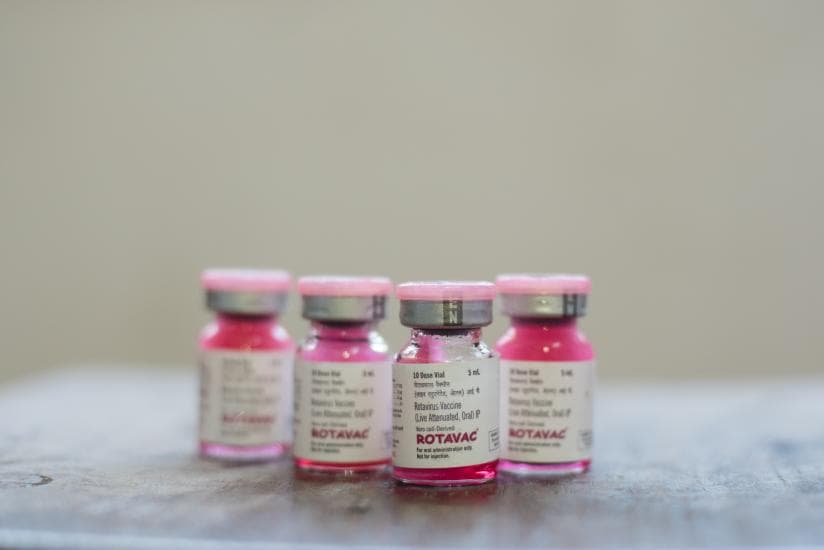
A multi-centre analysis across 31 hospitals in nine Indian states (2016–2020) reports that Rotavac, introduced in the Universal Immunisation Programme (UIP), is working in routine conditions: effectiveness about 54%, with sustained protection in the first two years of life and a clear drop in rotavirus-positive hospitalisations. In other words, the vaccine’s trial promise is translating to everyday clinics.
What the new Nature Medicine paper found (in plain English)
-
Design & scale: Observational, hospital-based surveillance comparing the pre- and post-introduction eras across India’s public sector.
-
Effectiveness: ~54% against lab-confirmed rotavirus gastroenteritis—remarkably close to Phase-3 efficacy, signalling minimal “efficacy-effectiveness” drop-off.
-
Age window: Protection sustains through the first two years, when rotavirus risk peaks.
-
Impact: The share of paediatric hospitalisations due to rotavirus falls substantially after rollout—evidence of population-level benefit, not just individual protection.
Why 54% is a win (the LMIC context)
-
Live oral rotavirus vaccines often show lower efficacy in low- and middle-income settings due to enteric pathogen exposure, maternal antibodies, malnutrition and gut microbiome differences. Matching trial efficacy in routine Indian use is therefore notable.
-
Globally, rotavirus still caused about 128,500 under-five deaths in 2016—mostly in LMICs—so even “modest” effectiveness translates into large absolute gains.
Program basics you should know (UIP reality check)
-
Schedule: Rotavac is given orally at 6, 10, and 14 weeks; no booster is recommended in UIP. Co-administered with OPV, Pentavalent and fractional IPV.
-
Why early dosing matters: Early completion narrows the vulnerability window before peak exposure; punctuality is as important as coverage. (UIP schedules underline this logic.)
-
India’s indigenous rotavirus vaccines (including Rotavac) have been followed closely for safety and immunogenicity; published surveillance and trials support acceptable safety profiles in Indian infants. Continued post-marketing monitoring remains essential.
Editorial: vaccines work—systems make them work better
The study’s message is encouraging but incomplete without system fixes. Here’s what India should do next:
-
Close the timeliness gap
Target late/missed second and third doses with due-date nudges (ASHA calls/SMS), clinic Saturday sessions, and default appointment slips handed at the first OPV/Pentavalent visit. (UIP schedule alignment supports this.) Chase completeness, not just coverage
District dashboards should track on-time series completion (6-10-14 weeks) rather than first-dose coverage alone—because partial series dilutes protection. -
Pair shots with ORS+zinc basics
Every immunisation contact is a chance to push ORS and zinc literacy and hand the family a two-sachet starter kit; vaccines prevent many severe cases, but supportive therapy still saves lives. -
Strengthen cold chain & last-mile logistics
Heat-exposed vials erase gains. Prioritise continuous temperature loggers, buffer stock norms, and rapid fault-repair SLAs for ILRs/DFs at PHCs in hot districts. -
Genotype surveillance stays vital
Keep sequencing rotavirus strains to watch for genotype shifts that might alter effectiveness; tie surveillance outputs to periodic programme reviews. -
Target high-burden pockets
Use hospitalisation and positivity maps to focus micro-plans on districts with persistent rotavirus admissions despite rollout—often the same places with malnutrition and WASH deficits. -
Integrate with WASH and nutrition missions
Clean water, sanitation, and better nutrition reduce background diarrhoeal load, raising vaccine bang-for-buck. Rotavirus control works best as part of a diarrhoea package, not a silo. -
Sustain transparent safety monitoring
Publish periodic AEFI summaries for rotavirus vaccines; transparency builds trust and inoculates against misinformation spikes.
The bigger picture: why this matters beyond paediatrics
-
Hospital decongestion: Fewer rotavirus admissions free paediatric beds and staff for pneumonia, neonatal sepsis, and other priorities.
-
Economic wins: Families avoid catastrophic costs from hospitalisation; states save on bed-days and antibiotics that don’t help viral diarrhoea.
-
Innovation dividend: Rotavac is a public–private–global partnership outcome; real-world performance validates India’s model for homegrown vaccines serving domestic and global South needs.
Bottom line
Rotavac’s ~54% real-world effectiveness with a measurable drop in rotavirus hospitalisations is exactly what India hoped to see when it added the vaccine to UIP. The task now is execution: finish the 3-dose series on time, keep cold chains cold, pair immunisation with ORS/zinc and WASH, and keep watching the virus. Do that—and India will keep bending the rotavirus curve down.