

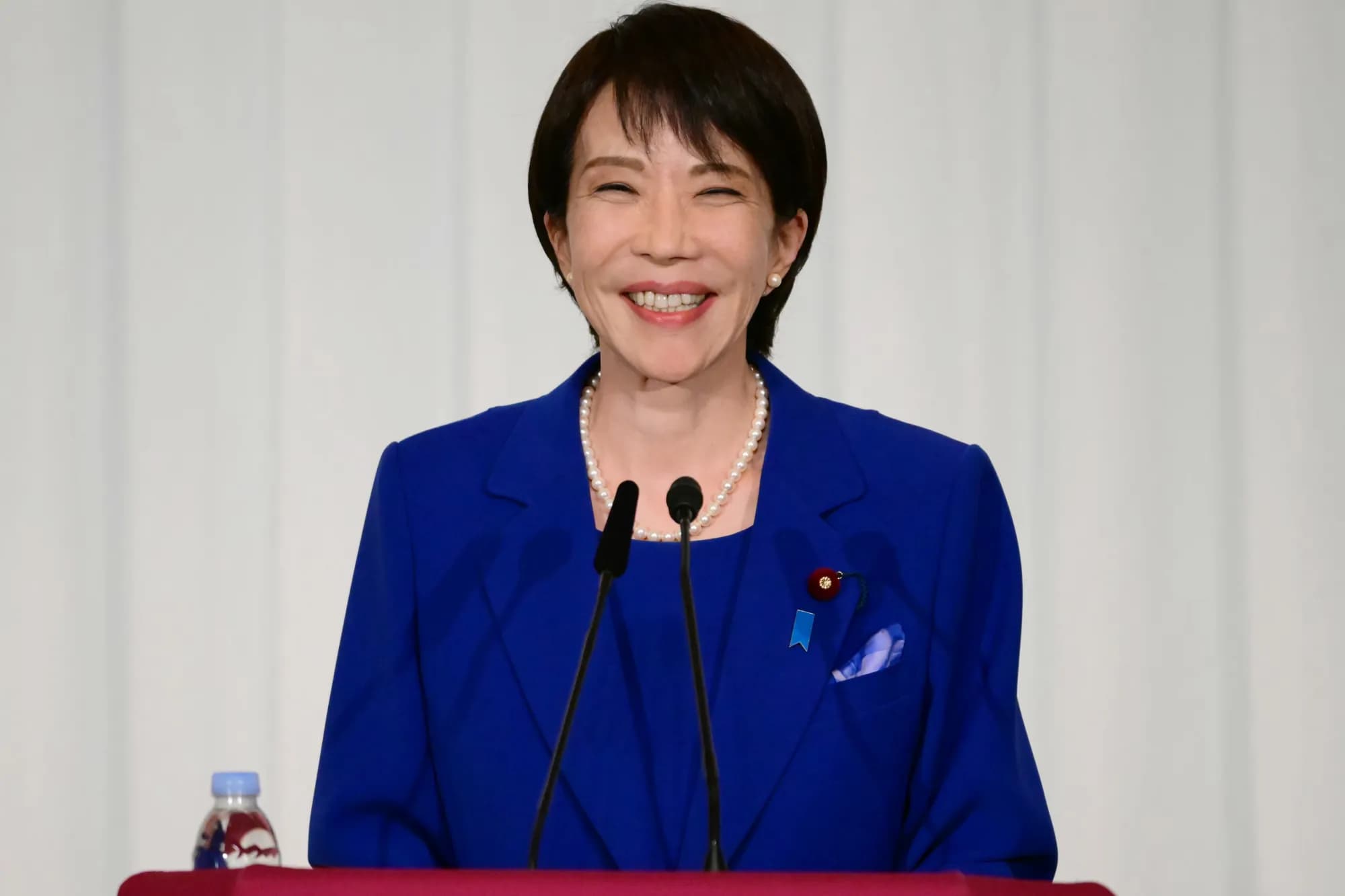
Sanae Takaichi, a veteran conservative politician and long-time protégé of Shinzo Abe, was elected on 5 October as the head of Japan’s ruling Liberal Democratic Party (LDP). Her appointment positions her to become Japan’s first female prime minister when the Diet formally approves her later this month.
The Story
Born in Nara Prefecture in 1961, Sanae Takaichi began her political career in the 1990s after studying political science at Kobe University and working in the private sector. A member of the LDP’s conservative wing, she rose through the ranks as a lawmaker known for her nationalist views and emphasis on traditional family values.
Takaichi has served in key cabinet posts, including Internal Affairs and Communications Minister and Minister for Economic Security. She is regarded as a protégé of Shinzo Abe, whose policy of “Abenomics” she staunchly supported, advocating fiscal stimulus and national defense reforms.
As LDP president, her immediate challenge will be to consolidate party unity, manage Japan’s slow economic recovery, and navigate tensions in the Asia-Pacific amid a shifting security landscape.
Why It Matters
Japan’s political establishment has long been dominated by men, with women representing less than 10% of lawmakers in its lower house. Takaichi’s ascent is both symbolic and strategic—it signals a potential shift toward broader gender representation in leadership, even within a deeply traditional party framework.
Her conservative ideology, however, may temper expectations of sweeping gender reforms. For Japan’s electorate and its allies, her leadership will be a test of how inclusivity coexists with continuity in policy and diplomacy.
Background / Context
-
Political Career: First elected to parliament in 1993; joined the LDP in 1996.
-
Key Roles: Served as Internal Affairs Minister (2014–2017) and Minister for Economic Security (2021–2022).
-
Ideological Roots: Known for pro-defense, pro-nuclear energy, and nationalist stances.
-
Gender Gap: Japan ranked 125th out of 146 in the World Economic Forum’s 2024 Global Gender Gap Index.
Implications
Takaichi’s rise could recalibrate Japan’s image abroad—especially among G7 nations striving for gender parity in leadership. Domestically, she faces the twin pressures of reviving the economy and managing a rapidly aging population.
Her close ties with Abe’s legacy indicate policy continuity on defense and regional diplomacy, particularly regarding China and North Korea. Yet, her leadership will also be closely watched for how she balances conservative orthodoxy with the demand for modernization and social reform.
Conclusion
If confirmed by parliament, Sanae Takaichi will not only make history as Japan’s first woman prime minister but also redefine the contours of conservative leadership in Asia’s oldest democracy. The months ahead will reveal whether her tenure heralds symbolic change—or genuine transformation.