

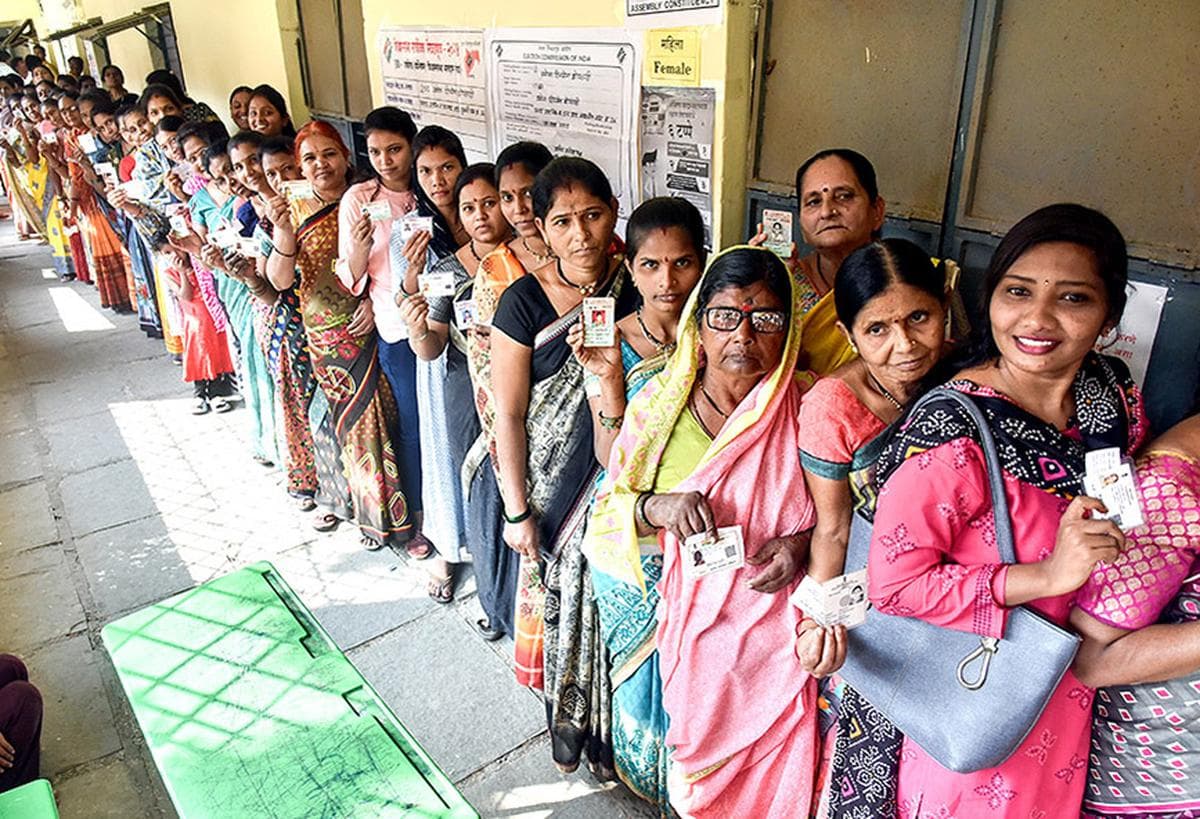
The Supreme Court has directed the Maharashtra SEC to complete pending elections to all urban and rural local bodies by January 31, 2026, after it failed to act on the Court’s May 6 order to notify polls by September 6. The ruling resets the clock on a years-long democratic vacuum across municipalities, zilla parishads and panchayat samitis—while re-focusing attention on the long-running OBC quota controversy that stalled the calendar.
The Story
-
What the Court said: Having noted non-compliance with its earlier directions, the Supreme Court fixed Jan 31, 2026 as the outer limit for completing all local-body polls.
-
Who is affected: Maharashtra today has 29 Municipal Corporations, 248 Municipal Councils, hundreds of Nagar Panchayats, 32/34 Zilla Parishads, and 336/351 Panchayat Samitis under administrators. BMC (₹74,000+ crore budget) has had no corporators since March 2022; newly formed corporations like Jalna and Ichalkaranji await their first elected houses.
-
Why it slipped: The SEC cited EVM shortages, exam schedules, and manpower constraints—but the deeper bottleneck has been the OBC quota architecture and prolonged court proceedings.
Why It Matters
With elected councils dissolved, IAS/administrative heads run much of urban and rural local governance. That blurs the constitutional idea of self-government (73rd/74th Amendments), weakens citizen voice on everyday services (water, waste, roads, local taxation), and shifts pressure onto MPs/MLAs, who are neither designed nor accountable for municipal/PRI micro-governance. Prolonged “administrator rule” also dilutes transparency over large urban budgets.
Background / Context
1) The OBC reservation tangle
-
K. Krishnamurthy (2010): SC said States must conduct a rigorous empirical inquiry to justify political backwardness for local-body reservations.
-
Vikas Kishanrao Gawali (2021): SC laid a three-fold (triple) test: (i) dedicated commission to collect contemporaneous data; (ii) specify the proportion of reservation unit-wise; (iii) cap total SC/ST/OBC reservation at 50%.
-
Banthia Commission (2022): Maharashtra set up the Banthia Commission in March 2022; its July 2022 report is under challenge. Pending finality, the Court said elections must proceed without OBC quota if the triple test isn’t met. Hence, 106 municipalities went to polls with OBC seats temporarily re-notified as general.
-
May 6 direction (this year): The SC asked the SEC to conduct polls with OBC reservation as existed prior to the Banthia Report, even as litigation continues—creating an inconsistency with the already-held 106 ULB polls and leaving present polls subject to final outcomes.
2) The constitutional frame for local polls
-
Part IX/IX-A: 73rd/74th Amendments entrench panchayats/municipalities.
-
Art. 243K & 243ZA: SECs are independent constitutional authorities for local elections.
-
Art. 243U / 243E: Five-year terms; elections before/within six months of expiry.
-
SC line (e.g., Kishan Singh Tomar, 2006): Polls cannot be delayed on grounds like delimitation/rotation; SEC must ensure timely elections.
Has the delay hurt governance?
-
Service delivery slows: Administrations tend to execute, not prioritise; without elected councils, local planning (DPs, ward works, user charges) drifts.
-
Accountability thins: No corporator/ward member to escalate potholes, drainage, hawker zones, or grievance redress; citizen voice migrates to distant state-level offices.
-
Budget opacity: Large municipal spends proceed via standing administrative approvals; fewer public debates on tariffs, contracts, PPPs.
-
Rural spillovers: Zilla parishads/panchayat samitis under administrators see delays in health, school, minor irrigation, rural roads, and convergence with line departments.
Who is running the show?
-
Municipal corporations/councils: Municipal Commissioners/Administrators (IAS/State Civil Service) are in charge; recent directions even appointed IAS officers to head all 29 corporations temporarily.
-
PRIs: Collectors/Chief Executive Officers/BDOs act as administrators for zilla parishads and panchayat samitis until elections.
-
SEC’s role: Conducts delimitation/rotation as per law, issues poll notifications, but is expected—per SC—to prioritise timelines over administrative hurdles.
Implications (What the order changes)
-
Hard calendar discipline: The Jan 31, 2026 deadline forces a State-wide schedule (ULBs and PRIs), aligning preparatory steps—ward delimitation, rotation, reservation lists, EVM logistics.
-
OBC quota compliance pathway: Till final adjudication, SEC must operationalise pre-Banthia reservation where ordered, while safeguarding parity with the 106 ULBs already polled without OBC quota (a legal/administrative tightrope).
-
Restoring accountability: Elected houses return scrutiny over contracts, tenders, user charges, and ward-level prioritisation.
-
** Litigation overhang:** Elections held now are subject to final SC outcomes; some post-poll challenges (including potential disqualifications) may follow—better than no elections, but still a risk to stability.
What must Maharashtra do now (Actionable steps)
-
Publish a master poll calendar by tier/region, with back-to-back phases to meet the deadline.
-
Finish ward delimitation/rotation transparently; publish draft lists with short, real consultations.
-
Reservation maps (SC/ST/OBC/women) consistent with SC directions; issue reasoned orders to withstand challenge.
-
Logistics plan for EVMs, staff rosters (avoid exam clashes), and security; leverage cluster polling for efficiency.
-
Data room for the OBC quota (commission methodology, datasets, unit-wise percentages) to improve defendability.
-
Administrator sunset clause: Time-bound handover protocols to elected bodies to prevent post-poll drift.
Conclusion
India’s Constitution guarantees local self-government—not prolonged administrator rule. The Supreme Court’s deadline is both a reprimand and a roadmap: fix the reservation architecture, stop procedural alibis, and return cities and districts to their voters. The cost of delay has been real—on services, budgets, and trust. The price of further drift will be higher.