

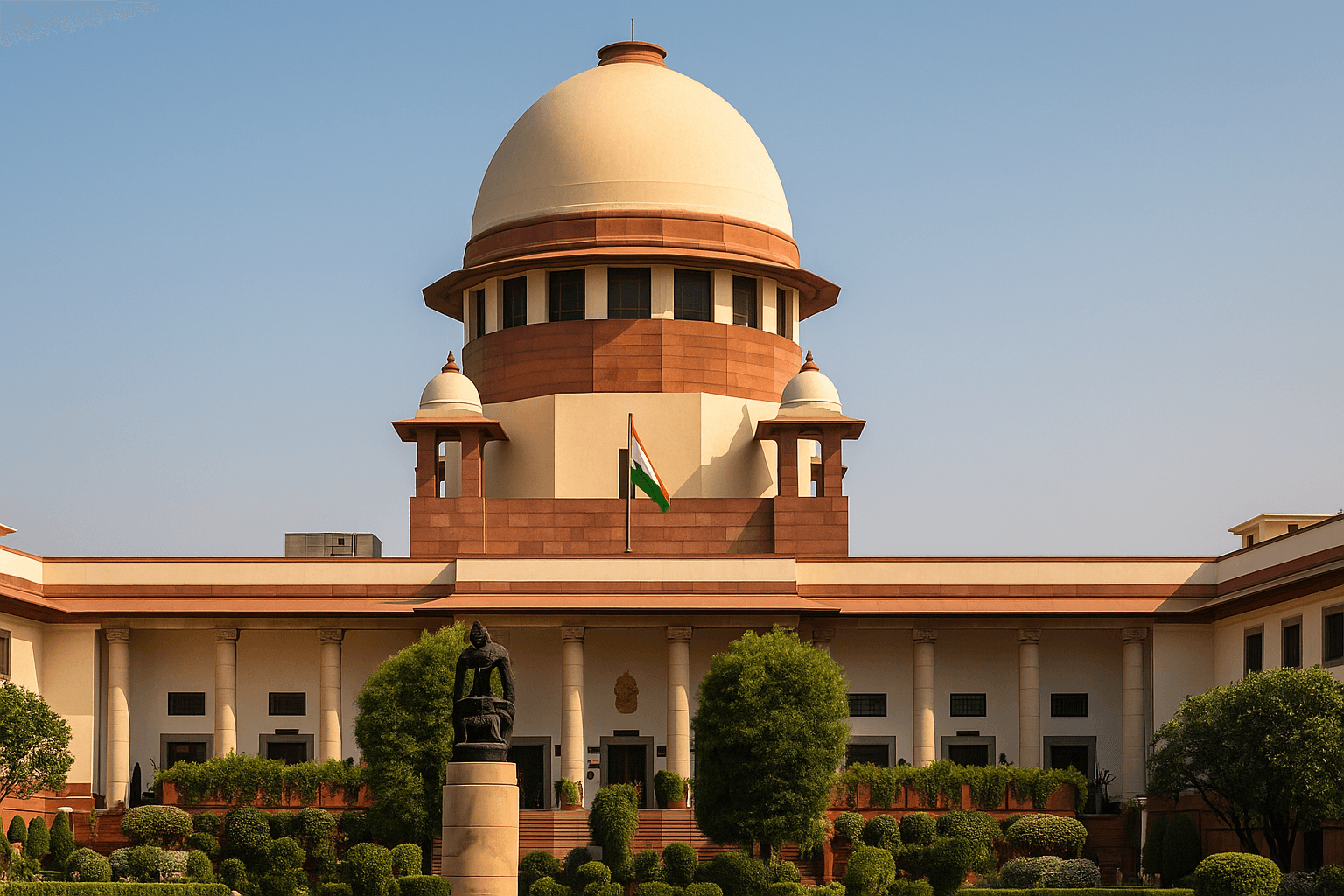
On Monday, a Bench of Justices Surya Kant and Joymalya Bagchi will hear the Supreme Court Bar Association’s petition seeking criminal contempt against advocate Rakesh Kishore for throwing an object toward the CJI B. R. Gavai’s Bench on October 6. Although the CJI termed the episode a “forgotten chapter,” others argue that an attack inside open court affronts the institution, warranting formal action. The Bar Council of India has already interim-suspended the advocate pending professional-misconduct proceedings.
The news at a glance
-
What’s listed: SCBA’s contempt petition; AG’s consent has been indicated to have been obtained.
-
Who hears it: Justices Surya Kant and Joymalya Bagchi.
-
Parallel track: Bar Council of India has passed an interim suspension; further disciplinary inquiry under the Advocates Act, 1961 will follow.
The law: Criminal contempt vs civil contempt (and “in facie curiae”)
-
Constitutional footing: Article 129 makes the Supreme Court a “court of record” with power to punish for contempt; Article 142(2) supplements procedure.
-
Statutory scheme: Contempt of Courts Act, 1971.
-
Civil contempt: Wilful disobedience of a court’s judgment/order.
-
Criminal contempt (Section 2(c)): Acts that scandalise or lower the authority of the court, prejudice or interfere with judicial proceedings, or obstruct administration of justice.
-
-
In facie curiae (Section 14): If the act occurs in the face of the court (e.g., inside the courtroom), the court can proceed summarily—record facts, ask for a defence/apology, and decide. AG consent is not needed for such in-court incidents.
How a criminal contempt case is triggered (Section 15)
-
Suo motu by the Court.
-
On motion by the Attorney General/Solicitor General.
-
On a petition by any person—but only with AG/SG written consent.
Here, the bar association has moved the Court and indicated AG consent—a safeguard against frivolous filings.
Possible outcomes and penalties
-
Punishment (Section 12): Up to 6 months’ simple imprisonment, or fine (statute prescribes a modest cap), or both; a sincere apology can secure discharge/remission.
-
Collateral measures: The Court may also frame charges, appoint an amicus curiae, record the contemnor’s explanation/apology, and close or drop proceedings if satisfied.
-
Separation from bar discipline: Contempt punishes offence against the court; professional misconduct is handled under the Advocates Act by bar councils (usually State Bar Council inquiry → Bar Council of India appellate/transfer powers). Both can run in parallel.
Bar Council action: Standards of professional conduct
-
Advocates Act, 1961 and BCI Rules require advocates to maintain dignity of court, not act in a manner unbecoming of the profession, and abstain from disruptive behaviour.
-
Interim suspension is a preventive step; final penalties (warning, suspension, or removal from the roll) follow due inquiry with an opportunity to be heard.
The institutional stakes: Dignity, security, and courtroom order
-
Open court is a constitutional value—but it demands minimum order and safety. A physical act aimed at the Bench is not mere speech; it implicates security protocols for judges, lawyers, litigants, and the public.
-
Deterrence vs judicial economy: The CJI’s instinct to move on preserves court time, but a limited, principled response can deter copycat disruptions.
-
Bar’s role as first responder: Strong, swift bar action signals self-regulation and protects the profession’s credibility, reducing the need for judicially driven discipline.
-
Free speech line: Contempt is not a shield against fair criticism of judgments; the law targets acts or speech that obstruct justice or undermine the court’s authority in ways that impede adjudication or public confidence.
How Monday could play out (typical sequence)
-
Step 1: Court notes maintainability (AG consent; or in-court exception).
-
Step 2: Notice to the advocate; the Court may appoint an amicus.
-
Step 3: Statement/apology/justification by the advocate; the Bench assesses sincerity and the incident record (including security reports/CCTV).
-
Step 4:
-
If apology accepted → warning/closure.
-
If not satisfactory → conviction & sentence (often calibrated to the gravity and contrition shown).
-
-
Parallel: Court may refer/leave professional-misconduct issues to the Bar Council for final disciplinary orders.
Precedent pointers
-
Courts have, in past matters, balanced dignity with restraint—sometimes imposing token fines or short sentences, sometimes accepting unequivocal apologies, and at times initiating bar-discipline referrals for conduct breaches.
-
The touchstone remains whether conduct obstructs or tends substantially to obstruct the administration of justice—not whether it merely annoys or criticises the court.
Quick glossary
-
Criminal contempt: Acts that scandalise the court or obstruct justice.
-
Civil contempt: Wilful disobedience of a court order.
-
In facie curiae: Contempt committed in the face of the court; allows summary procedure.
-
AG consent: Prior written consent of Attorney General/Solicitor General for private motions of criminal contempt (not needed for suo motu or in-court incidents).
-
Advocates Act discipline: Professional-misconduct proceedings by bar councils; distinct from contempt.