

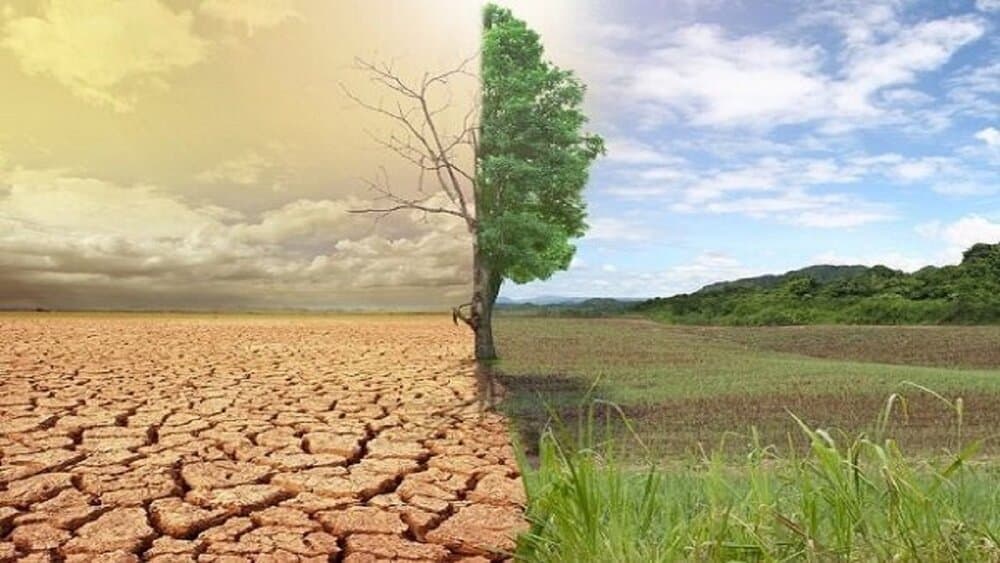
In a pioneering experiment, researchers at the Central University of Rajasthan (CUoR) have successfully grown wheat in the Thar desert using desert “soilification” technology. Powered by an indigenous bioformulation, the trial demonstrates how barren sand can be turned into fertile ground with high water-retention capacity, potentially halting the desert’s spread toward the National Capital Region.
The Story
The experiment was carried out at Banseli village near Pushkar in Ajmer district, where 13 kg of wheat-4079 seeds were sown across 1,000 sq. metres of desert land in November 2024. By April 2025, the crop was harvested with a yield of 26 kg per 100 sq. metres, achieving a seed-to-harvest ratio of 1:20—double that of normal arid land.
The bioformulation developed by CUoR scientists modified desert sand into a soil-like structure. The polymers enhanced water retention, promoted cross-linking of sand particles, and stimulated beneficial microbial activity, boosting plant stress resistance. Remarkably, the wheat required only three irrigation cycles during its growth, compared to five to six cycles in conventional farming.
Led by Associate Professor Akhil Agrawal of the Department of Microbiology, the team shifted from earlier lab-based experiments on bajra, guar gum, and chickpea to field-scale wheat trials. Research scholar Diksha Kumari oversaw field implementation, noting that reduced water input and healthy crop growth in such hostile conditions highlighted the method’s transformative potential.
The project was supported by the Krishi Vigyan Kendra (KVK) and the Rajasthan Horticulture Department, which facilitated field-level trials. KVK officials also designed the field layout at the edge of the Thar desert.
Why It Matters
India faces rising desertification, accelerated by degradation of the Aravalis, shifting rainfall patterns, and land misuse. Western Rajasthan is among the worst-hit zones, with sand dunes creeping closer to inhabited areas and farmlands. The CUoR experiment suggests a scalable biotechnological solution to restore degraded land, conserve water, and ensure food security in arid regions.
For farmers, the reduced irrigation requirement could be game-changing in water-scarce areas. For policymakers, the research points to a scientific path to counter desert expansion that threatens the ecology of northwestern India, including the NCR.
Background / Context
-
Desertification challenge: India loses nearly 30% of its land to degradation, with Rajasthan among the most affected. The weakening of the Aravali range has accelerated desert spread.
-
CUoR research: Initial trials with polymers and bioformulations on bajra, guar, and chickpea demonstrated feasibility before scaling to wheat.
-
Water savings: Bioformulation-based crops used 30–40% less irrigation compared to conventional wheat farming.
-
Second-phase trials: On campus, 100 tonnes of sand from Jaisalmer were amended with bioformulation, yielding 54% higher output for multiple crops.
Implications
The CUoR trial has implications beyond Rajasthan. If scaled, the technology could aid other arid and semi-arid regions in India and abroad. Reduced irrigation requirements align with sustainable agriculture goals and could support climate-resilient farming.
However, large-scale adoption will depend on cost, farmer training, and long-term soil health assessments. Policymakers will also need to integrate such biotechnological interventions with afforestation, water conservation, and land management programmes.
Conclusion
The success of growing wheat in the Thar desert underlines how applied science can tackle pressing ecological and livelihood challenges. By demonstrating that barren sand can be transformed into fertile soil, the CUoR team has opened a pathway for sustainable farming in India’s driest regions. Expanding the technology to millet, green gram, and other dryland crops may further strengthen food security and resilience against desertification.