

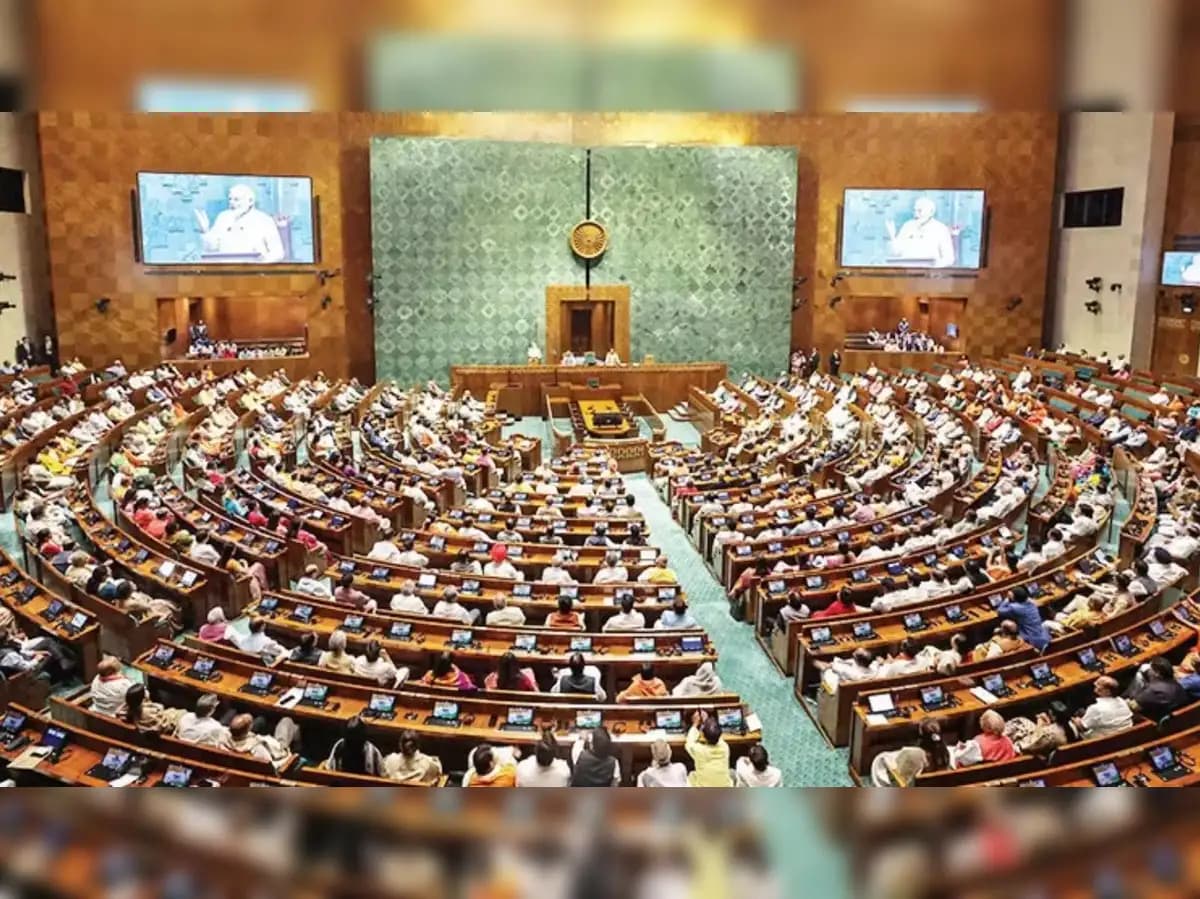
India has taken a decisive step towards changing how its most tightly controlled energy sector works. The Sustainable Harnessing and Advancement of Nuclear Energy for Transforming India (SHANTI) Bill, 2025, introduced in the Lok Sabha, proposes a single new legal framework that replaces the Atomic Energy Act, 1962 and the Civil Liability for Nuclear Damage (CLND) Act, 2010. The core shift is unmistakable: nuclear power is no longer structured as a near-exclusive state enterprise. Private participation—Indian and foreign-linked through permitted routes—is being invited into building and operating civilian nuclear power, under a redesigned regulatory and liability regime. This is not merely an “opening up.” It is a reallocation of responsibilities and risks—between the State, plant operators, equipment suppliers, insurers, and ultimately the public.
What’s in the news
The SHANTI Bill, 2025 has been introduced in Parliament to:
-
create a new statutory structure for licensing and safety authorisation,
-
give statutory backing to the Atomic Energy Regulatory Board (AERB),
-
remove the effective monopoly of public sector operators over nuclear power plant operations, and
-
revise civil liability rules for nuclear damage, including limits on operator liability and a narrower pathway for operators to pursue suppliers after an accident.
What the SHANTI Bill changes
Repeal-and-replace architecture
Instead of patching old laws, the Bill proposes a full replacement with a single umbrella statute. This matters because nuclear governance in India has long been split between strategic control, civilian power generation, and liability rules—often creating hesitation among global suppliers and complexity for domestic expansion.
Private operators enter a state-dominated sector
A pivotal provision is that operating a nuclear power plant is no longer restricted to a single government monopoly structure. The Bill enables licensing for eligible entities to build, own, operate, and decommission nuclear power plants and reactors—within a controlled, permissioned framework.
Statutory status for AERB and stronger safety scaffolding
The AERB, earlier functioning without a standalone statutory charter, is proposed to be placed on firmer legal footing. The Bill also speaks to strengthened mechanisms for safety, security, safeguards, quality assurance, and emergency preparedness. This is crucial: private capital can accelerate projects, but only a strong regulator can protect public confidence.
New institutional machinery for nuclear damage claims
The Bill proposes dedicated institutional arrangements for handling nuclear damage claims, including claims commissioners and a nuclear damage claims commission for severe cases, with an appellate pathway. In plain terms, the law is trying to ensure that if the worst happens, the response is not improvised.
Liability redesign: the heart of the political and commercial bargain
Operator liability gets graded and capped
The Bill proposes graded limits on operator liability based on plant size. This is meant to reduce uncertainty for new entrants and make insurance and financing more feasible. It also signals a key policy stance: beyond a point, catastrophic nuclear risk is treated as a sovereign-capacity risk, not something a private balance sheet can absorb.
Supplier exposure is narrowed through “recourse” limits
Under the older framework, suppliers were wary that “supplier liability” could be triggered in ways that made participation commercially unviable. The Bill restricts the circumstances in which operators can claim compensation from suppliers after an incident, effectively shifting supplier exposure closer to what is contractually negotiated. This is designed to remove a long-standing investment chill.
Penalties are capped even for severe breaches
The Bill introduces graded penalties for violations and caps the maximum monetary penalty even for severe breaches at ₹1 crore. Supporters will call this “predictability.” Critics will call it “soft deterrence.” The practical answer will depend on how licence suspension, cancellation, prosecution provisions, and compliance audits are structured in subordinate rules.
Why the government is pushing this now
Nuclear as firm clean power for a renewables-heavy grid
India’s nuclear power currently contributes a small share of installed capacity (roughly 1–2%) and a modest share of generation (around 3%). Yet nuclear’s strategic appeal is different from its percentage: it delivers firm, low-carbon electricity that can stabilise a grid increasingly dominated by intermittent renewables.
The 100 GW ambition and the 2047 horizon
The government has articulated a target of scaling nuclear capacity dramatically by 2047, alongside a broader decarbonisation pathway towards 2070. Achieving such a jump through public capital alone is difficult, especially when competing priorities—transmission, storage, distribution reforms—also demand funds.
SMRs and industrial decarbonisation
Small Modular Reactors (SMRs) are being positioned as a new pillar: smaller units, potential for standardised manufacturing, and siting options for industrial clusters and high-reliability users. The Bill’s design also signals a desire to unlock innovation and domestic manufacturing, including changes that could affect patentability for peaceful uses in nuclear and radiation technologies.
What this could unlock, if execution is steady
Faster project pipelines and diversified financing
Private participation can bring fresh financing models—project finance, joint ventures, supply-chain localisation, and execution discipline. It can also push standardisation, which is the only reliable antidote to nuclear cost overruns.
A stronger ecosystem beyond power generation
The Bill’s framing covers broader peaceful applications of nuclear and radiation technologies—healthcare, agriculture, industry, research—suggesting an ambition to grow a wider nuclear-tech economy, not just add megawatts.
The fault lines: where the Bill will be tested
Regulatory credibility is the real currency
In nuclear power, capital follows confidence. A statutory regulator helps, but credibility depends on independence, technical capacity, transparent incident reporting, and enforcement strength. If oversight is seen as permissive, every project becomes vulnerable to litigation, protests, and loss of investor appetite.
Risk cannot be pushed downward without consequences
Capping liability and limiting supplier exposure can improve investment conditions, but it also raises a sensitive public question: if responsibility is capped, who bears the residual risk? The answer is inevitably the State—meaning taxpayers and public institutions must be demonstrably prepared with emergency capacity, monitoring, and compensation systems.
Waste, spent fuel, and decommissioning are not side issues
Private operation must not mean private opacity. Spent fuel management, long-term waste strategy, transport security, and end-of-life decommissioning financing need clear, enforceable rules—otherwise the sector will accumulate hidden liabilities that surface decades later.
Economics: nuclear needs patience and a tariff story
Even with private entry, nuclear remains capital intensive with long gestation. The real-world feasibility will depend on:
-
predictable tariff frameworks and long-term offtake contracts,
-
faster approvals without cutting safety corners, and
-
credible insurance and liability fund design.
What to watch next
Subordinate rules will decide the real balance of power
The Bill sets the direction; rules will set the discipline. Market confidence will depend on how the government defines:
-
eligibility and licensing thresholds,
-
operator compliance audits and disclosure norms,
-
incident response protocols and compensation processes,
-
supplier contracting boundaries, and
-
financial security/insurance mechanisms.
Early pilots will shape public trust
A few early private-participation projects—especially SMR-linked pilots—will become the sector’s proof points. If they are transparent, on-time, and safely run, the reform narrative strengthens. If they face delays, opacity, or safety controversies, the entire opening can stall.
Source credits: Parliamentary reporting on the Bill’s introduction; official government statement on the Bill’s objectives; independent policy and business reporting on liability caps, claims mechanisms, and private participation design.