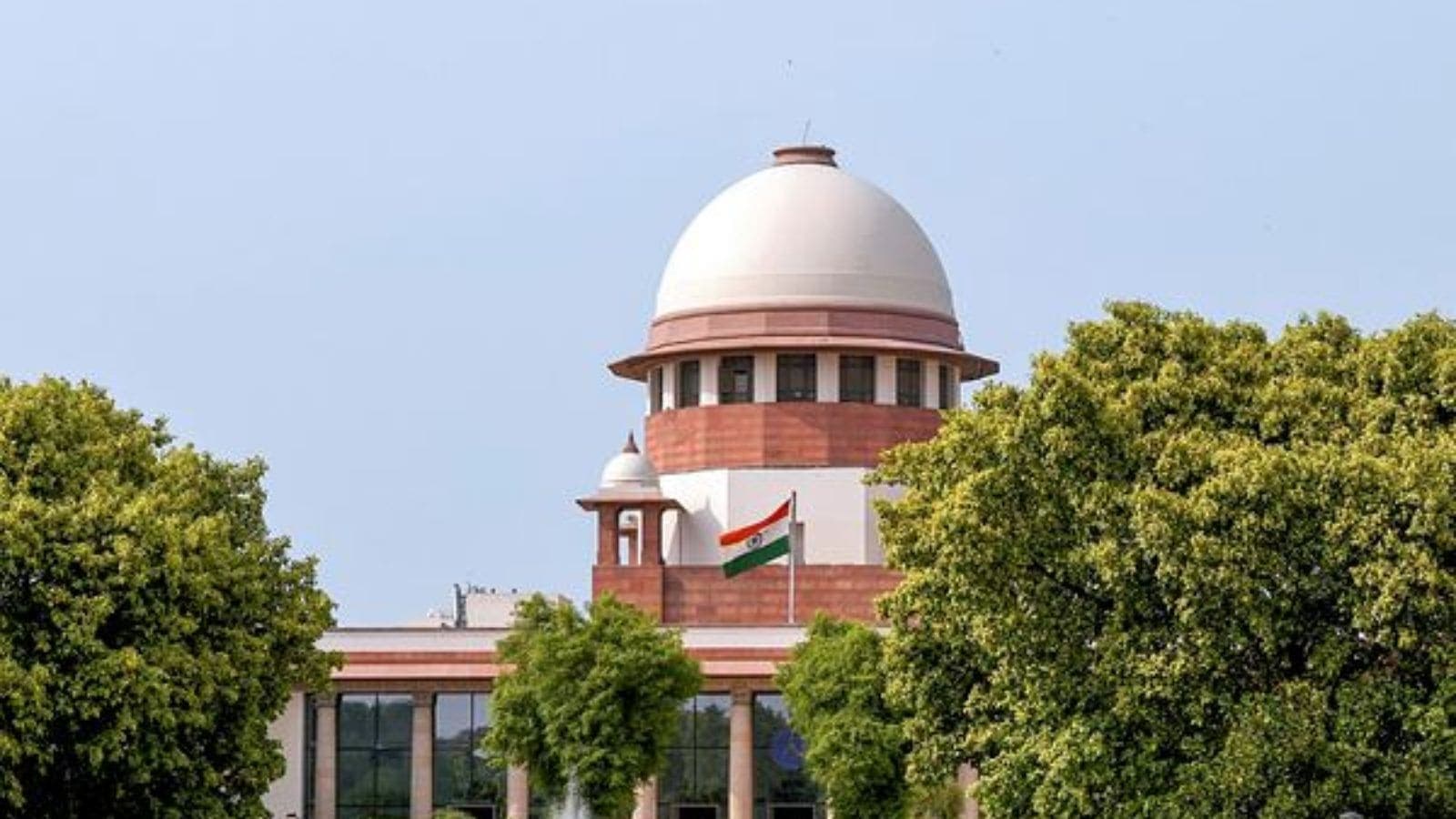
After the Telangana High Court halted Government Orders hiking OBC reservation in municipalities and panchayats to 42%, the State has approached the Supreme Court. At the core is whether OBC quotas in local bodies can cross the 50% cap and under what conditions—an issue the Court has addressed repeatedly, from Indra Sawhney (1992) to the “triple test” line of cases culminating in Vikas Kishanrao Gawali (2021) and subsequent directions to States.
The big legal milestones on OBC reservation
1) Indra Sawhney (1992): The 50% ceiling and creamy layer
A nine-judge bench upheld OBC reservations but set a general 50% ceiling on total quotas and introduced the creamy layer exclusion for OBCs. While primarily about jobs and central policy, this benchmark ceiling informs later rulings, including those on local bodies.
2) K. Krishna Murthy (2010): Local self-government reservations are permissible—but need evidence
The Court upheld the permissibility of OBC reservation in panchayats/municipalities under Parts IX & IX-A, stressing that political backwardness at the local level must be evidenced through a rigorous empirical exercise. This case laid the groundwork for the structured approach later called the “triple test.”
3) Vikas Kishanrao Gawali v. State of Maharashtra (2021): The “Triple Test” crystallised
A three-judge bench formalised the triple test before providing OBC reservation in local bodies:
(i) a dedicated commission must conduct a contemporaneous, empirical inquiry into OBC backwardness in that local body;
(ii) the State must determine local body–wise reservation percentages based on that report; and
(iii) the aggregate of SC/ST/OBC reservation must not exceed 50% of the seats.
4) Post-Gawali applications and reiterations (2022–2025): Follow the test, keep within 50%
-
Karnataka/Maharashtra directions (2022): The Supreme Court reiterated that polls could proceed only after the triple test; States constituted commissions (e.g., the Jayant Banthia panel in Maharashtra). Polls were allowed subject to outcome of challenges and the 50% aggregate cap.
- Madhya Pradesh/UP episodes (2022): Courts insisted on contemporaneous data and adherence to the cap, striking down or pausing processes that skipped the test.
- Recent Telangana development (2025): The Telangana High Court stayed the GO raising OBC quota to 42% and directed adherence to Supreme Court limits; it faulted non-compliance with the triple test, asking polls to be conducted within the 50% cap (treating the extra 17% as general seats). The State has now moved the Supreme Court.
-
5) Jaishri Laxmanrao Patil (Maratha, 2021): No dilution of the 50% ceiling absent “extraordinary” grounds
While not about local bodies per se, the Constitution Bench struck down the Maratha SEBC law and reaffirmed the 50% ceiling unless exceptional circumstances exist and are properly substantiated—bolstering the cap’s continued force. (Included here for the ceiling doctrine’s continuity.)
6) Ashoka Kumar Thakur (2008): OBCs in higher education with creamy layer exclusion
The Court upheld OBC reservation in central educational institutions under the 93rd Amendment, but insisted on creamy layer exclusion—a principle that continues to frame OBC policy design even outside jobs. (Contextual relevance to OBC jurisprudence.)
Why this matters for Telangana’s 42% proposal
The High Court’s interim order squarely applies the Gawali triple test and the 50% aggregate cap. Telangana’s appeal will likely turn on:
-
Whether its empirical exercise and commission-based findings meet the Court’s contemporaneous and local body–wise requirements; and
-
Whether aggregate SC/ST/OBC quotas can cross 50% in the absence of narrowly defined “extraordinary circumstances.”
-
Credits: Core news tip and headline framing from The Hindu.
-