

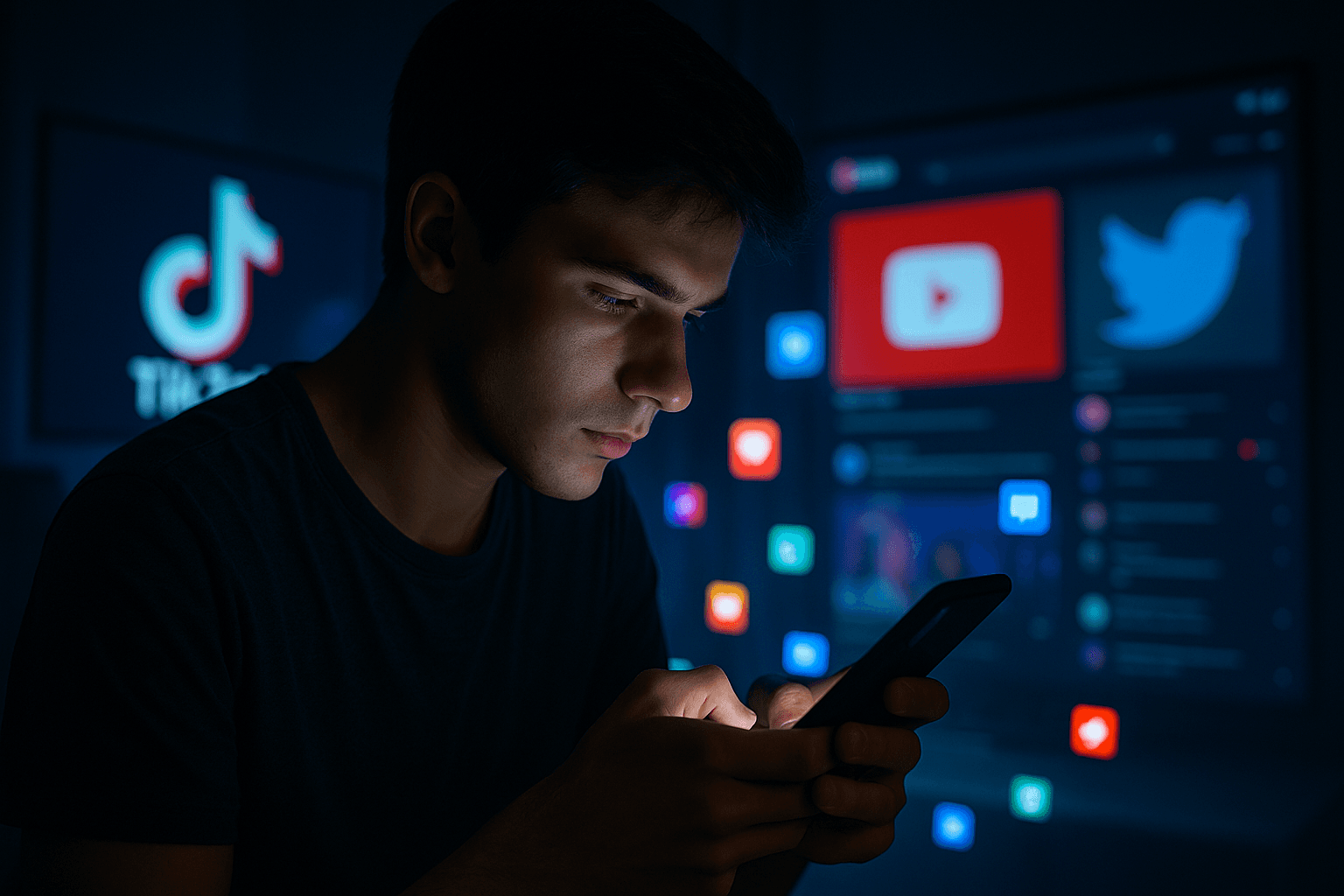
Every swipe, every scroll, every click — it all looks effortless. But behind the endless stream of videos, memes, and news updates lies a set of invisible instructions. These are the algorithms of TikTok, YouTube, and X (formerly Twitter) — silent curators that decide what billions see each day.
The Story
An algorithm, at its core, is just a recipe. Input your actions (likes, watch time, comments, shares), process them through a system, and get outputs: recommendations. But when billions of people feed data into these systems, the result is not just personalized content — it is a reshaping of attention, culture, and even politics.
-
TikTok’s “For You Page” is famously precise. Within minutes, it can predict a user’s mood, interests, or insecurities, serving up videos that feel uncannily personal.
-
YouTube’s recommendation engine pushes viewers from one video to the next, accounting for 70% of watch time on the platform.
-
X’s “For You” timeline has transformed the once-chronological feed into a curated mix of trending and suggested posts, amplifying some voices while burying others.
What makes these algorithms powerful is not that they show you what you want, but that they influence what you think you want.
Why It Matters
These feeds are not neutral. They are engineered to maximize attention, because attention is money. The longer you stay, the more ads you see, and the more data is collected. But in the process, algorithms have become gatekeepers of culture, shaping everything from election debates to global fashion trends.
Psychology & Behaviour
Algorithms are built on psychology. They exploit the brain’s reward system by giving small, unpredictable hits of pleasure — the next viral dance, the breaking news alert, the meme you just had to share.
-
Echo chambers: The more you interact with one type of content, the more similar content you see, reinforcing beliefs.
-
Filter bubbles: You rarely see what contradicts your worldview.
-
Doomscrolling: The feed never ends, creating a cycle of compulsive consumption.
These mechanisms explain why it feels so hard to “just close the app.”
Economic Angle
The “algorithm economy” is massive.
-
Ad revenue: Platforms earn billions by targeting users with ads based on algorithmic predictions.
-
Creator livelihoods: A tweak in YouTube’s algorithm can double or wipe out a creator’s income overnight.
-
Industry shifts: Musicians, writers, comedians, even small businesses now build strategies around cracking the algorithm.
In short, algorithms don’t just reflect culture — they actively shape markets and careers.
Political & Social Impact
Algorithms amplify not only cat videos and cooking hacks, but also political ideas and misinformation.
-
During the 2016 U.S. election, Facebook and YouTube feeds were accused of fueling polarization.
-
In countries like India, X and YouTube have become central stages for political campaigns.
-
Protest movements from the Arab Spring to #MeToo gained momentum because algorithms elevated grassroots voices.
But the same systems can push divisive or extremist content, sometimes without oversight. That duality — empowering democracy and threatening it — makes algorithmic power uniquely complex.
Cultural Dimensions
Algorithms decide what goes viral.
-
A song trending on TikTok can top the Billboard charts within days.
-
Fashion aesthetics like “cottagecore” or “dark academia” spread worldwide through recommendation loops.
-
Local creators in small towns can suddenly reach global audiences.
This democratization of fame comes with costs: trends move faster than ever, attention spans shrink, and creators face burnout to stay relevant.
Global Governance & Regulation
Governments are starting to intervene.
-
EU’s Digital Services Act forces platforms to reveal how algorithms rank content.
-
India’s IT Rules demand transparency and accountability for online moderation.
-
The U.S. Congress has repeatedly debated TikTok bans, citing national security concerns.
The key dilemma: Should algorithms remain in corporate hands, be regulated by governments, or give more control to users themselves?
Ethical Questions
Algorithms raise questions with no easy answers:
-
Should they show what is popular or what is true?
-
Should they prioritize safety or freedom of expression?
-
Can users ever really consent when they don’t know how the system works?
The “black box problem” — the fact that even engineers sometimes can’t fully explain why an algorithm makes a decision — adds to the unease.
Future of Algorithms
As artificial intelligence advances, algorithms are evolving from recommendation engines to generative systems. Instead of just suggesting videos, AI may soon create custom-tailored content in real time.
Some platforms are experimenting with giving users more control — sliders to adjust feeds, options to turn off recommendations, or chronological-only timelines. Others see a future of “algorithmic sovereignty,” where countries build their own systems to control data flows.
What remains constant: algorithms will keep deciding what billions know, feel, and believe. The question is how transparent, fair, and accountable those decisions will be.
Conclusion
TikTok, YouTube, and X are not just apps — they are information filters, cultural engines, and political actors. Their algorithms, invisible yet powerful, shape our digital lives more than most realize. Understanding them is not just about tech literacy; it’s about understanding the future of society itself.