

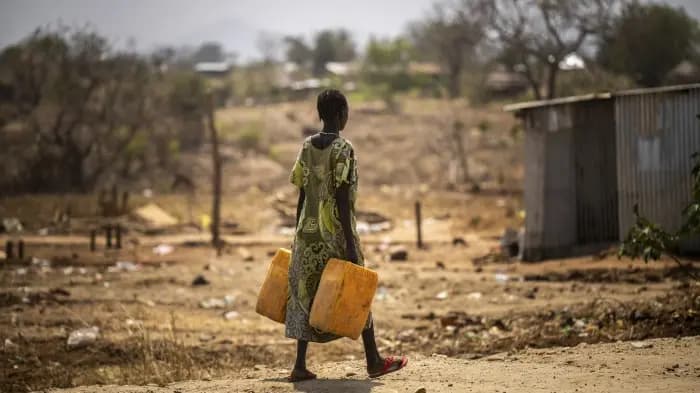
The UN’s warning that around three lakh South Sudanese have fled this year is the latest marker of a protracted emergency. Independence in 2011 raised hopes; cycles of elite power struggles, ethnic mobilisation, and fragile institutions have kept violence—and displacement—recurring.
What’s happening now
-
New displacement surge: Clashes and localised conflicts have intensified, pushing civilians to leave at speed.
-
Humanitarian stress: Camps and host communities are straining under simultaneous shocks—violence, flooding/drought swings, high food prices, and disease outbreaks.
Why people are fleeing: the layered drivers
-
Elite rifts & armed fragmentation: Recurrent breakdowns in power-sharing and armed group splintering create flashpoints across states.
-
Ethnic violence & revenge cycles: Local disputes over land, cattle, and political patronage escalate quickly in a heavily armed environment.
-
Economic collapse: Currency weakness, limited oil revenue stability, and disrupted trade leave households without buffers.
-
Regional spillover: The wider Sudan war and porous borders fuel arms flows, cross-border raids, and new refugee movements.
-
Climate shocks: Floods and dry spells displace communities and cut off roads, complicating aid delivery and livelihoods.
Where are people going?
-
Immediate neighbours: Uganda, Ethiopia, Kenya, Democratic Republic of Congo, and Sudan absorb the bulk of arrivals.
-
Mixed flows: Refugees, returnees from earlier waves, and internally displaced persons (IDPs) often transit multiple borders before stabilising.
Key risks in transit: Family separation, gender-based violence, child recruitment, landmine/UXO exposure, cholera and measles outbreaks, and acute malnutrition.
The biggest hurdles for the response
-
Access & security: Aid convoys need predictable corridors; fragmented conflict lines and road inaccessibility raise costs and delays.
-
Funding gaps: Appeals remain underfunded, forcing cuts to food rations, health outreach, and WASH services.
-
Registration & documentation: Weak civil documentation complicates assistance, family tracing, and cross-border protection.
-
Education & livelihoods: Prolonged displacement without schooling or work deepens fragility and future conflict risks.
What must be done (immediately and next)
Immediate
-
Scale basic services: Food, nutrition screening, vaccination, cholera prevention, and GBV-safe spaces at border points and reception centres.
-
Open humanitarian corridors: Local ceasefire windows tied to monitored routes for medical and food deliveries.
-
Cash where markets function: Reduce negative coping (child labour, early marriage) and support host communities to limit tensions.
Near term
-
Ceasefire support & monitoring: Regional guarantors with verifiable benchmarks and targeted sanctions on spoilers.
-
Cross-border coordination: Shared biometrics/registration, disease surveillance, and referral systems among Uganda–Kenya–Ethiopia–DRC–Sudan.
-
Education/livelihoods packages: School-in-a-box, accelerated learning, and work permits in host areas to prevent protracted dependency.
Structural
-
Justice & reconciliation at local level: Community peace committees, cattle-raiding compensation norms, and transitional justice pilots.
-
Economic stabilisation: Support for basic fiscal management and essential imports; climate-resilient infrastructure to keep roads open year-round.
What to watch
-
Border policies: Any tightening or refoulement risks.
-
Humanitarian pipeline: Rations and medical supply continuity through year-end.
-
Disease patterns: Cholera/measles alerts in high-density reception sites.
-
Conflict map: Whether hotspots spread to key oil transit zones or major towns.
Bottom line
South Sudan’s latest refugee surge is not a one-off—it’s the predictable outcome of unresolved political fractures meeting economic stress and regional war spillovers. The fix begins with protection and access today, and with enforceable political commitments, local justice, and economic stabilisation tomorrow.
Source: The Hindu