

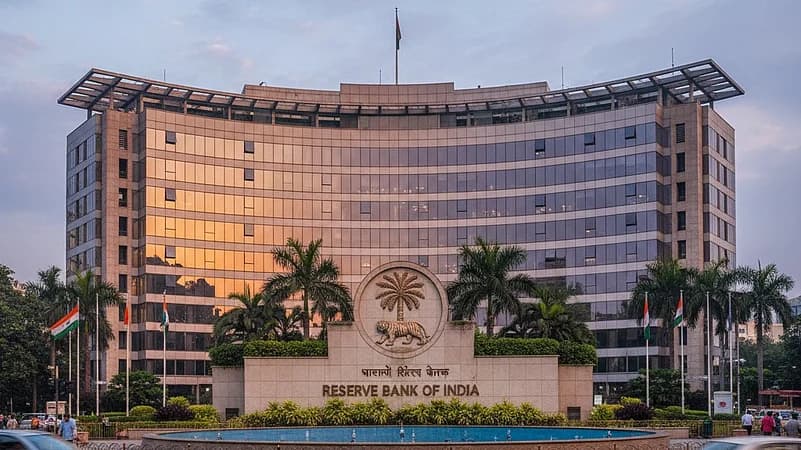
Retail inflation in November 2025 has been reported at an exceptionally low 0.7%, following October’s record low in the current CPI series. The editorial’s central argument is straightforward: the RBI’s Monetary Policy Committee should resist reading this as a durable disinflation trend and should pause further rate cuts in February 2026, allowing time for monetary transmission, the Budget impulse, and the upcoming CPI revision to reshape the policy picture.
What’s in the news
Inflation prints at historic lows
November 2025 CPI inflation is among the lowest readings in the series, with food prices contracting and pulling the headline sharply down.
The base-effect caveat
The editorial flags that unusually high inflation in October–November 2024 makes the 2025 year-on-year comparison look abnormally benign, and that this base advantage will fade over the coming months.
The CPI design issue
With food and beverages carrying close to half the CPI weight, food movements can disproportionately drive headline inflation, sometimes masking pressures elsewhere.
The policy choice ahead
After the December 2025 rate cut, the MPC meets again in February 2026. The editorial recommends a pause to evaluate whether prior easing is actually lifting demand and investment.
Background and context
How base effects shape inflation narratives
Year-on-year inflation is highly sensitive to what happened in the same month last year. When the comparison base is unusually high, the current inflation number can look artificially low even if prices are not falling in a meaningful, broad-based way.
Why food dominates India’s inflation optics
India’s CPI assigns a heavy weight to food and beverages, reflecting consumption patterns of an earlier base year. As a result, a sharp food swing can compress or inflate the headline even when non-food components behave differently.
CPI revision as a structural reset
A rebased CPI series, with updated consumption weights and a new base year, can change the interpretation of inflation itself. A lower food weight would reduce the “headline volatility” coming from food, altering how policymakers and markets read future inflation prints.
Key claims made in the editorial
The inflation trough may be temporary
The fall in food prices is described as statistically influenced by last year’s high base, implying the headline could look very different once base effects normalise.
Monetary easing has already been significant
The editorial notes cumulative easing through 2025 and argues the RBI should now wait for rate cuts to transmit through credit markets, borrowing costs, and investment decisions.
Fiscal policy will add a new signal
With Budget 2026 expected to be in place by the February MPC meeting, the editorial argues monetary policy should allow fiscal policy’s impact to surface before further rate adjustments.
CPI rebasing needs policy attention
The upcoming new CPI series is presented as another reason to pause: the MPC should study how new weights and base-year mechanics may change inflation dynamics and the interpretation of policy stance.
Why it matters
Risk management is the heart of monetary policy
Policy errors are often asymmetric. Cutting too much into a temporary inflation dip can create inflation persistence later, while pausing briefly after a large easing cycle may carry lower long-term costs if growth is already receiving support.
Credibility of the inflation-targeting framework
India’s flexible inflation targeting depends on anchoring expectations near the target band. If future inflation rebounds when base effects fade, policy may need to reverse course quickly, which can be disruptive for markets and borrowers.
Transmission lags are real
Rate cuts do not work instantly. They transmit through deposit and lending rates, bank behaviour, credit demand, and corporate balance sheets with delays. A pause can be framed as “letting policy work,” not as abandoning growth support.
Arguments for and against a pause
Arguments supporting a pause
Base effects can mislead policy
If low inflation is partly statistical, further cuts based on headline readings may be premature.
Evaluate whether demand is actually responding
A pause creates space to assess credit growth quality, capex intentions, and whether lower rates are improving consumption and investment.
Align with fiscal developments
Once the Budget is known, the MPC can better judge whether fiscal stance is expansionary, neutral, or consolidating, and calibrate accordingly.
Arguments against a pause
Growth risks may require continued support
If growth is slowing sharply in the second half of the year, additional easing could be justified to prevent demand from weakening further.
Real rates could remain high for some segments
Even with lower policy rates, effective borrowing costs may not fall meaningfully for small borrowers, MSMEs, or riskier sectors, limiting stimulus unless policy continues easing.
Inflation may stay benign if supply conditions improve
If food supply is stable and global price pressures remain contained, pausing could be seen as overly cautious.
Constitutional and legal angle
MPC framework and accountability
India’s monetary policy is set under a formal MPC system within a flexible inflation-targeting framework, with the RBI responsible for maintaining price stability while keeping growth in mind. The institutional design emphasises transparency, voting records, and clear communication, making the rationale for either “pause” or “continue” a matter of public policy accountability.
Statistical governance and CPI credibility
CPI revision is not merely technical. It affects welfare indexing, policy assessment, and credibility of inflation measurement. A new base year and revised weights can change how inflation is experienced and interpreted, which matters for both policy legitimacy and market expectations.
Implications and way forward
Treat low headline inflation with analytical caution
Policy communication should clearly separate statistical effects from underlying inflation pressures, reducing the risk of mis-anchored expectations.
Strengthen focus on transmission indicators
Beyond CPI prints, the MPC can lean more on transmission metrics such as bank lending rates, credit conditions, household inflation expectations, and investment indicators to judge whether easing is working.
Prepare markets for CPI-series transition
When the new CPI series arrives, consistent explanation of weight changes and comparability issues will be essential to prevent confusion and volatility in inflation expectations.
Balance growth support with inflation durability
A pause does not foreclose future action. It can be positioned as conditional patience: readiness to move if growth weakens materially, while remaining alert to inflation’s likely normalisation as base effects fade.
Source credits
The Hindu editorial, “Time to pause” (based on November 2025 CPI and the RBI MPC’s December 2025 decision, and commentary on the forthcoming CPI series revision).