

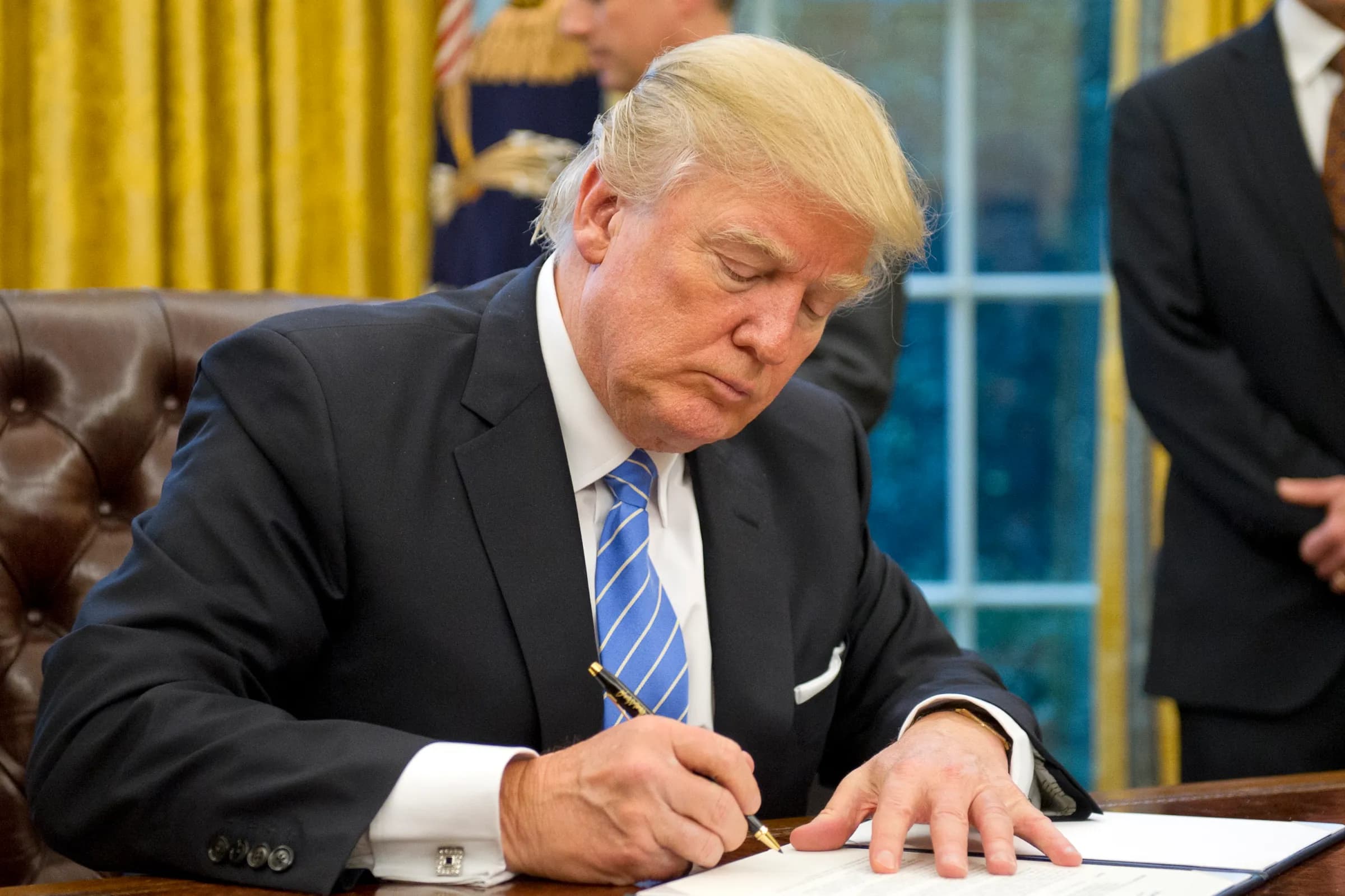
U.S. President Donald Trump on Thursday announced a fresh round of tariffs targeting pharmaceuticals, heavy trucks, and furniture, set to take effect from 1 October. The measures, revealed on Truth Social, include a 100% duty on branded drugs and a 25% tariff on heavy-duty trucks, marking an aggressive expansion of Washington’s trade actions.
The Trump administration said the new tariffs are aimed at countering what the President called “large-scale flooding” of foreign products into the U.S. market. Alongside the 100% duty on imported branded drugs, the White House unveiled a 50% tariff on kitchen cabinets and bathroom vanities, and a 30% tariff on upholstered furniture.
The announcement did not clarify whether countries with trade deals, including Japan and the European Union, would be exempt. The administration noted that exemptions may be limited by provisions already embedded in bilateral agreements.
Mr. Trump linked the pharmaceutical tariff to domestic production, saying the levy would not apply if a company has begun construction of a manufacturing facility in the U.S. “This is about protecting American industry from unfair competition,” he wrote.
The Pharmaceutical Research and Manufacturers of America warned the move could undermine billions of dollars in planned investments, arguing that tariffs risk deterring local production rather than encouraging it.
The U.S. Chamber of Commerce expressed concern over the truck tariffs, noting that Mexico, Canada, Japan, Germany, and Finland—America’s top suppliers—are close allies and pose no national security threat. Mexico alone is the largest exporter of medium- and heavy-duty trucks to the U.S.
Treasury Secretary Scott Bessent said the new measures could generate $300 billion in revenue by year-end. The administration has also opened national security probes into imports of wind turbines, aircraft, semiconductors, copper, timber, and critical minerals.
Why It Matters
The tariffs mark a sharp escalation in Trump’s use of trade policy as a geopolitical and domestic economic lever. Pharmaceuticals, trucks, and furniture touch everyday American life: from the price of medicines to the cost of home goods and logistics.
For readers, the measures are significant because they may translate into higher consumer prices and strained supply chains, while also reshaping negotiations with allies. It is akin to a household suddenly doubling the rent on essential appliances, hoping local carpenters will start building them—only to risk family budgets in the process.
Background / Context
-
Tariffs have been a central tool of Trump’s trade policy since his first term, including duties on steel, aluminium, and autos.
-
According to industry data, 53% by value of the $85.6 billion in ingredients used in U.S. medicines are domestically produced, with the rest sourced from Europe and allied partners.
-
Previous trade deals with the EU, Japan, and the U.K. cap tariffs for sectors such as autos and semiconductors, limiting Washington’s room to manoeuvre.
-
Trump has launched over a dozen national security investigations into imports ranging from renewable energy components to medical equipment.
Implications
The immediate impact may be costlier drugs and vehicles, with ripple effects across healthcare and logistics. Pharmaceutical companies could delay or reconsider U.S. investments, while truck makers such as Peterbilt, Kenworth, and Freightliner may gain temporary relief but risk retaliation from export markets.
Trade partners could challenge the tariffs at the World Trade Organization or seek exemptions through existing deals. Domestic political debates are also likely to sharpen, with businesses lobbying against measures that raise input costs.
If successful in raising revenue, the tariffs may embolden the administration to extend duties into other sectors under pending probes. However, over-reliance on tariffs could strain relations with allies and fuel global trade tensions.
Conclusion
Trump’s latest tariff package underscores a continued reliance on trade barriers as both economic strategy and political signal. The effectiveness of the measures will depend on whether they prompt new domestic manufacturing or trigger higher prices and international disputes.