

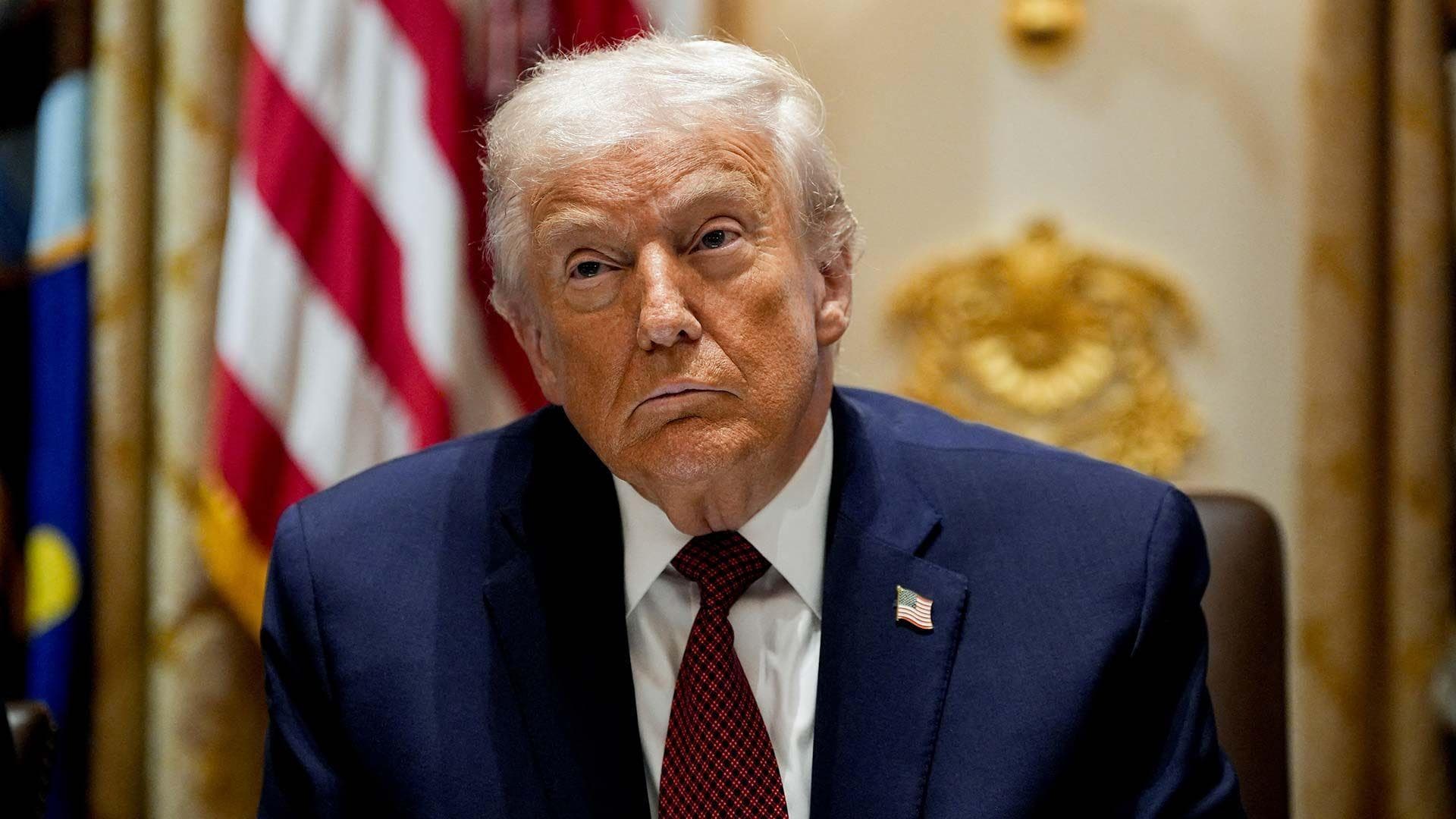
Just as Indian and U.S. negotiators prepare to sit across the table in New Delhi to discuss tariffs, rice has entered the line of fire. U.S. President Donald Trump has hinted that he is considering imposing tariffs on Indian rice, accusing India, Thailand and others of “dumping” rice in the American market and “illegally shipping” into the U.S. Yet, a closer look at the trade numbers undercuts the threat. Indian rice accounts for only a sliver of India’s global rice exports, but forms a major share of what the U.S. itself imports. Any sharp tariff on Indian rice could therefore raise costs for U.S. buyers and consumers well before it meaningfully dents India’s export earnings.
The Story
At a White House meeting, a U.S. farmers’ representative complained that countries such as India and Thailand were “dumping” rice in the American market. In response, President Trump turned to Treasury Secretary Scott Bessent and asked:
“Why is India allowed to do that? They have to pay tariffs. Do they have an exemption on rice?”
He later suggested that the issue could be resolved “so quickly with tariffs” on countries “illegally shipping” into the U.S.
This exchange comes against the backdrop of a wider tariff confrontation. The U.S. currently imposes a 50% tariff on imports from India, and a high-level team led by Deputy U.S. Trade Representative Rick Switzer is scheduled to be in New Delhi from December 10–12 to discuss the tariff regime with their Indian counterparts.
Rice, a politically sensitive farm commodity in the U.S., has now become the latest symbol in a broader debate that mixes trade, domestic electoral incentives and perceptions of unfair competition.
Trade Reality: Asymmetry in Dependence
The rhetoric of “dumping” sits uneasily with the trade data.
-
According to India’s Ministry of Commerce and Industry, India exported $391.74 million worth of rice to the U.S. in 2023–24.
-
This is only about 3.1% of India’s total rice exports. India sells rice to 179 other countries, indicating a highly diversified export base.
On the U.S. side, however:
-
Data from the World Integrated Trade Solutions (WITS) show that India accounted for roughly 26% of the $1.6 billion worth of rice the U.S. imported in 2024.
In other words:
-
For India, the U.S. is not a major rice market.
-
For the U.S., India is a major rice supplier, accounting for more than one-fourth of its import basket.
This asymmetry means any new tariffs on Indian rice are more likely to:
-
Raise the landing cost of rice in the U.S.,
-
Hurt U.S. importers, retailers and ultimately consumers,
-
While prompting Indian exporters to re-route shipments to other markets.
Trade policy expert Ajay Srivastava, founder of the Global Trade Research Initiative and former Director General of Foreign Trade, summed it up by saying that President Trump’s December 8 threat to impose tariffs on Indian rice, announced along with a U.S. farm relief package, appears driven “more by domestic politics than by trade logic”.
Why It Matters
For India, the threat of rice tariffs comes on top of the existing 50% tariffs already in place on its exports to the U.S. It adds another layer of uncertainty to an already contested bilateral trade environment.
For the U.S., the move reflects how trade measures are being woven tightly into domestic political narratives, especially around agriculture and rural constituencies. Tariffs on Indian rice can be projected as “protecting” American farmers, even if the immediate economic costs fall on American buyers and households.
At a systemic level, the episode underscores three points:
-
Weaponisation of tariffs
Tariffs are increasingly being used as a first-response political tool rather than a measure calibrated by long-term trade strategy. -
Interdependence vs. leverage
Even where one partner seems more dependent (U.S. on Indian rice), tariffs can still be used if political payoffs are high enough. India’s diversified rice market does, however, limit the economic leverage that tariffs can exert. -
Negotiating context
Raising tariff threats days before a scheduled tariff-focused bilateral visit is likely intended to increase U.S. bargaining power at the negotiating table, but it may also harden positions on the Indian side.Conclusion
President Trump’s hint at new tariffs on Indian rice makes for sharp political messaging but sits awkwardly with the underlying trade mathematics. With India sending only about 3% of its rice exports to the U.S., and yet meeting over 25% of U.S. rice import demand, any new barriers will likely sting American consumers more than Indian farmers.
As negotiators from both countries meet in New Delhi, the rice episode is a reminder that in an age of tariff-driven politics, data and dependence do not always determine policy — but they do shape who ultimately pays the price.